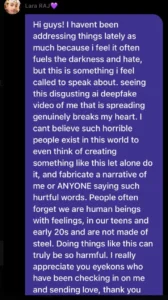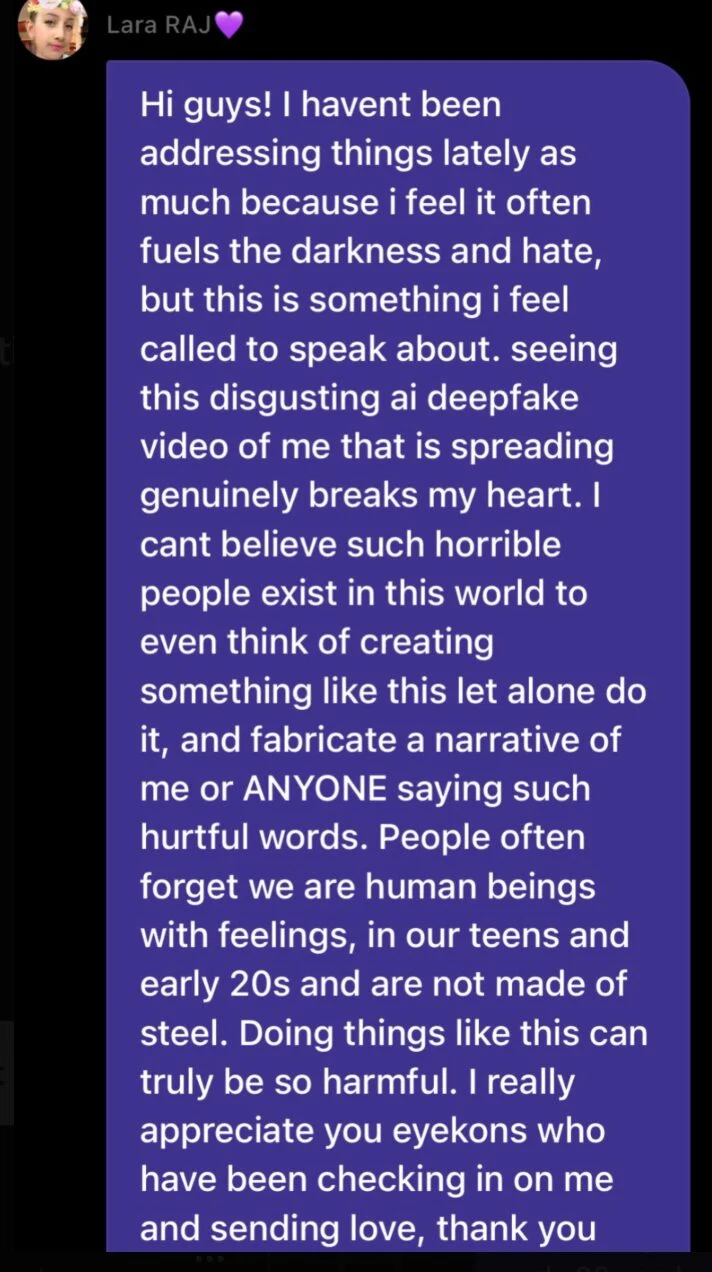
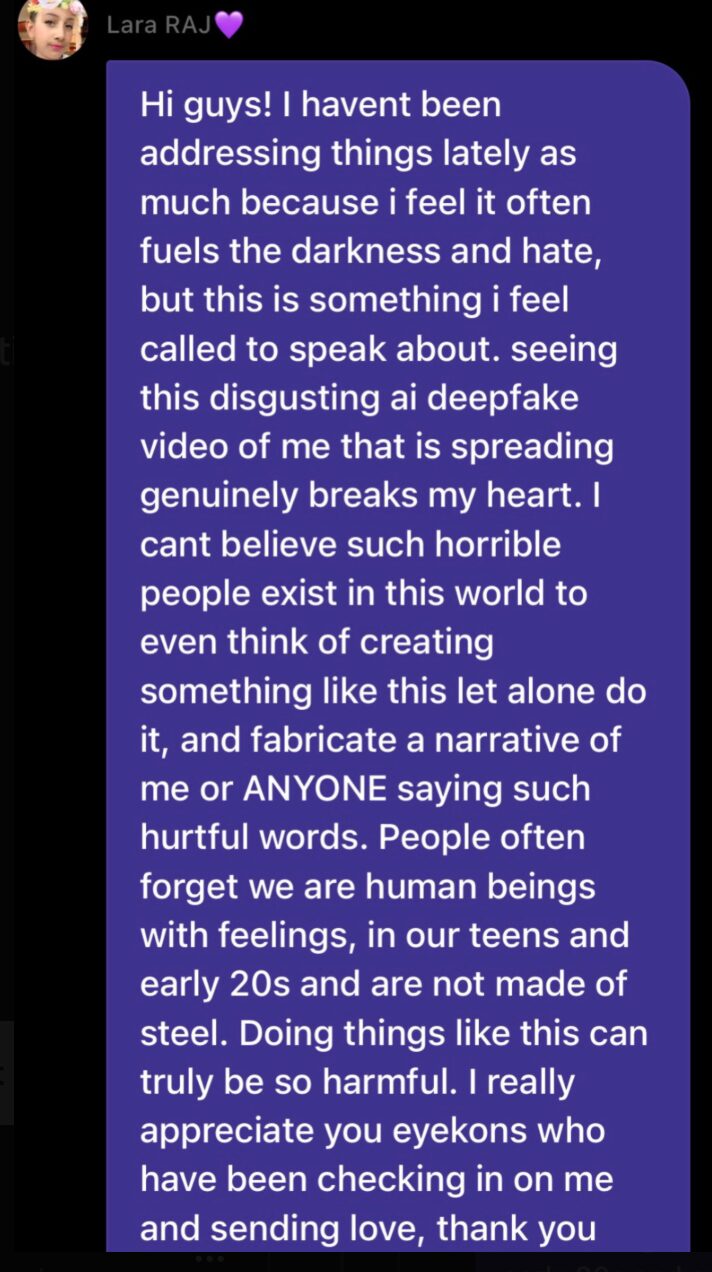
In a concerning development highlighting the escalating challenges posed by artificial intelligence, Lara, a prominent member of the global girl group KATSEYE, has publicly addressed a malicious AI-generated deepfake video targeting her. The video, which depicted her purportedly making racist remarks, has since been deleted following widespread condemnation. Lara’s decision to speak out, conveyed through a message on the fan communication platform Weverse DMs on September 23, 2026, marks a significant moment, as she typically refrains from engaging with such online controversies. Her statement underscores the profound personal and professional distress that deepfake technology can inflict upon public figures, particularly those in the highly scrutinized entertainment industry.
The incident ignited a fervent wave of concern and outrage among fans and digital rights advocates alike. Online communities quickly mobilized, expressing fury that Lara was forced to confront and publicly refute fabricated content designed to damage her reputation. The sentiment across social media platforms was one of profound empathy for Lara, coupled with stern condemnation of the perpetrators and a call for more robust measures against AI misuse. Tweets referencing the incident lamented the "inhumane and evil" nature of the act, with many fans expressing deep concern for her well-being and demanding an end to such pervasive online harassment.
Chronology of the Deepfake Incident
The precise origin and initial dissemination of the deepfake video remain under investigation, but its existence became widely known shortly before Lara’s public statement. The video, crafted using advanced AI algorithms, superimposed Lara’s likeness onto a fabricated interview setting, where she was made to appear as if uttering discriminatory comments. This sophisticated level of manipulation made the video disturbingly convincing to an unsuspecting viewer, prompting immediate alarm among those who encountered it.
Lara’s response came swiftly on September 23, 2026, via Weverse DMs, a direct communication channel often utilized by K-pop idols to interact with their fanbase. Her message, while not fully reproduced in the public domain, conveyed a sense of urgency and distress, indicating that the severity of the deepfake compelled her to break her usual silence on online issues. This direct engagement served as a powerful, personal refutation of the fabricated content, sending a clear message to her fans about the video’s inauthenticity and her genuine feelings regarding its malicious intent.
Following Lara’s statement and the subsequent outcry from the KATSEYE fandom, numerous reports indicate that the deepfake video was promptly removed from various online platforms where it had been circulating. This swift action, while a relief, highlights the reactive nature of current content moderation systems, often requiring significant public pressure or direct intervention from affected parties to remove harmful AI-generated content.

The Proliferation of Deepfakes in the Digital Age
The incident involving KATSEYE’s Lara is not an isolated occurrence but rather a stark illustration of a growing global problem: the widespread proliferation and malicious application of deepfake technology. Deepfakes are synthetic media in which a person in an existing image or video is replaced with someone else’s likeness using artificial neural networks. While the technology has benign applications in film production and creative arts, its malicious use has surged dramatically, leading to the creation of non-consensual pornography, political disinformation, and reputational attacks.
Reports from organizations monitoring digital safety indicate a worrying trend. A recent study by the identity verification company Sensity AI revealed that the volume of deepfake videos detected online has increased by over 900% in the past two years, with an overwhelming majority (estimated at over 90%) being non-consensual sexual content, primarily targeting women. While Lara’s deepfake was designed for reputational damage rather than sexual exploitation, it falls under the broader umbrella of malicious AI misuse that disproportionately affects public figures, particularly female entertainers who are already subjected to intense public scrutiny and online harassment.
The K-pop industry, with its global reach and highly dedicated fanbases, has become a frequent target for various forms of online abuse. Idols, often young and under immense pressure, are vulnerable to sophisticated smear campaigns and privacy invasions. The rise of generative AI tools, which are increasingly accessible and user-friendly, has lowered the barrier for creating convincing fake content, making it easier for malicious actors to target celebrities with deepfakes that can cause significant emotional distress and damage their carefully cultivated public images.
Broader Implications: Digital Ethics, Mental Health, and Legal Challenges
The incident involving Lara underscores several critical broader implications for digital ethics, mental health, and the legal landscape surrounding AI.

Firstly, it brings into sharp focus the urgent need for robust digital ethics frameworks and AI governance. As AI technology continues to advance at an unprecedented pace, the gap between technological capability and ethical oversight widens. There is a pressing call for developers, tech companies, and policymakers to collaborate on establishing clear guidelines and regulations that prioritize user safety, privacy, and accountability. This includes developing advanced AI detection tools capable of identifying deepfakes more efficiently and implementing proactive content moderation strategies rather than relying solely on reactive measures.
Secondly, the mental health impact on individuals targeted by deepfakes is profound. Being falsely portrayed in a damaging or humiliating scenario can lead to severe psychological distress, anxiety, depression, and even post-traumatic stress. For public figures like Lara, whose careers are intrinsically linked to their public image, such incidents can be particularly devastating, affecting their professional standing, personal relationships, and overall well-being. The constant battle against misinformation and the fear of future deepfake attacks add an immense burden to an already demanding career.
Thirdly, the legal landscape is struggling to keep pace with the rapid evolution of deepfake technology. Many jurisdictions lack specific laws addressing the creation and dissemination of deepfakes, particularly those that are non-sexual but still inflict severe reputational harm. Existing defamation laws often prove inadequate, as proving intent and tracing anonymous perpetrators across international borders can be incredibly challenging. In South Korea, where KATSEYE operates, legal frameworks are continually being updated to address cybercrimes, but the novelty and complexity of AI-generated content present new hurdles. There is a global push for stronger legislation that includes criminal penalties for malicious deepfake creation and distribution, as well as mechanisms for rapid content removal and victim support.
Official Responses and Industry Action
While KATSEYE’s management agency, a joint venture between HYBE and Geffen Records, did not issue a public statement specifically detailing their response to this incident at the time of reporting, it is standard practice for major entertainment companies to take severe legal action against creators and disseminators of malicious content targeting their artists. Agencies typically employ legal teams to monitor online activity, gather evidence, and pursue civil and criminal charges, citing defamation, invasion of privacy, and copyright infringement.
The K-pop industry as a whole has increasingly recognized the threat posed by deepfakes and other forms of digital harassment. Many agencies have implemented stricter policies and dedicated resources to protect their artists, including employing forensic experts to identify deepfakes and working with social media platforms to expedite content removal. There is also a growing trend towards collaborative efforts among entertainment companies and digital rights organizations to advocate for stronger legal protections and public awareness campaigns.
Fan groups, often highly organized, also play a crucial role in monitoring online spaces and reporting malicious content. Their collective action can significantly amplify calls for content removal and bring incidents to the attention of agencies and platforms. The immediate and widespread fan reaction to Lara’s deepfake incident demonstrated the power of collective vigilance in combating online abuse.
Prevention, Education, and Future Outlook
Moving forward, a multi-faceted approach is essential to mitigate the risks associated with deepfake technology. This includes:
- Technological Advancements: Continued investment in AI-powered deepfake detection tools that can identify synthetic media with greater accuracy and speed. Research into digital watermarking and provenance tracking for media content could also help authenticate genuine content.
- Legal and Regulatory Frameworks: Development and enforcement of comprehensive laws specifically targeting malicious deepfakes, with clear definitions of harm and appropriate penalties. International cooperation is vital, given the global nature of online content.
- Platform Accountability: Increased responsibility for social media platforms to implement proactive content moderation, invest in detection technology, and provide transparent mechanisms for reporting and removing harmful content promptly.
- Public Education and Media Literacy: Campaigns to educate the public about deepfake technology, its capabilities, and how to critically evaluate online information. Enhancing media literacy among internet users is crucial to prevent the spread of misinformation.
- Victim Support: Establishing robust support systems for individuals targeted by deepfakes, offering psychological counseling, legal assistance, and guidance on navigating the emotional and practical challenges of such incidents.
The incident involving KATSEYE’s Lara serves as a stark reminder of the urgent need for collective action to safeguard the digital landscape. As AI technology continues to evolve, so too must our strategies for protecting individuals from its potential misuse. The courage of figures like Lara in speaking out against these injustices is vital in raising awareness and fostering a more responsible and secure online environment for everyone.