In a move that signaled a tectonic shift in the global music landscape, South Korean powerhouse Girls’ Generation claimed the top prize at the inaugural YouTube Music Awards (YTMA) held at Pier 36 in New York City. The group’s victory in the Video of the Year category for their hit single "I Got a Boy" has not only solidified the presence of K-pop in the international mainstream but has also ignited a complex conversation regarding the mechanics of digital fandom, the democratization of music awards, and the evolving nature of global superstardom.
The ceremony, which took place on November 3, 2013, saw the nine-member ensemble—represented at the event by member Tiffany Young—triumph over some of the most established names in Western pop music. The nominees for Video of the Year included a formidable lineup: Justin Bieber (“Beauty and a Beat”), Miley Cyrus (“We Can’t Stop”), Lady Gaga (“Applause”), Macklemore & Ryan Lewis (“Thrift Shop”), One Direction (“Best Song Ever”), Psy (“Gentleman”), Selena Gomez (“Come & Get It”), Demi Lovato (“Heart Attack”), and Epic Rap Battles of History (“Barack Obama vs. Mitt Romney”).
The Mechanics of a Digital Victory
The YouTube Music Awards distinguished themselves from traditional accolades like the Grammys or the MTV Video Music Awards by basing their winners entirely on digital engagement metrics. The criteria for the Video of the Year were centered on the "most shared" videos over the previous year. According to YouTube’s official methodology, the winners were determined by tracking the number of times a video was shared across social media platforms, including Twitter, Facebook, and Google+, as well as view counts and overall engagement.
Related Articles
This data-driven approach favored artists with highly organized and digitally active fanbases. For Girls’ Generation, their victory was a direct result of a massive, coordinated effort by their global fandom, known as "SONE." Unlike the viral, organic explosion of Psy’s "Gangnam Style" in 2012, which permeated the public consciousness through novelty and wide-reaching memes, the Girls’ Generation win was the product of a systematic mobilization of a dedicated core audience.
Fandom Logistics and Systematic Voting
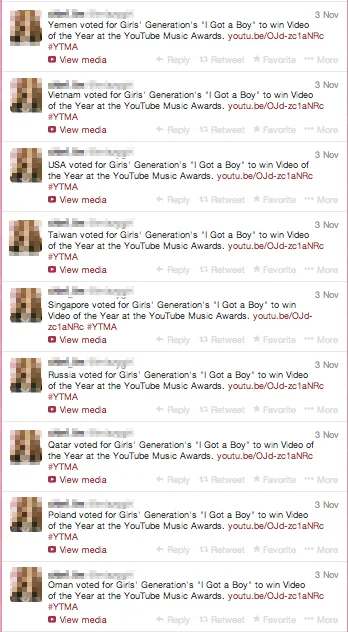
Reports from the voting period indicate that the SONE fandom utilized sophisticated strategies to maximize their impact on the YouTube metrics. These tactics included "relay sessions," where fans in different time zones took shifts to ensure that the "I Got a Boy" video was being shared and viewed consistently throughout a 24-hour cycle. By coordinating efforts across Asia, Europe, and the Americas, the fandom maintained a constant stream of digital activity that traditional Western artists, who often rely on more passive consumption patterns, could not match.
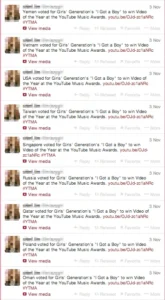
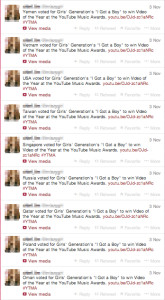
Social media monitoring during the voting window revealed a flood of automated and semi-automated posts. Fans reportedly used various digital identities and multiple devices to circumvent voting limitations. While such practices are common in the world of online fan competitions, the scale of the SNSD (So-nyeo Shi-dae) mobilization was unprecedented for a Western-based award show. This has led to a debate within the industry about whether such awards measure "worldwide popularity" or the "organizational efficiency" of a specific demographic.
The Artistic Context of "I Got a Boy"
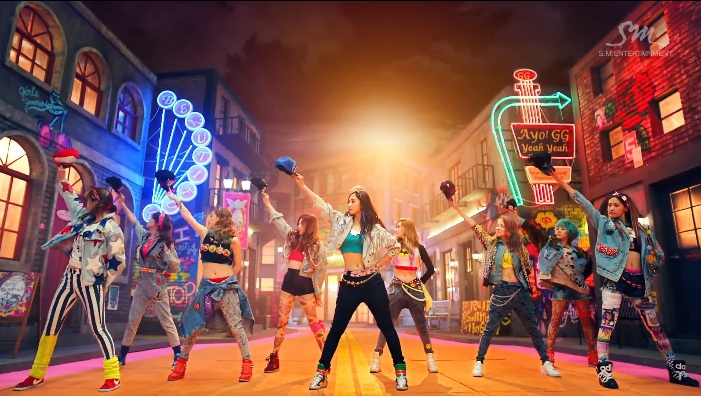
While the voting process has been a point of scrutiny, the music video for "I Got a Boy" itself represented a significant stylistic evolution for Girls’ Generation and K-pop as a whole. Released on January 1, 2013, the track was a departure from the group’s previous "bubblegum pop" or "electro-pop" hits like "Gee" and "Genie."
"I Got a Boy" is characterized by its experimental structure, blending multiple genres—including hip-hop, dubstep, and rock—into a single, kaleidoscopic production. The music video features high-energy choreography, vibrant streetwear-inspired fashion, and rapid-fire editing that fits the visual aesthetic of the YouTube era. At the time of its release, the video set a record for the fastest K-pop group video to reach 10 million views, achieving the feat in just 55 hours. This early momentum provided the foundation for its eventual victory at the YTMAs nearly a year later.
International Reaction and the "Gatekeeper" Conflict
The announcement of Girls’ Generation as the winners was met with a polarized response. Inside the venue, Tiffany Young’s acceptance speech was a moment of triumph. "YouTube is my best friend. Is YouTube your best friend?" she asked the crowd, expressing gratitude for the platform’s role in bridging the gap between Korean artists and global audiences.
However, on social media, the reaction from fans of Western pop stars was often marked by confusion and, in some instances, xenophobia. The hashtag "Who is Girls’ Generation?" trended briefly as fans of Justin Bieber and One Direction expressed frustration that a group they were unfamiliar with had defeated their idols. This reaction highlighted the lingering disconnect between the "East" and "West" in the music industry, where K-pop was still viewed by some as a niche subculture despite its massive statistical footprint.
Conversely, the win was celebrated in South Korea as a significant cultural milestone. The Korean media hailed the event as a validation of the "Hallyu" (Korean Wave) and a sign that K-pop had officially moved beyond a regional trend to become a permanent fixture of the global entertainment industry.
Strategic Implications for SM Entertainment and K-Pop
The YTMA victory serves as a critical data point for SM Entertainment, the management agency behind Girls’ Generation. The agency has long harbored ambitions for the group to break into the United States market. Following the release of the English version of "The Boys" in late 2011 and appearances on The Late Show with David Letterman and Live! with Kelly, the group had established a foothold, but had yet to achieve a major American chart breakthrough.
This award suggests that while "radio play" and traditional Western promotion may still be hurdles, the digital landscape offers a bypass. The group’s ability to dominate a platform like YouTube, which is the primary source of music consumption for younger demographics, provides leverage for future negotiations with American labels such as Interscope Records.
Furthermore, the win has broader implications for the K-pop industry. It demonstrates that the "fandom-as-a-service" model—where fans act as voluntary marketing and distribution arms for their favorite artists—is a potent force in an era where social media engagement is the primary currency of success.
A New Era of Music Awards
The 2013 YouTube Music Awards may be remembered as a turning point in how cultural influence is measured. By choosing a winner based on sharing and digital participation rather than industry panels or traditional sales, YouTube acknowledged the power of the hyper-connected consumer.
For Girls’ Generation, the Video of the Year award is not a fluke, but the culmination of years of rigorous training, strategic marketing by SM Entertainment, and the unwavering loyalty of a global fanbase. While critics may argue that "power voting" skews the perception of popularity, the numbers remain indisputable: "I Got a Boy" generated more digital "noise" and active engagement than the biggest hits from the biggest Western stars.
As the music industry continues to grapple with the decline of physical sales and the rise of streaming and social media, the Girls’ Generation win at the YTMAs stands as a case study in the future of global pop. It is a future where geographic borders are secondary to digital reach, and where the most organized audience, rather than the most famous individual, holds the power to crown the world’s biggest stars.
The question that remains for the group and their management is how to translate this digital dominance into sustained commercial success in the Western market. With the world now watching, the pressure is on Girls’ Generation to prove that their YouTube victory is just the beginning of a new chapter in international music history.