Girls’ Generation Victory at the Inaugural YouTube Music Awards Highlights the Unprecedented Mobilization of Global K-pop Fandoms
Article Editorial Team
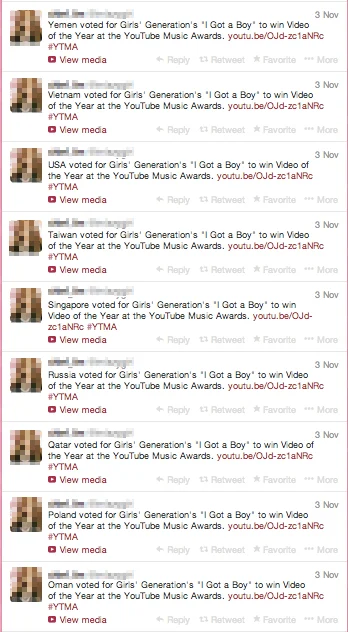
The global music landscape witnessed a significant paradigm shift on November 3, 2013, when the South Korean girl group Girls’ Generation, also known as SNSD, was announced as the winner of the Video of the Year award at the inaugural YouTube Music Awards (YTMA). Held at Pier 36 in New York City, the event was intended to celebrate the artists and videos that turned YouTube into a global phenomenon over the preceding year. Girls’ Generation secured the top honor for their experimental hit "I Got A Boy," a victory that notably saw them triumph over established Western superstars including Justin Bieber, Lady Gaga, Miley Cyrus, Psy, Selena Gomez, Demi Lovato, Macklemore & Ryan Lewis, One Direction, and Taylor Swift.
The victory was not merely a win for the nine-member ensemble but served as a definitive case study in the power of digital-native fandoms and the evolving metrics of global popularity. While the result came as a shock to many Western media outlets and casual listeners, an analysis of the voting criteria and the systematic mobilization of the group’s international fan base, known as SONEs, suggests that the outcome was a logical conclusion of the award’s specific engagement-based metrics.
The Mechanics of the Victory: Engagement Over Passive Consumption
The YouTube Music Awards were distinct from traditional accolades like the Grammys or the MTV Video Music Awards in their heavy reliance on social media engagement as the primary judging criterion. The winner for Video of the Year was determined by which of the nominated videos was shared most frequently across social media platforms—specifically Twitter, Facebook, and Google+—during a designated voting period.
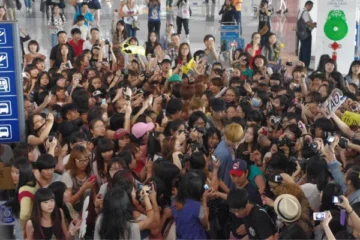
This methodology played directly into the strengths of K-pop fandom culture, which is characterized by a high degree of digital organization and collective action. Unlike traditional Western music consumption, which often relies on passive radio play or individual streaming, K-pop fan bases operate with a corporate level of efficiency. During the YTMA voting window, SONEs utilized "relay sessions," a strategy where fan chapters in different time zones coordinated their efforts to ensure that voting activity never ceased. As fans in South Korea and Southeast Asia went to sleep, chapters in Europe and the Americas would take over the responsibility of sharing the video link.
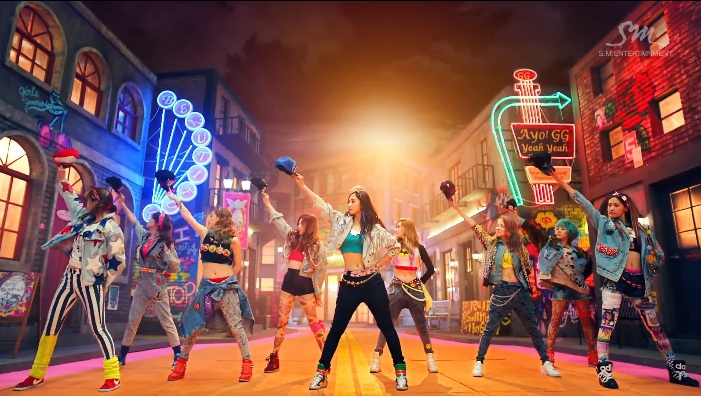
The social media footprint of this effort was immense. Twitter timelines were flooded with the standardized voting text: “I voted for Girls’ Generation’s I Got A Boy to win Video of The Year at the YouTube Music Awards.” Reports indicated that fans utilized multiple accounts and devices to maximize their impact, often adopting humorous or diverse digital identities to circumvent spam filters or simply to demonstrate the breadth of their reach. This systematic approach ensured that "I Got A Boy" remained at the top of the sharing metrics, even if its raw view count at the time was lower than that of competitors like Justin Bieber or Miley Cyrus.
A Timeline of the "I Got A Boy" Phenomenon
The journey to the YTMA stage began nearly a year prior to the ceremony. "I Got A Boy" was released on January 1, 2013, as the title track of the group’s fourth Korean-language studio album. The song was a radical departure from the group’s previous "bubblegum pop" image, featuring a complex, multi-genre structure that shifted between electro-pop, hip-hop, and rock.
- January 1, 2013: "I Got A Boy" is released. The music video garners 10 million views in just 55 hours, setting a new record for K-pop groups at the time.
- October 21, 2013: YouTube announces the nominees for the first-ever YouTube Music Awards. Girls’ Generation is the only Asian girl group nominated in the Video of the Year category.
- October 22 – November 3, 2013: The voting period commences. K-pop news outlets and fan forums mobilize global efforts to secure shares for the video.
- November 3, 2013: The live ceremony takes place in New York. Tiffany, representing the group, accepts the award, delivering her speech in English and expressing gratitude to YouTube and the fans.
Industry Reaction and Cultural Backlash
The announcement of Girls’ Generation as the winner triggered an immediate and polarized reaction. On one side, the K-pop industry and its supporters viewed the win as a "mainstream" validation of Korean pop culture, following the path blazed by Psy’s "Gangnam Style" in 2012. It signaled that K-pop was no longer a niche subculture but a dominant force capable of competing with the biggest names in the American music industry.
Conversely, the win was met with significant backlash from the fan bases of the defeated Western artists. Social media platforms were inundated with "who are they?" inquiries, often accompanied by xenophobic or dismissive commentary regarding the group’s origin and the nature of their music. This friction highlighted a disconnect between traditional Western music industry gatekeepers and the reality of globalized, internet-driven fame.
The controversy also sparked a debate about the validity of "power voting." Critics argued that a minority of highly dedicated fans could skew results, making them unrepresentative of the "general public’s" preferences. However, proponents of the YouTube metrics argued that the award was designed to measure engagement—the willingness of an audience to actively promote and disseminate content—rather than just passive recognition. In this regard, Girls’ Generation’s victory was an accurate reflection of which artist had the most passionate and digitally savvy audience.
Supporting Data and the "Hallyu" Context
The win was a culmination of years of strategic planning by SM Entertainment, the group’s management agency. By 2013, Girls’ Generation had already established itself as the premier girl group in Asia, with significant commercial success in Japan and South Korea. They had made their American television debut in 2012 on The Late Show with David Letterman and Live! with Kelly and Michael, signaling a clear intent to penetrate the North American market.
At the time of the win, "I Got A Boy" had already become a significant digital success. While it lacked the viral "meme" quality of Psy’s "Gangnam Style," its technical production was highly praised by Western critics. Billboard described the track as one of the most forward-thinking pop songs of the year. The group’s victory served to solidify the "Hallyu" (Korean Wave) not as a one-off fluke, but as a sustainable movement backed by high production values and a robust marketing machine.
Broader Implications for the Music Industry
The 2013 YouTube Music Awards win for Girls’ Generation serves as a historical marker for several long-term trends in the music industry:
- The Rise of Fan-Led Marketing: The victory demonstrated that a dedicated fandom could act as a more effective marketing and promotional force than traditional record label budgets. This model has since been refined and adopted by subsequent K-pop acts like BTS and BLACKPINK, who have dominated Western charts through similar digital mobilization strategies.
- The Shift in Charting and Awards Metrics: Following the YTMA controversy, many major music charts, including Billboard, began to adjust their formulas to better account for social media shares and YouTube views, recognizing these as legitimate indicators of an artist’s reach.
- The Globalization of the Mainstream: The event forced Western audiences to confront the reality that the "mainstream" is no longer defined solely by American or European output. The visibility of Girls’ Generation at a major US-based award show opened the door for more diverse international acts to be taken seriously by Western media.
Future Outlook: The American Expansion
Following the YTMA win, questions regarding the group’s future in the United States became a central topic of discussion. While the group was signed to Interscope Records for their US promotions, the follow-up to their 2013 success was cautious. The win confirmed their worldwide presence, but it also highlighted the challenges of transitioning from a digital phenomenon to a staple of American terrestrial radio and touring.
Ultimately, the YouTube Music Award for Video of the Year remains a crowning achievement for Girls’ Generation. It stands as a testament to their longevity, the marketing prowess of SM Entertainment, and the undeniable power of a globalized fan base. Whether or not the group would go on to achieve the same level of sustained chart dominance in the US as they had in Asia, their 2013 victory ensured that the name Girls’ Generation would be etched into the history of the digital music revolution. The win was a clear message to the music industry: the barriers to entry have changed, and the power now resides in the hands of the global, connected consumer.
Related News