Intersection of Political Milestones and Pop Culture An Analysis of Park Geun-hye’s Presidency and the Rise of Empowerment Themes in K-pop
Article Editorial Team
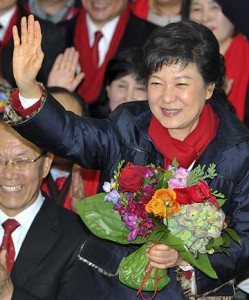
The transition of leadership in South Korea between 2012 and 2013 marked a significant juncture in the nation’s democratic history, characterized by the election of Park Geun-hye as the country’s first female head of state. Representing the conservative New Frontier Party—subsequently known as the Saenuri Party and formerly the Grand National Party—Park secured the presidency in December 2012 following a highly competitive campaign against the progressive Democratic United Party. Her victory was viewed internationally as a potential turning point for gender dynamics in a nation historically rooted in patriarchal structures. However, the intersection of this political milestone with South Korea’s pervasive pop culture industry, specifically the K-pop genre, highlighted a complex discrepancy between symbolic representation and the lived reality of gender inequality.
The Historical Context of the 18th Presidential Election
The 2012 presidential election was defined by narrow margins and deep-seated societal divisions. Park Geun-hye, the daughter of former military leader Park Chung-hee, was a figure of significant controversy. To her supporters, she represented a link to the rapid economic development of the 1960s and 70s, known as the "Miracle on the Han River." To her detractors, she symbolized the legacy of authoritarian rule. Despite these polarities, her inauguration at Cheong Wa Dae (the Blue House) in early 2013 was widely heralded as a "glass ceiling" moment.
The opposition, led by the Democratic United Party (Minju), frequently criticized Park’s rise to power, suggesting it was facilitated more by her family lineage than a commitment to progressive gender reform. Nevertheless, the presence of a female president prompted an immediate national conversation regarding the status of women in South Korean society. Analysts and sociologists at the time questioned whether a singular female executive could catalyze systemic change in a country consistently ranked at the bottom of gender equality indices among developed nations.
Socio-Economic Indicators and the Gender Equality Gap
During the period of Park’s election and the subsequent cultural responses, South Korea’s record on gender rights remained a point of international scrutiny. Data from the Organisation for Economic Co-operation and Development (OECD) consistently highlighted South Korea as having the largest gender wage gap among member nations, often exceeding 35%. This disparity was compounded by institutionalized sexism in corporate hiring practices and promotion cycles.
Furthermore, South Korean women faced a "double burden" of professional expectations and traditional domestic roles. While South Korean women pursued higher education at rates comparable to or exceeding their male counterparts, this investment did not translate into labor market participation. Sociological data from 2013 indicated a significant "M-curve" in female employment, where women would exit the workforce in their late 20s and early 30s due to marriage and childbirth, often struggling to re-enter at the same professional level.
Legal frameworks also reflected conservative social values. In 2013, abortion remained largely illegal under the Criminal Act of 1953, with very narrow exceptions for the health of the mother or instances of sexual assault. These structural barriers formed the backdrop against which cultural entities attempted to monetize the concept of "female empowerment."
Cultural Commercialization: Girl’s Day and the “Female President” Single
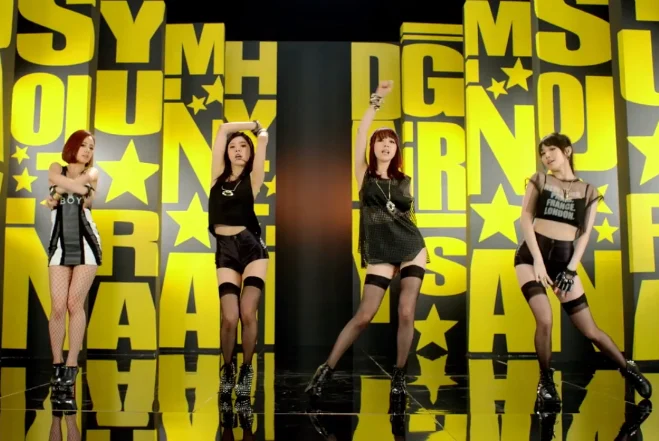
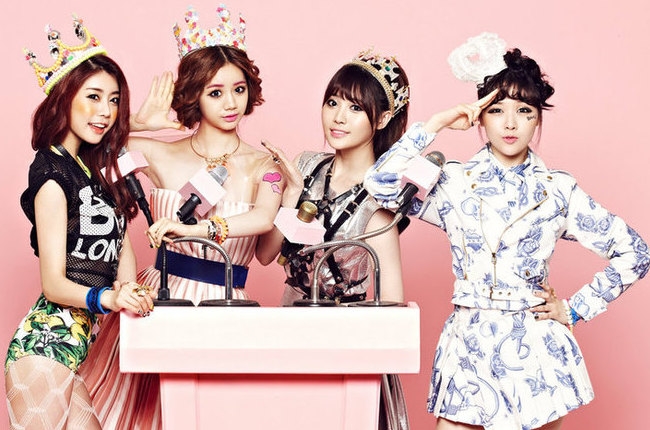
In June 2013, approximately four months into Park Geun-hye’s term, the K-pop group Girl’s Day released their repackaged album titled Female President. The lead single of the same name sought to capitalize on the zeitgeist of the era. Prior to this release, Girl’s Day had been categorized among "third-tier" girl groups, navigating various member changes and experimenting with "cute" and "innocent" concepts. The shift toward a "sexy" and "empowered" image was a strategic pivot intended to elevate the group’s profile.
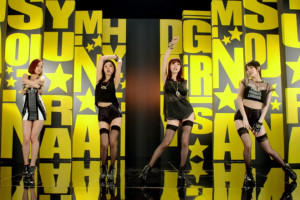
The marketing of "Female President" utilized the imagery of political authority to frame a narrative of personal agency. The music video featured members in various stylized settings, including a controversial sequence involving a member dressed in an androgynous suit (Hyeri) and another in more traditional feminine attire (Minah). This portrayal culminated in a scene where Minah initiates a kiss with the suit-wearing Hyeri—a move intended to symbolize a woman taking the initiative in a romantic context.
Lyrical Analysis and the Definition of Empowerment
A critical examination of the lyrics of "Female President" reveals a disconnect between the title’s political weight and the song’s actual message. The lyrics explicitly reference the presidency as a justification for a woman to be more assertive in her dating life:
"Our country’s president is now a woman / So why can’t I be the one to do it first? / Why is it a problem for a girl to kiss first?"
While the song advocates for a shift in romantic etiquette, critics noted that it reduced the complex struggle for gender equality to the realm of interpersonal relationships and male-centric validation. The empowerment portrayed was not one of professional autonomy, legal rights, or economic independence, but rather the "freedom" to pursue a male partner without waiting for him to act.
Moreover, the song’s lyrics contained contradictory themes. Alongside calls for assertiveness, the lyrics described the female protagonists as feeling "dizzy," "nervous," and "like babies" in the presence of their love interests. This juxtaposition highlighted a common trope in the K-pop industry: the "strong woman" archetype that remains fundamentally submissive to traditional romantic hierarchies.
Chronology of Cultural and Political Events (2012–2013)
To understand the impact of this period, a timeline of key events is essential:
- December 19, 2012: Park Geun-hye is elected as the 18th President of South Korea with 51.6% of the vote.
- February 25, 2013: Park is officially inaugurated, promising a "Second Miracle on the Han River" and a focus on the "Creative Economy."
- March 2013: Girl’s Day achieves commercial success with "Expectation," marking their transition into "sexy" concepts.
- June 24, 2013: Girl’s Day releases "Female President," explicitly referencing the new political landscape.
- Late 2013: International organizations, including the World Economic Forum, release reports showing South Korea’s Gender Gap Index ranking remains 111th out of 136 countries, despite the female presidency.
Public and Critical Reception
The reception of the "Female President" concept was polarized. Within the K-pop fandom, the song was a commercial success, reaching the top ten on the Gaon Digital Chart and earning the group their first music show win on Inkigayo. The "sexy" choreography and provocative styling were successful in garnering media attention and increasing the group’s "brand power."
However, feminist scholars and social critics in South Korea offered a more nuanced critique. The consensus among many analysts was that the entertainment industry was using the superficial trappings of feminism to sell a product that did nothing to challenge the status quo. By framing "empowerment" through the lens of a "sexy" concept—which many argued was designed for the male gaze—the industry was seen as commodifying the political milestone of a female president for profit.
The styling choices, including skin-toned body suits and highly suggestive dance moves, were criticized for undermining the message of authority. Critics argued that if the goal was to celebrate the breaking of a glass ceiling, the visual representation remained firmly within the confines of traditional objectification.
Institutional Barriers and the Failure of Symbolic Representation
The "Female President" era in South Korea serves as a case study in the limitations of symbolic representation. While Park Geun-hye’s presidency was a historical first, her administration’s policies did not significantly advance the cause of women’s rights. During her tenure, the focus remained on macroeconomic stability and security issues, with gender equality initiatives often relegated to the background.
The disconnect between the pop culture "girl power" anthem and the socio-political reality was stark. In 2013, while Girl’s Day sang about the novelty of a female leader, women in the workforce continued to face "career breaks" due to a lack of affordable childcare and a culture of long working hours that penalized parents. The legal status of reproductive rights remained stagnant, and the representation of women in the National Assembly stayed well below the OECD average.
Broader Impact and Implications for the K-pop Industry
The release of "Female President" signaled a trend in the K-pop industry where "empowerment" became a marketable aesthetic rather than a political stance. In the years following 2013, many girl groups adopted "girl crush" concepts, characterized by fierce imagery and lyrics about independence. However, the industry itself continued to be plagued by issues such as the "slave contracts," rigorous beauty standards, and the intense sexualization of young performers.
The legacy of this period is one of missed opportunities. The election of a female president provided a platform for a substantive national dialogue on the restructuring of South Korean society. Instead, the cultural response, epitomized by the pop music of the time, largely diverted that energy into consumerist narratives.
In conclusion, while the 2012–2013 period was momentous for South Korean politics, the cultural reflection of this change remained superficial. The "Female President" phenomenon demonstrated that while pop culture can mirror political shifts, it often lacks the depth to address the structural inequities that those shifts are intended to resolve. The symbolic victory of a female president did not immediately translate into the dismantling of the patriarchy, and the music of the era remains a testament to the gap between political symbolism and social progress.
Related News