K-Pop Idol Confesses To Lying On Broadcast
Article Editorial Team

The South Korean entertainment industry, often characterized by its veneer of glamour and manufactured perfection, recently witnessed a moment of profound vulnerability as singer and actor Lee Joon, a former member of the K-pop group MBLAQ, shared the stark realities of his upbringing. During the May 27 broadcast of the popular tvN talk show You Quiz on the Block, hosted by the veteran comedian Yoo Jae Suk and Jo Se Ho, Lee Joon—born Lee Chang-sun—delivered an emotional testimony regarding the severe financial hardships his family faced during his youth. Beyond recounting the struggles of his past, the performer made a significant "confession of conscience," admitting that a long-held public narrative regarding his financial success in his early twenties was partially fabricated to preserve his dignity against the stigma of poverty.
The Economic Context: The 1997 IMF Crisis and Family Destitution
The foundation of Lee Joon’s narrative begins with the 1997 Asian Financial Crisis, commonly referred to in South Korea as the "IMF Crisis." This period of intense economic volatility saw the collapse of numerous domestic businesses and a surge in national unemployment. Lee Joon disclosed that his father’s business was among those that succumbed to the financial climate during this era. The subsequent fallout transitioned the family from relative stability to a state of chronic impoverishment that defined Lee’s formative years.
According to his account, the financial strain necessitated manual labor from a very young age. Lee shared that from the sixth grade through his middle school years, he and his older sister spent their school vacations distributing flyers. This was not merely for pocket money but was a vital contribution to the family’s survival. The actor’s recollections of his school life further highlighted the severity of their situation; he revealed that he would often request leftover school lunch scraps to take home in plastic bags. Such measures were necessary to ensure the family had enough to eat, a detail that underscores the hidden hunger experienced by many families during the post-IMF recovery period.
Living Conditions and the Drive for Socioeconomic Mobility
Lee Joon provided a visceral description of his childhood living environment, which he characterized as being infested with pests and lacking basic hygiene. "There were so many cockroaches that sometimes they were under my pillow or even on my toothbrush," he stated, explaining that his primary motivation throughout his youth was simply to live in a "clean house." This aspiration for a sanitary and stable environment became the driving force behind his academic and professional pursuits.
Despite his family’s lack of resources, Lee Joon demonstrated significant talent in the arts, specifically in dance. However, his choice of higher education was dictated strictly by financial constraints rather than prestige alone. He chose to attend the Korea National University of Arts (KNUA) because the tuition was significantly more affordable than that of private institutions. KNUA is a prestigious public university, but for Lee, it represented the only viable path to a career in the arts that would not further burden his family with insurmountable debt. This pragmatic approach to his education highlights the "glass ceiling" often faced by talented individuals from low-income backgrounds in the competitive South Korean arts scene.

The 15-Year Confession: The Truth Behind the "Successful Son" Narrative
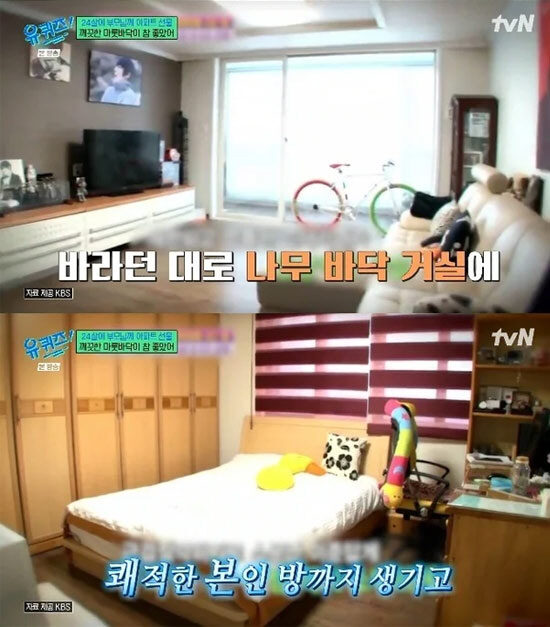
The most striking portion of the interview involved Lee Joon’s admission regarding a claim he made fifteen years ago. At the age of 24, during the height of his fame as a member of MBLAQ, it was reported and broadcast that he had purchased an apartment for his parents. At the time, this was hailed as a "filial" success story, positioning Lee as the quintessential self-made idol who had rescued his family from poverty.
However, on You Quiz on the Block, Lee Joon corrected the record, stating that the property was actually a rental, not a purchased home. He explained that at the time, he felt a desperate need to project an image of total success to shield himself and his family from the pity of others. "Life was so difficult then that many people pitied me, and some looked down on me," Lee confessed. He admitted that the lie was a defense mechanism intended to demonstrate that he had "succeeded to this extent" and was no longer an object of public sympathy or private condescension.
This revelation provides a rare look into the psychological pressures faced by first-generation and second-generation "dirt spoon" (heuk-sujeo) idols—those born into poor families—who often feel an immense burden to perform success long before they have achieved true financial security. The "confession of conscience" after 15 years suggests a shift in Lee’s personal growth, where the need for authenticity has finally outweighed the fear of social stigma.
Industry Pressures and the "Face" Culture in South Korea
Lee Joon’s decision to lie about home ownership is deeply rooted in the Korean cultural concept of Chemyeon, or "saving face." In a society that places high value on social standing and visible success, admitting to living in a rental despite being a famous celebrity could be perceived as a failure. For Lee, who had spent his childhood in a house with cockroaches and eating lunch scraps, the psychological trauma of poverty created a compulsion to overcompensate.
Host Yoo Jae Suk offered words of comfort and validation, noting that the achievement of providing a three-bedroom rental apartment for one’s parents at the age of 24 is, in itself, an extraordinary feat. "Providing your parents with a rented apartment in your early twenties is really hard," Yoo remarked, adding that his parents must have been incredibly proud regardless of whether the home was owned or leased.
Lee Joon reflected on that period with a mix of pride and lingering emotion, describing the joy of finally having a home with a living room, three bedrooms, and wooden floors—a stark contrast to his previous living conditions. He noted that the house was the manifestation of a childhood dream, which is why he felt such a strong urge to share it on television at the time, even if he felt the need to embellish the details of its acquisition.
A Philosophy of Resilience: Living "Day by Day"
When asked how he managed to navigate such a difficult journey from poverty to a successful career in both music and acting, Lee Joon’s response was grounded in a philosophy of incremental progress. He explained that he never allowed himself to be overwhelmed by the impossibility of his long-term goals. Instead, he focused entirely on surviving and succeeding within the span of a single day.
"I didn’t say, ‘I will achieve this no matter what.’ I lived focusing only on one day at a time," he explained. This "day-by-day" method served as a survival strategy that prevented burnout and despair. By focusing on immediate tasks and maintaining a belief that "good days would come" if he simply did not give up, Lee was able to build a career that has spanned over a decade and a half, transitioning from a popular idol to a respected actor in dramas such as The Escape of the Seven and Bloody Heart.
Broader Implications and Public Reception
The public reaction to Lee Joon’s appearance has been overwhelmingly positive, with many viewers expressing sympathy and admiration for his honesty. In a contemporary South Korean landscape where the "wealth gap" is a central theme of social discourse, Lee’s story resonates as a genuine example of social mobility achieved through grit rather than inheritance.
His confession also highlights the changing nature of celebrity transparency in South Korea. While the previous generation of idols was often required to maintain a perfect, untarnished image, there is an increasing trend toward "humanizing" celebrities by allowing them to share their flaws and past hardships. Lee Joon’s willingness to admit to a 15-year-old lie is seen by industry analysts as a sign of maturity and a reflection of a public that increasingly values authenticity over manufactured perfection.
Furthermore, the interview sheds light on the lingering effects of the 1997 IMF crisis on the "millennial" generation of entertainers. It serves as a reminder that the economic stability currently enjoyed by South Korea was built on the backs of families who suffered immense personal losses, and that the scars of that era continue to influence the behavior and psychological health of those who lived through it.
Conclusion
Lee Joon’s appearance on You Quiz on the Block serves as more than just a celebrity interview; it is a poignant case study in resilience, the psychological impact of poverty, and the crushing weight of societal expectations. By coming clean about his past and the motives behind his "successful" facade, Lee has not only unburdened himself but has also provided a source of inspiration for those currently facing similar socioeconomic challenges. His journey from a middle-schooler sticking flyers to a prominent figure in the Korean wave (Hallyu) remains a testament to the power of persistence, even when that persistence is fueled by the simple, humble dream of a clean house and a life free from the stigma of want.
Related News