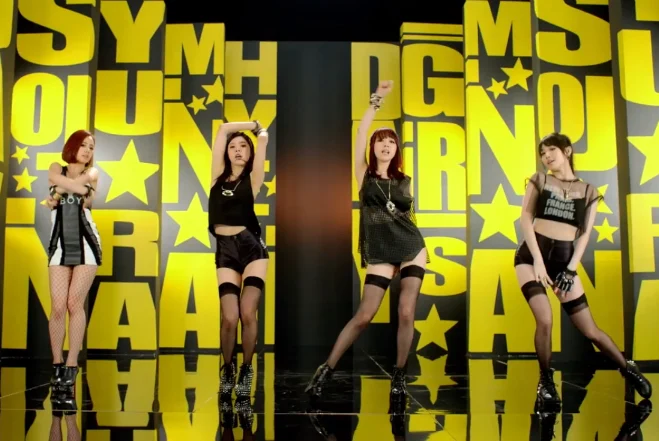
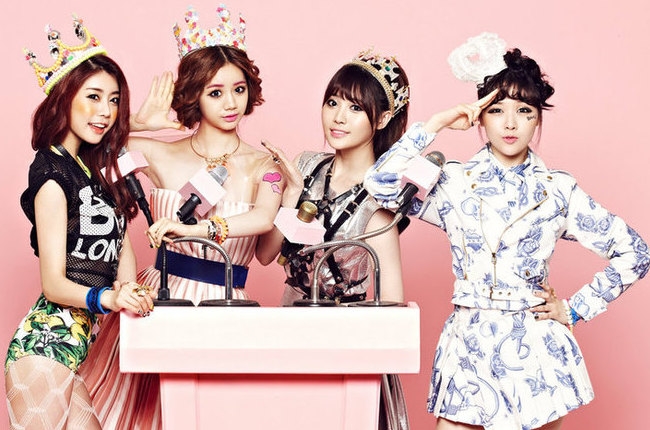
The intersection of popular culture and national politics reached a unique zenith in South Korea during the first half of 2013, as the K-pop industry sought to capitalize on the historic election of Park Geun-hye. Following the December 2012 presidential election, in which Park Geun-hye of the conservative New Frontier Party (Saenuri Party) secured a narrow victory, South Korea inaugurated its first female head of state. This milestone was viewed by many as a potential watershed moment for a nation long criticized for its rigid patriarchal structures and significant gender disparities. In June 2013, the K-pop quartet Girl’s Day released their repackaged album featuring the lead single "Female President." While the track’s title and promotional imagery suggested a bold foray into feminist discourse, the resulting cultural product offered a complex and often contradictory look at how female empowerment is commodified within the Korean entertainment industry.
The Political Backdrop: The Rise of Park Geun-hye
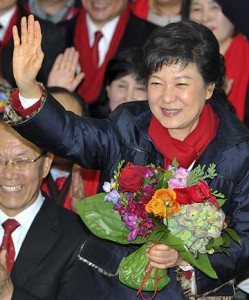
The election of Park Geun-hye was a polarizing event in South Korean history. As the daughter of the late military dictator Park Chung-hee, her candidacy carried the weight of a complicated legacy. To her supporters, she represented a return to the economic stability and discipline of her father’s era; to her detractors, she was a symbol of dynastic politics and the lingering influence of an authoritarian past. Despite these controversies, her ascent to the Blue House (CheongWaDae) was objectively revolutionary in the context of South Korean social hierarchy.
At the time of her inauguration in February 2013, South Korea ranked consistently low in global gender equality indices. For instance, the World Economic Forum’s Global Gender Gap Report frequently placed South Korea near the bottom among OECD nations. The "glass ceiling" in the corporate world was exceptionally thick, and the gender wage gap was the highest in the developed world. Park’s victory was thus framed by international media as a sign that South Korea was ready to confront its gender biases. However, critics argued that Park’s brand of "motherly leadership" did little to address systemic inequalities, focusing instead on traditional family values rather than radical policy shifts in women’s rights.
Chronology of the "Female President" Release
The release of "Female President" followed a specific timeline designed to maximize the group’s rising popularity following their previous hit, "Expectation."
- December 19, 2012: Park Geun-hye wins the 18th presidential election with 51.6% of the vote.
- February 25, 2013: Park Geun-hye is officially inaugurated as President of South Korea.
- March 2013: Girl’s Day releases "Expectation," marking a significant shift from their "cute" image to a more "sexy" and mature concept.
- June 20, 2013: Dream Tea Entertainment begins releasing teasers for "Female President," utilizing patriotic imagery and bold, military-inspired aesthetics.
- June 24, 2013: The music video and single for "Female President" are officially released, coinciding with a high-profile showcase that featured the members performing in a pool, a move that generated significant media buzz.
Socio-Economic Realities for Women in 2013
To understand the critique of Girl’s Day’s "Female President," one must examine the socio-economic data of the period. In 2013, the gender wage gap in South Korea stood at approximately 36.6%, meaning women earned nearly 40% less than their male counterparts. Furthermore, the labor force participation rate for women was significantly lower than for men, particularly in the 30–39 age bracket, a phenomenon known as the "M-curve," where women leave the workforce to raise children and struggle to return to equivalent positions later.
Legal hurdles also remained prevalent. In 2013, abortion was largely illegal in South Korea, with exceptions only for cases of rape, incest, or when the mother’s health was in grave danger. This lack of reproductive autonomy stood in stark contrast to the image of a powerful female president leading the nation. When Girl’s Day utilized the title "Female President," there was an unspoken expectation among social commentators that the song might touch upon these burgeoning demands for systemic change.
The Disconnect Between Title and Content
The primary critique of "Female President" lies in the disconnect between its grandiose title and its lyrical focus. The song does not address legislative power, economic independence, or social reform. Instead, it uses the existence of a female president as a rhetorical justification for a woman to initiate a kiss with a man. The lyrics suggest that since a woman has reached the highest office in the land, it is no longer "a problem" for a woman to be the first to express romantic interest.
The chorus emphasizes this limited scope: "The president of our country is now a woman / So what’s the problem? Why can’t a girl do it first?" This framing suggests that the pinnacle of female empowerment is found within the confines of traditional romantic pursuit. By reducing the significance of a female head of state to the level of dating etiquette, the song arguably trivializes the political milestone it purports to celebrate.
Furthermore, the lyrics contain internal contradictions. While the verses encourage women to be bold, other lines describe the female protagonist as feeling "like a baby" or being "unable to open her eyes" in the presence of her love interest. This reliance on the "damsel" trope undermines the assertive message the title implies, reinforcing the idea that a woman’s value is ultimately tied to her relationship with a man.
Visual Representation and the "Male Gaze"
The music video for "Female President" further complicates its message of empowerment. Directed with a focus on high-contrast visuals and provocative choreography, the video features the members in outfits that were deemed controversial at the time of release. One particular set of costumes—flesh-toned, skin-tight bodysuits—led to a public debate regarding the sexualization of the members under the guise of "girl power."
A notable scene in the video involves members Minah and Hyeri, with Hyeri dressed in masculine-coded attire (a suit and short hair) and Minah in a feminine gown. The two engage in a near-kiss, a visual choice that was widely interpreted as "queerbaiting"—using the aesthetic of same-sex romance to generate shock value and attract the male gaze, rather than to provide genuine representation. In this context, the "empowerment" portrayed is performative, designed to fit within the established marketing strategies of the K-pop industry rather than to challenge social norms.
Industry and Public Reaction
The reaction to "Female President" was mixed. Commercially, the song was a success, reaching the top ten on the Gaon Digital Chart and helping Girl’s Day secure their first-ever music show win on SBS’s Inkigayo. The win was an emotional milestone for the group, who had struggled for years to find their footing in a crowded market.
However, cultural critics were less enthusiastic. Many noted that the song felt like a missed opportunity. In an era where "girl crush" concepts were beginning to take root—pioneered by groups like 2NE1 and Brown Eyed Girls—"Female President" felt like a regressive step that used the language of feminism to sell a traditional "sexy" concept. Some commentators argued that the song’s release was a cynical attempt to ride the coattails of President Park’s popularity without engaging with the actual difficulties faced by Korean women.
Broader Implications and Legacy
The legacy of "Female President" serves as a case study in the commercialization of social movements. It highlights a recurring theme in K-pop where political or social symbols are stripped of their weight to be used as aesthetic "concepts." While the song did not spark a feminist revolution, it did inadvertently highlight the absurdity of the gendered expectations placed on women in South Korea. By suggesting that it took a female president for a woman to feel comfortable initiating a kiss, the song underscored just how restrictive the social climate remained.
Years later, the political landscape would shift dramatically. Park Geun-hye’s presidency ended in impeachment and imprisonment following a massive corruption scandal in 2017, an event that led to a resurgence of grassroots activism in South Korea, including the "Escape the Corset" movement and a more robust feminist discourse. In this new context, "Female President" remains a curious relic of a time when the nation was grappling with the symbolic vs. the substantive meaning of gender equality.
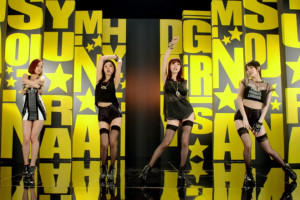
In conclusion, while "Female President" provided Girl’s Day with the commercial momentum they needed to join the ranks of top-tier girl groups, it failed to provide any meaningful contribution to the discourse on women’s rights. It remains an example of how the entertainment industry can mirror political milestones while simultaneously hollowing them of their transformative potential. For a true "watershed" in women’s rights, South Korea would eventually look not to K-pop anthems, but to the legislative changes and social movements that followed the tumultuous end of the very presidency the song sought to celebrate.