BTS Redefines Longevity and Identity in Apple Music Interview Discussing the Cultural Legacy of Arirang and Their Collective Future
Article Editorial Team
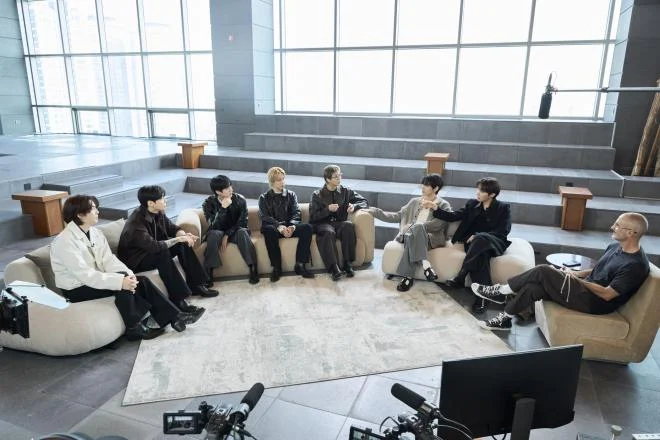
The global music landscape shifted significantly when BTS, the South Korean septet that has come to define the modern era of pop culture, sat down for an extensive and introspective interview with Apple Music’s Zane Lowe. This conversation, occurring at a pivotal juncture in the group’s storied career, transcended the typical promotional cycle for a new album. Instead, it served as a profound meditation on the nature of time, the evolution of identity, and the intentionality required to sustain a collective unit in an industry characterized by rapid turnover and fleeting success. Rather than offering grand declarations of permanence, the members—RM, Jin, SUGA, j-hope, Jimin, V, and Jung Kook—presented a grounded perspective on their future, suggesting that their longevity is not a predetermined guarantee but a continuous, conscious choice.
The Philosophy of Permanence as a Practiced Effort
At the heart of the discussion was the philosophical question of whether a group of BTS’s magnitude can truly last "forever." The members’ responses revealed a mature understanding of their reality, eschewing idealistic clichés for a more nuanced truth. Jin, the eldest member, provided a foundation of honesty by noting that while nothing in the physical world is truly permanent, the lack of a guarantee does not render the effort toward preservation meaningless. He suggested that the value of their connection lies in the care invested in maintaining it, implying that "forever" is a destination reached through daily dedication rather than a fixed state of being.
This sentiment was echoed by j-hope, who addressed the inherent uncertainty of the future. He articulated that longevity exists in the space between a promise and a possibility, shaped entirely by shared will. If the seven members remain in agreement to move forward together, the form of the group remains intact. V further simplified this philosophy, noting that staying together is less about making monumental public declarations and more about the consistent, quiet effort of showing up for one another over decades. SUGA, often the most pragmatic voice in the group, envisioned a future where the members continue to create music into their senior years, not out of contractual obligation but out of a genuine desire to communicate through their art. Collectively, their perspectives framed their future as a "practiced" reality—a deliberate construction rather than an accidental byproduct of success.
A Chronology of Transition: From Hiatus to Reunion
To understand the weight of this interview, one must look at the timeline of BTS’s "Chapter 2," a period defined by individual growth and the fulfillment of mandatory national duties. In June 2022, during their annual "Festa" celebration, the group announced a temporary pause in collective activities to focus on solo projects and prepare for South Korea’s compulsory military service. This period was not a disbandment but a strategic evolution.
Between late 2022 and 2024, each member released solo material that explored their distinct musical identities. Jin released "The Astronaut," RM debuted "Indigo," j-hope explored darker themes in "Jack in the Box," SUGA toured globally as Agust D with "D-Day," Jimin reached the top of the Billboard Hot 100 with "FACE," V showcased his jazz influences in "Layover," and Jung Kook achieved massive global success with "GOLDEN."
The military enlistment cycle began with Jin in December 2022, followed by j-hope in April 2023, and SUGA in September 2023. The remaining four members—RM, Jimin, V, and Jung Kook—enlisted simultaneously in December 2023. This synchronized timeline was a strategic decision intended to minimize the group’s total time away from the spotlight, ensuring a full-group reunion by late 2025 or early 2026. Jung Kook noted in the interview that returning to the group after this period felt remarkably natural. For him, the group is a "default state," and the reunion was not a dramatic shift but a continuation of a narrative that had never truly paused.
The Cultural Weight of Arirang: Rooting the Future in Heritage
A significant portion of the interview focused on the group’s new creative direction, specifically their engagement with the concept of "Arirang." The folk song "Arirang" is often considered the unofficial national anthem of Korea, a melody that encapsulates the sentiment of Han—a uniquely Korean emotional state involving longing, sorrow, and resilience. For BTS, choosing this as a thematic anchor for their new era was a deeply symbolic move.
RM explained that during their time in the military, the themes of "Arirang"—longing for home, for loved ones, and for a sense of belonging—became personally resonant. Distance from the stage and their global fanbase, known as ARMY, allowed the members to reflect on their roots. By reinterpreting "Arirang" within a modern pop context, BTS is attempting to bridge the gap between traditional Korean identity and a globalized audience. This move signifies a shift from being mere "idols" to becoming cultural ambassadors who utilize their heritage to tell universal stories of human connection. The choice of "Arirang" suggests that their new chapter is not just about commercial success but about deepening the cultural substance of their discography.

Leadership and the Evolution of Group Dynamics
As the leader of the group, RM provided insight into the complexities of guiding a global phenomenon for fifteen years. He described the evolution of their relationship from a team to a family, where communication often happens through unspoken understanding. However, he was candid about the "weight of the crown." Leadership, according to RM, involves a delicate balance between carrying the responsibility of the group’s direction and maintaining his own sense of belonging as one of the seven members.
This dynamic is further complicated by the group’s transition from a small-scale operation to a pillar of a multi-billion dollar corporation. Reflecting on their early days at Big Hit Entertainment (now HYBE), RM recalled a time when the staff was small enough to share every responsibility. Today, BTS is the engine of a global conglomerate, yet the members expressed a desire to remain grounded in the same work ethic that defined their trainee days. This internal stability is crucial, as the group’s influence now extends into the realms of economics and diplomacy, with their reunion expected to have a significant impact on South Korea’s "soft power" and tourism sectors.
Technical Expansion and Global Collaborations
The interview also touched upon the group’s technical growth. Jung Kook spoke about the experience of working with international producers such as El Guincho, known for his work with Rosalía. This collaboration introduced the group to new musical textures and rhythmic approaches that challenged their existing creative boundaries. The pressure to "do justice" to these new sounds served as a catalyst for growth, preventing the group from becoming stagnant in their established success.
This willingness to experiment is a hallmark of BTS’s longevity strategy. Rather than replicating the "Dynamite" or "Butter" formulas, they are leaning into diverse genres and complex themes. This creative expansion ensures that they remain relevant in a shifting musical landscape where listener preferences are increasingly fragmented.
Broader Impact and the Legacy of the Fan-Artist Relationship
Perhaps the most poignant aspect of the interview was the members’ reflection on their fans. BTS’s rise coincided with the maturation of a generation. RM noted that many fans who started as students are now adults navigating the complexities of careers, marriages, and parenthood. This parallel growth has transformed the fan-artist relationship from one of idolization to one of mutual evolution.
The economic implications of BTS’s return cannot be overstated. Analysts estimate that BTS contributes over $3.6 billion annually to the South Korean economy. Their concerts and merchandise sales are significant drivers for HYBE’s revenue, but more importantly, their presence serves as a primary vehicle for the global "Hallyu" (Korean Wave). The interview with Zane Lowe confirms that the group is fully aware of this responsibility but chooses to prioritize the emotional and artistic integrity of their work over purely financial metrics.
Conclusion: A New Era Defined by Choice
In the final moments of the interview, the consensus was clear: BTS is entering a new chapter defined not by what they must do, but by what they choose to do. The decision to continue as a group did not require extensive debate or negotiation; it was an unspoken alignment of seven individuals who recognize that what they have built is irreplaceable.
By rejecting the pressure of "forever" and instead focusing on the "now," BTS has created a more sustainable model for long-term success in the music industry. They have demonstrated that a group can survive the pressures of global fame, the challenges of mandatory service, and the desire for individual expression by maintaining a core of mutual respect and shared vision. As they prepare for their upcoming world tour and the release of their new projects, BTS stands as a testament to the idea that the strongest legacies are built by those who decide, every single day, to stay. The interview with Zane Lowe was not just a look back at where they have been, but a confident, quiet step toward a future they are building on their own terms.
Related News