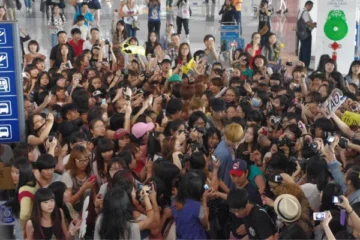
The Struggles and Resilience of the Global K-pop International Fan Diaspora
Article Editorial Team

The rise of South Korean popular music, globally recognized as K-pop, has cultivated an international fan diaspora that transcends geographical, linguistic, and cultural boundaries. This community, often referred to as "i-fans," is bound by a shared affinity for the genre’s high-production music videos, intricate choreography, and idol-fan engagement models. Despite the unifying power of digital technology, which allows a fan in the rural United States to connect instantaneously with a peer in Indonesia, the international experience is often defined by a unique set of challenges. These obstacles range from linguistic barriers and regional exclusion to the social stigma associated with consuming foreign-language media. As K-pop evolves into a multi-billion-dollar global industry, understanding the plight of the international consumer is essential to analyzing the genre’s long-term sustainability and cultural impact.
The Linguistic Barrier and the Crisis of Translation
For the international fan, the primary obstacle to engagement is the language gap. While music is often cited as a universal language, the secondary content that fuels K-pop fandom—variety shows, behind-the-scenes vlogs, and live-streamed interviews—requires specific linguistic comprehension. When a K-pop idol group releases new content, international fans frequently encounter a "translation vacuum." Official subtitles are often delayed or entirely absent, forcing the community to rely on "fan-subbers"—volunteers who spend hours translating and timing subtitles for the benefit of the global community.

This reliance on unofficial channels creates a precarious ecosystem. Fans often navigate unauthorized hosting sites to view translated content, only to face the frustration of copyright takedowns. The Digital Millennium Copyright Act (DMCA) and other intellectual property protections frequently result in the deletion of subbed videos, leaving non-Korean speakers in a state of "false hope." In many instances, fans are forced to watch content without understanding the dialogue, relying on visual cues and the aesthetic appeal of the performers to maintain engagement. This phenomenon highlights a significant disparity in the consumer experience between domestic Korean fans and the global audience.
Socio-Cultural Stigma and the Challenge of "Initiation"
The international K-pop fan frequently operates within a social environment that is either indifferent or overtly hostile to their interests. One of the most prevalent challenges is the "uninitiated" gaze—the reaction of peers who are unfamiliar with K-pop’s aesthetic norms. K-pop often utilizes a "flower boy" (kkotminam) aesthetic, which emphasizes soft features, makeup, and androgynous fashion for male idols. This frequently leads to awkward social interactions for international fans, particularly when displaying idols on phone wallpapers or social media profiles.
The case of Ren from the group NU’EST serves as a historical benchmark for this cultural friction. Known for his striking, gender-fluid appearance during his early career, Ren often prompted bewilderment from Western observers, leading to repetitive and often intrusive questions regarding his gender. For the international fan, defending their taste involves a constant process of cultural education, explaining that beauty standards in East Asia may differ significantly from Western constructs of masculinity.

Furthermore, the "initiation" process—attempting to introduce friends to K-pop—often meets with resistance. While seminal works like Big Bang’s "Fantastic Baby" or Super Junior’s "Sorry Sorry" are regarded as masterpieces within the fandom, they can be overwhelming to the uninitiated. The high-saturation visuals and synchronized dancing are sometimes perceived as "too much" or "seizure-inducing" by those accustomed to the more minimalist or individualistic performances typical of Western pop music.
Geographic Exclusion: The "World Tour" Paradox
Despite the "global" branding of many K-pop agencies, the geographical distribution of live performances remains highly concentrated. For many international fans, their home countries are treated as unreachable territories, often jokingly compared to the "Land of Oz." A standard "World Tour" in the K-pop industry typically includes stops in Seoul, Tokyo, Los Angeles, New York, and perhaps a few major European capitals like Paris or London. This leaves vast regions, including South America, Africa, Southeast Asia, and the Middle East, largely underserved.
The financial and logistical reality for fans in these excluded regions is one of digital participation only. Their experience is limited to "shaky fancams" and 1080p live streams. This creates a sense of "digital citizenship" where the fan is part of the movement but physically isolated from the core experience. This geographic exclusion is not merely a matter of distance but also of market priority, as agencies often prioritize regions with higher per-capita spending or more established music distribution infrastructures.

The Complexity of Nomenclature and Branding
K-pop branding often utilizes English to create a global appeal, but the execution can lead to linguistic confusion for native English speakers. The industry is known for its creative, and often convoluted, use of acronyms. For example, the group Teen Top’s name is an acronym for "Teenager EmoBoys Emoticon Next Generation Talent Object Praise." While such names may sound trendy in a Korean linguistic context, they require extensive explanation when presented to an international audience.
Similarly, group names like SHINee or T-ara require phonetic clarification (pronounced "shiny" and "tiara"). The international fan often finds themselves acting as a volunteer PR representative, clarifying these naming conventions to skeptical peers. This linguistic friction extends to "Engrish"—the use of awkwardly phrased English lyrics. While lines such as "You zoom zoom my heart like a rocket" or "Cola cola cola so fantastic" are catchy and iconic within the fandom, they often fail to meet the grammatical standards of native speakers, creating another layer of "cringe" that fans must navigate or embrace.
Data and Economic Impact of the International Diaspora
The importance of the international fan cannot be understated when looking at the economic data. According to reports from the Korea Customs Service, K-pop album exports reached a record high of nearly $300 million in 2023, with the United States, Japan, and China being the top markets. However, emerging markets in Southeast Asia and Europe are showing the fastest growth rates.

Data from social media platforms further illustrates this dominance. Twitter (now X) has consistently reported that K-pop is one of the most discussed topics globally, with billions of tweets generated annually. This digital footprint is what drives the stock prices of the "Big Four" agencies—HYBE, SM Entertainment, YG Entertainment, and JYP Entertainment. The international fan is not just a consumer; they are a digital laborer who boosts streaming numbers, trends hashtags, and participates in "mass buying" events to ensure their favorite groups chart on the Billboard 200.
Cultural Dissociation and Social Repression
A more profound, psychological challenge for the international fan is the sense of cultural dissociation. As fans immerse themselves in Korean media, they often find themselves more attuned to the Top 10 hits in Seoul than the music playing in their local grocery stores. This "Hallyu" immersion can lead to a state where one’s own local culture feels foreign.
Furthermore, the act of "fangirling" or "fanboying" in public is often met with social repression. In many societies, the outward expression of intense enthusiasm for a foreign-language pop group is viewed as immature or "obsessive." Fans often find themselves repressing their excitement in public spaces to avoid "cold glares" from the general public. This social pressure forces the fandom into private digital spaces, where they can express themselves without fear of judgment.

Broader Implications and the Future of the Industry
The struggles of the international K-pop fan highlight a broader shift in global media consumption. We are moving toward a "de-centered" cultural world where the United States is no longer the sole exporter of popular culture. However, the infrastructure of the K-pop industry has yet to fully catch up with its global reach.
To maintain this momentum, Korean entertainment agencies must address the "pain points" of the international diaspora. This includes:
- Standardizing Professional Translations: Ensuring that all content is released with multi-language subtitles simultaneously.
- Expanding Tour Circuits: Utilizing data to identify underserved regions with high fan density, such as Brazil, Mexico, and Indonesia.
- Cultural Sensitivity: Moving beyond the "Engrish" trope toward more meaningful cross-cultural lyrical collaborations.
The international fan diaspora is a vital organ of the K-pop machine. They are the ambassadors who spread the "beacon of joy" to the furthest corners of the world, building bridges between distant nations. While their journey is marked by "lost translations" and geographic isolation, their resilience has turned K-pop from a regional niche into a global phenomenon. As the industry continues to mature, the voices of these fans will likely become the primary driver of how K-pop is produced, marketed, and consumed on the world stage.
Related News