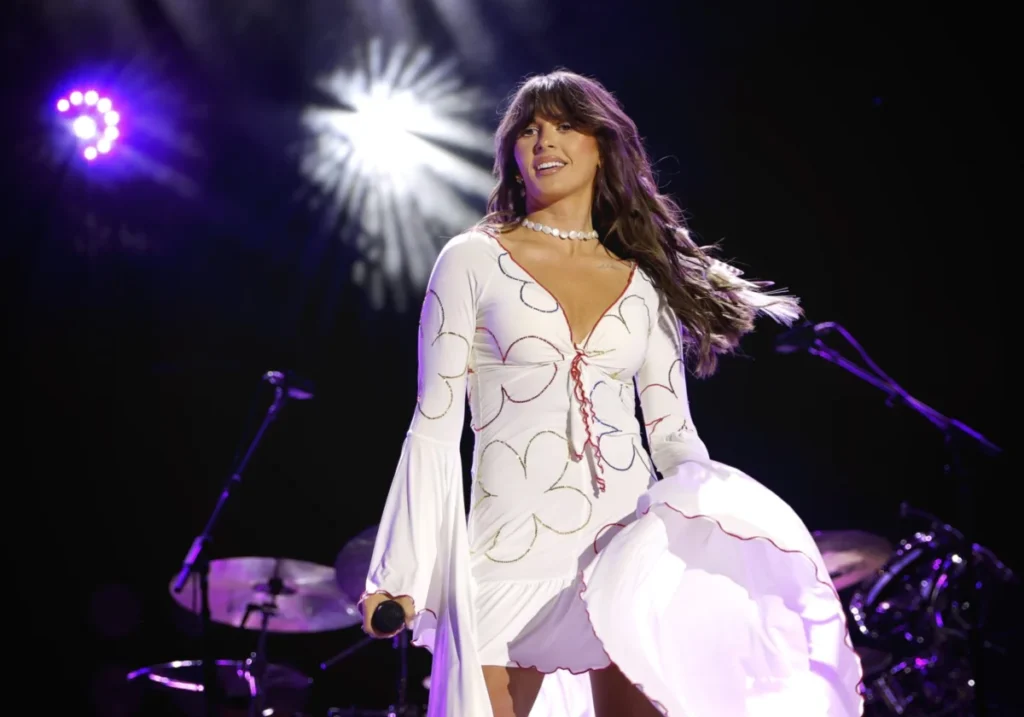
The music industry and chart enthusiasts alike are buzzing with astonishment and, in some corners, outright disbelief following Ella Langley’s country hit "Choosin’ Texas" achieving an unprecedented 24 weeks at the No. 1 position on the Billboard Hot 100. This remarkable feat has shattered previous records and sparked widespread discussion about the evolving landscape of popular music and the mechanics of chart dominance in the modern era.
The initial reaction from many observers has been one of surprise, largely because "Choosin’ Texas" does not fit the traditional mold of a quintessential, chart-topping megahit designed for such enduring success. Unlike historical record-holders that often featured superstar collaborations, elaborate promotional campaigns, and meticulously crafted narratives, Langley’s track emerged as a more organic, perhaps even unassuming, contender. Its ascent to the apex of the Billboard Hot 100 was not heralded by immediate, industry-wide predictions of historic proportions. Instead, it was a gradual, tenacious climb that defied conventional expectations.
Early markers of potential were present. Langley, a rising star in the country music scene, had already established herself as a capable hitmaker. Her prior singles, such as "You Look Like You Love Me" which peaked at No. 30 on the Hot 100, and other similarly successful tracks, indicated a growing fanbase and a growing presence on mainstream charts. The initial success of "Choosin’ Texas," therefore, was not entirely out of the blue. However, its sustained presence and eventual record-breaking reign were far from predictable.
The song itself possesses undeniable qualities of a strong country track: a memorable title, a compelling chorus, and relatable lyrics delivered with conviction by Langley. Its production, described as a nod to past eras without being overtly retro, coupled with a melody that flows smoothly, contributes to its broad appeal. Yet, the trajectory of "Choosin’ Texas" has been anything but linear, marked by moments where its chart run appeared to be faltering.
A Chart Journey Defined by Resilience
The path to 24 weeks at No. 1 was punctuated by several near misses and moments of uncertainty. As early as December of the previous year, after peaking at No. 11, the song dipped to No. 27, seemingly caught in the annual surge of holiday music. Many observers at the time believed its opportunity to even reach the top 10 had passed. However, following the holiday season, "Choosin’ Texas" rebounded, ultimately reaching the No. 1 spot on February 14. This period was intensely competitive, with the track in a tight race against other strong contenders. The imminent releases and performances by major artists like Bad Bunny and Taylor Swift threatened to overshadow its ascent, yet it persevered.
Further challenges arose in the late spring and throughout June, when "Choosin’ Texas" temporarily ceded the top spot to new releases from global superstars Drake, Ariana Grande, and Taylor Swift. Each of these instances appeared to signal the potential end of its dominant run. Had the song faded at any of these junctures, it would still have been recognized as a significant breakthrough for Ella Langley and a major country hit of the year. However, in each instance, it demonstrated a remarkable ability to return to prominence, often without overt, large-scale promotional pushes. This consistent resurgence, against the backdrop of a constantly shifting musical landscape, has propelled it into the annals of Hot 100 history.
The Evolving Billboard Charts: A New Era of Longevity
Understanding the unprecedented success of "Choosin’ Texas" requires an examination of the significant transformations within the Billboard charts, particularly the Hot 100, over the past decade. If this song had been released twenty, or even ten, years prior, its sustained dominance would have been virtually unimaginable. This is not a reflection of the song’s quality in different eras, but rather a testament to how the charts themselves have evolved.
One of the most striking changes is the dramatic increase in the presence of country music on the Hot 100. For much of the 21st century, the No. 1 spot on the Hot 100 was largely inaccessible to country artists. Between the year 2000, when Lonestar’s "Amazed" topped the chart, and 2023, only two country songs managed to reach No. 1, both by Taylor Swift and with significant pop crossover appeal. However, the streaming era has fundamentally reshaped this dynamic. The rise of massive country stars like Morgan Wallen and Zach Bryan, coupled with the genre’s gradual infiltration of top 40 radio, has significantly elevated its chart ceiling. This shift is evidenced by the fact that a staggering 11 of the 32 songs in Billboard history to top both the Hot 100 and the Hot Country Songs charts have done so since 2023. Earlier this year, the Hot 100’s entire top five was comprised of country songs for the first time ever.
Beyond the genre’s increased visibility, the most significant factor contributing to the longevity of hits like "Choosin’ Texas" is the dramatic slowdown in chart turnover, particularly at the upper echelons. This phenomenon is attributed to several converging forces. Major radio stations have increasingly narrowed their playlists and maintained them with greater staticity. Simultaneously, the shift in streaming consumption from curated playlists to algorithmic personalization and autoplay means that songs are being discovered and sustained organically over longer periods. Consequently, artists, labels, and tastemakers possess diminished power to rapidly redirect public listening habits.
This sustained presence is reflected in the composition of the Hot 100’s top tier. The week "Choosin’ Texas" set the record for most weeks at No. 1, eight of the top 10 songs had already spent double-digit weeks in that region. This indicates a market where established hits maintain their positions for extended durations, with fewer new songs rapidly breaking through. The cultural fragmentation of pop music, the competition from catalog hits, and the splintering of audiences on platforms like TikTok have contributed to a scarcity of breakout hits. As a result, the top of the charts is increasingly populated by debuts from established artists and the enduring popularity of previously released tracks.
The trend towards longer-running hits is evident in the recent history of the No. 1 record. For over two decades, Mariah Carey and Boyz II Men’s "One Sweet Day" held the record with 16 weeks at No. 1. This benchmark was first tied by Luis Fonsi, Daddy Yankee, and Justin Bieber’s "Despacito" in 2017, and then surpassed by Lil Nas X and Billy Ray Cyrus’s "Old Town Road" in 2019 with 19 weeks. More recently, Shaboozey matched this with "A Bar Song (Tipsy)" in 2024, and Mariah Carey’s "All I Want for Christmas Is You" achieved 22 weeks. Langley’s 24-week run means that a record that stood for over 21 years has now been tied or surpassed five times in the past decade, underscoring the altered dynamics of chart performance.
The Organic Appeal of "Choosin’ Texas"
While the evolving chart landscape provided fertile ground, the question remains: why "Choosin’ Texas" specifically? The song’s success can be attributed to a combination of intrinsic qualities and organic momentum. Its lyrical content, while not overtly political, centers on a romantic entanglement, with the choice of Texas stemming from a personal relationship rather than an ideological statement. The song’s melody is universally appealing, and Langley’s performance is convincing and relatable.
Its pop sensibility, with a sound that evokes the early 1980s when the lines between country and pop were blurred, has allowed it to resonate beyond traditional country audiences. Furthermore, its gently melancholic vibe and mid-tempo energy make it a natural fit for diverse streaming playlists, allowing it to coexist seamlessly with artists from various genres.
Crucially, "Choosin’ Texas" benefited from narrative momentum. Viral rumors of a real-life love triangle involving Langley, fellow artist Riley Green, and Megan Moroney, circulated widely on social media platforms like TikTok. Although none of the artists involved confirmed a romantic relationship or a breakup inspiring the song, the speculation itself fueled public interest and increased the song’s exposure. This fan-driven narrative, coupled with Langley’s own appeals to her fanbase to help "make country music history," contributed to its initial surge to No. 1 in February.
Sustained Performance and Unconventional Promotion
What distinguishes "Choosin’ Texas" from many other record-breaking hits is its relatively understated promotional strategy. Unlike the highly active and multifaceted campaigns seen with songs like "Old Town Road," Langley has maintained a more hands-off approach. While she has engaged with platforms like TikTok and delivered notable live performances, the promotional efforts have not been overtly aggressive or continuous. The official music video premiered in April, during the song’s early weeks at No. 1, and there have been no significant subsequent promotional developments such as new remixes or extensive social media campaigns. Even during her ACM Awards win in May, she performed a different song, "Be Her."
Instead, the song’s continued success has been driven by remarkably consistent streaming numbers. From February to late September, "Choosin’ Texas" has consistently garnered between 20 and 30 million streams weekly, demonstrating sustained listener engagement. This endurance surpasses that of some other recent record-holders.
Even more remarkably, its radio airplay numbers have continued to grow. While the song has enjoyed robust airplay throughout the year, its total audience figures have increased significantly, reaching new peaks. Its presence on the Pop Airplay chart, where it only reached the top 10 in mid-August, signifies ongoing growth and cross-format appeal nearly a year after its initial release. The third component of the Hot 100 formula, digital song sales, has also played a role. "Choosin’ Texas" has topped the Digital Song Sales chart for a record-setting 19 weeks, indicating consistent demand even in a market where digital sales have declined.
The absence of a concentrated period of overwhelming cultural ubiquity, as seen with "Despacito" or "Old Town Road," may have paradoxically aided "Choosin’ Texas"’s long-term chart endurance. Instead of burning brightly and fading, it has maintained a steady, pervasive presence, consistently attracting new listeners without overwhelming the cultural conversation.
The Dissonance and Backlash: Navigating Cultural Divides
The record-breaking success of "Choosin’ Texas" has, for many who were not previously familiar with the song or artist, generated significant surprise and, in some cases, vocal opposition. This reaction stems from a complex interplay of factors, including a fragmented media landscape, distrust in data, and deeply entrenched cultural divides.
The perception of country music among certain segments of the pop-listening public remains a significant point of contention. Despite the genre’s increasing mainstream success and crossover appeal, it is still often dismissed as musically unappealing or associated with a particular political leaning. This perception is exacerbated by instances where country songs have been actively promoted by conservative figures for their perceived ideological alignment, leading to their No. 1 status.
Ella Langley, through her associations, has become entangled in these broader cultural discussions. Her performances at Kid Rock’s "Rock the Country" festival and her duet with Morgan Wallen, an artist who has faced public controversy, have led some to associate her success with a "conservative silent majority." A New York Times headline, "The Rural Vibe Shift Is Real," suggested that "lots of people are choosing Texas" in the cultural contest between different American ideologies.
However, such interpretations are often reductive and fail to acknowledge the song’s broader appeal. "Choosin’ Texas" itself is lyrically devoid of political messaging, and its popularity extends to traditionally liberal strongholds like Los Angeles, Philadelphia, and Seattle, as evidenced by city-specific streaming charts. Furthermore, prominent artists from diverse genres, including indie rockers and rappers, have offered their own interpretations of the song, demonstrating its cross-genre resonance.
Moreover, the success of female artists in country music has historically been challenging, especially in the streaming era, where male artists have largely dominated chart performance. Langley’s ability to achieve massive success while maintaining her country identity challenges the gendered hierarchy within Nashville. Her achievement, alongside other female country artists like Megan Moroney, highlights a growing, albeit contested, space for women in the genre’s upper echelons.
A Comparative Look: Shaboozey and the Shifting Tides of Chart Dominance
The discourse surrounding Langley’s record-breaking run has been notably more contentious than that surrounding Shaboozey’s 19-week No. 1 with "A Bar Song (Tipsy)" in 2024. Several factors may explain this difference. Shaboozey, a Black artist who blended genres and emerged from a hip-hop background, may have been perceived as a less direct challenge to established norms compared to Langley’s association with mainstream country. His success, following Lil Nas X’s genre-bending phenomenon, might have felt more like a continuation of a recognized trend rather than a disruption of a perceived status quo.
Furthermore, the period during which Shaboozey’s song achieved its dominance was marked by a highly charged and eventful popular culture landscape, including major music releases, celebrity feuds, and significant political events. This packed environment may have diluted the focus on any single chart record. In contrast, Langley’s achievement during a comparatively less saturated period has drawn more concentrated attention and scrutiny.
The expectations for what constitutes a "major pop hit" have also shifted. While listeners may reflexively anticipate the cultural impact of songs like "Old Town Road" or the star power behind "One Sweet Day," the reality of modern chart success often involves slower-burn, consistent performers like "Choosin’ Texas" and Teddy Swims’ "Lose Control." These songs achieve significant chart longevity through broad appeal across streaming and radio, without necessarily achieving overwhelming cultural ubiquity or making their artists overnight global superstars.
Conclusion: The Disconnect and the Future of Chart Success
Ultimately, the intense reaction to Ella Langley’s record-breaking achievement on the Billboard Hot 100 appears to stem from a broader disconnect between the public’s perception of popular music and its evolving reality. For many, the idea that a song they haven’t heard by an artist they don’t know can become the biggest hit of all time is jarring. This sentiment may reflect a feeling that the landscape of popular music has shifted away from their personal engagement, leaving them feeling disconnected from what is currently dominating the charts.
The surprise and anger expressed by some listeners are understandable. The music industry, and specifically the way hits are made and sustained, has undergone profound changes. The traditional markers of a chart-topping phenomenon have been redefined by streaming, algorithmic influence, and the shifting dynamics of radio airplay. As the industry continues to evolve, it is plausible that similar discussions and debates will arise around future record-breaking hits by artists who may not fit the preconceived notions of chart dominance. The enduring success of "Choosin’ Texas" serves as a potent reminder that in the contemporary music landscape, the path to the top can be as surprising and unconventional as the destination itself.