
The 18th presidential election of South Korea, held on December 19, 2012, marked a definitive turning point in the nation’s democratic history with the victory of Park Geun-hye. Representing the conservative Saenuri Party, Park secured 51.6% of the vote, narrowly defeating her opponent, Moon Jae-in of the Democratic United Party. This victory was not merely a shift in administration but a symbolic milestone, as Park became the first female head of state in a country historically characterized by deeply entrenched patriarchal structures. In June 2013, six months into Park’s term, the K-pop quartet Girl’s Day released their repackaged album featuring the lead single "Female President." The song attempted to capitalize on the national zeitgeist of female leadership, yet it simultaneously ignited a debate regarding the depth of gender empowerment in South Korean popular culture and the stark reality of the socio-economic challenges facing women in the country.
The Political Landscape of the Park Geun-hye Era
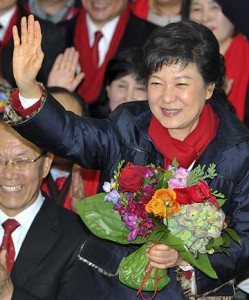
The election of Park Geun-hye was viewed through a dual lens of progress and legacy. As the daughter of former President Park Chung-hee, who ruled South Korea from 1961 to 1979, her candidacy was inextricably linked to her father’s complex history of rapid economic development and authoritarianism. While her supporters saw her as a steady hand capable of revitalizing the economy, her detractors argued that her rise was a product of political inheritance rather than a grassroots victory for women’s rights.
Despite the controversy surrounding her lineage, the presence of a woman in CheongWaDae (the Blue House) was objectively revolutionary. For many, it signaled a "watershed moment" for gender equality. However, the political reality remained complex. Park’s administration faced immediate pressure to address systemic issues, including the "glass ceiling" in corporate environments and the widening gender wage gap. During this period, South Korea consistently ranked at the bottom of the OECD’s Gender Wage Gap index, with women earning approximately 36% to 39% less than their male counterparts—a disparity significantly higher than the OECD average of 15%.
Chronology of the "Female President" Release
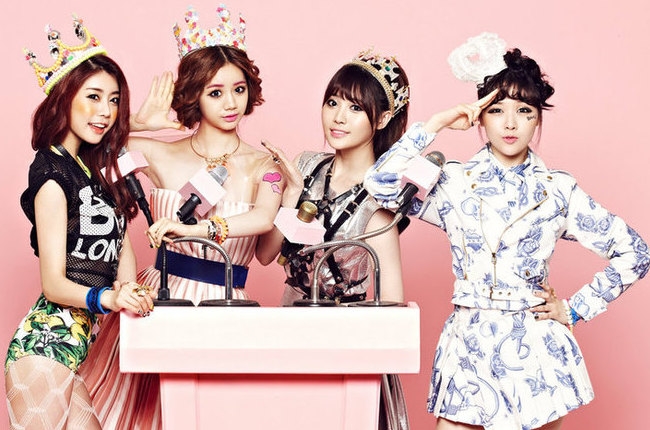
Following the success of their hit single "Expectation" in early 2013, Girl’s Day—comprising members Sojin, Yura, Minah, and Hyeri—sought to solidify their position among the elite "second generation" of K-pop girl groups. On June 24, 2013, the group released "Female President" as the title track of their first repackaged album. The timing of the release was widely interpreted as a direct reference to the incumbent president.
The promotional rollout for the song was intensive, featuring high-concept teasers that promised a bold, empowered image. This was a significant departure from the group’s earlier "aegyo" (cute) concepts, such as "Twinkle Twinkle" and "Hug Me Once." The group’s agency, Dream T Entertainment, positioned the comeback as a celebration of modern womanhood, using the backdrop of South Korea’s changing political hierarchy to market a more assertive brand of femininity.
Analyzing the "Female President" Narrative and Aesthetics
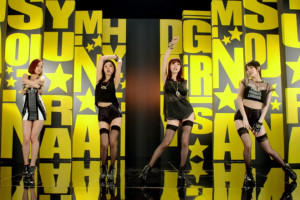
The music video for "Female President" utilized several visual tropes intended to signify power and subversion. One of the most discussed elements was the portrayal of a romantic dynamic between member Minah and an androgynous, suit-clad version of member Hyeri. The video culminates in a scene where Minah pulls Hyeri toward her by the tie, hinting at a kiss—a move designed to shock the conservative Korean public and demonstrate a reversal of traditional gender roles in courtship.
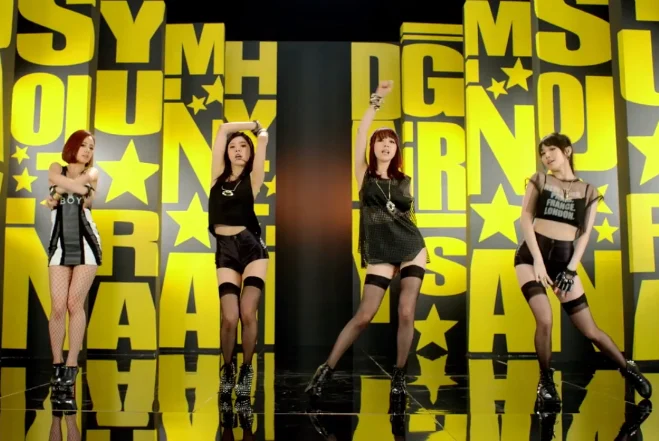
However, the visual messaging was met with criticism regarding its consistency. Critics pointed out that while the song’s title evoked political power, the choreography and styling remained heavily catered to the male gaze. The group performed in skin-toned, form-fitting outfits that created an illusion of nudity, a stylistic choice that some argued undermined the "empowerment" theme. Furthermore, the video included standard K-pop tropes, such as luxury vehicles and bedroom settings, which lacked a clear connection to the theme of leadership or social change.
Supporting Data: The Reality of Gender Equality in 2013
To understand the critique of "Female President," one must examine the statistical landscape of South Korea during the 2012–2013 period. While the country celebrated its first female president, other metrics told a different story:
- Labor Force Participation: According to the World Bank, the female labor force participation rate in South Korea was approximately 50.2% in 2013, significantly lower than the male rate of 73.2%.
- The Glass Ceiling Index: In 2013, The Economist ranked South Korea last among 26 OECD countries in its "Glass Ceiling Index," which measures the chances of a woman receiving equal treatment at work.
- Education vs. Employment: South Korean women held some of the highest rates of tertiary education in the world, yet the "M-curve" phenomenon persisted, where women would drop out of the workforce in their late 20s and 30s due to marriage and childbirth, often failing to return to high-level positions.
- Reproductive Rights: At the time of the song’s release, abortion remained illegal in South Korea under the Criminal Act of 1953, except in cases of rape, incest, or severe health risk to the mother. This legal framework was a central point of contention for women’s rights activists who argued that true empowerment was impossible without bodily autonomy.
Disconnect Between Pop Culture and Social Progress
The primary critique of "Female President" was the perceived trivialization of the term "empowerment." The lyrics of the song do not address policy, economic independence, or structural sexism. Instead, the core message focuses on the "bravery" required for a woman to initiate a kiss or express romantic interest first. The chorus states, "The president of our country is now a woman / So what’s the problem? Why can’t you do it? / Why can’t a girl kiss first?"
Social commentators argued that this rhetoric framed female agency solely within the context of romantic relationships with men. By using the election of a female head of state as a justification for minor shifts in dating etiquette, the song was seen by some as a missed opportunity to address the more pressing barriers to gender equality. The "watershed" of the presidency was reduced to a marketing hook, highlighting a recurring trend in the K-pop industry where political or social movements are "sanitized" for commercial consumption.
Official Responses and Public Reception
The public response to "Female President" was polarized. On domestic music charts, the song was a commercial success, reaching the top ten on the Gaon Digital Chart and earning Girl’s Day their first music show win on SBS’s Inkigayo. Fans praised the group’s charisma and the high-energy production of the track, which blended electronic dance elements with rock-inspired guitar riffs.
However, the "kiss scene" between Minah and Hyeri drew scrutiny from the Korea Communications Standards Commission (KCSC), which at the time maintained strict guidelines regarding the portrayal of same-sex intimacy and "provocative" choreography. While the group avoided formal sanctions, the controversy ensured that the song remained a topic of debate in both entertainment and social circles.
Members of the group addressed the concept in various interviews, stating that they wanted to show a "cool and confident" side that matched the changing times. They acknowledged the influence of President Park Geun-hye’s election but emphasized that their primary goal was to provide an uplifting anthem for their female fans.
Broader Impact and Long-term Implications
In the years following the release of "Female President," the intersection of K-pop and feminism evolved significantly. The 2016 "Gangnam Station murder" and the subsequent rise of the "Megalian" and "Escape the Corset" movements in South Korea forced the entertainment industry to engage more seriously with gender issues. Groups that debuted later, such as MAMAMOO or (G)I-DLE, began to incorporate more nuanced themes of self-love and independence that moved beyond the "first kiss" narrative.
The presidency of Park Geun-hye itself ended in 2017 following a massive corruption scandal and her subsequent impeachment. This political downfall led to a reassessment of her legacy as a female leader. For many activists, her tenure proved that having a woman in power did not automatically translate to an improvement in the lives of ordinary women, as many of the structural inequalities identified in 2013 remained unresolved at the end of her term.
"Female President" remains a fascinating artifact of a specific moment in South Korean history. It represents the point where the K-pop industry first attempted to grapple with the optics of high-level female leadership. While the song’s lyrical content may have lacked the depth to spark a true social revolution, its existence highlighted the growing tension between traditional values and the aspirations of a new generation of South Korean women. The song serves as a reminder that cultural representation, while important, is often a separate entity from the legislative and economic changes required to achieve true gender parity.