Girl’s Day and the Political Symbolism of Female President: A Critical Analysis of Empowerment in South Korean Popular Culture
Article Editorial Team
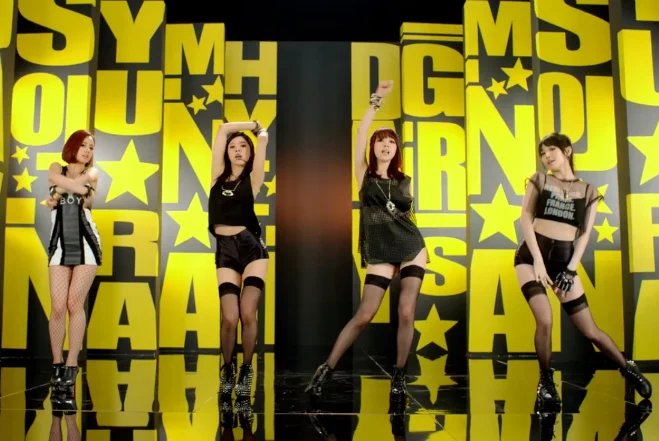
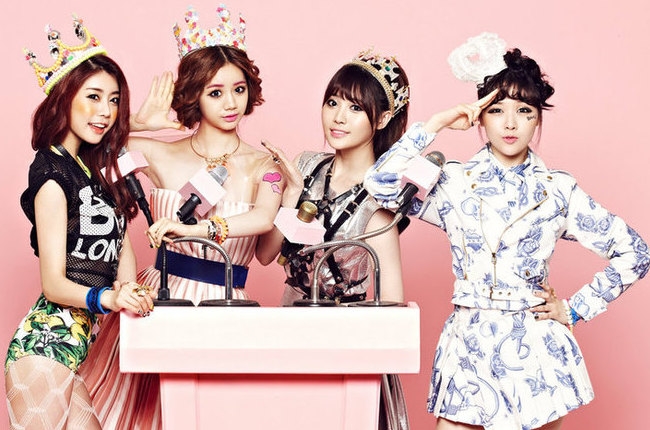
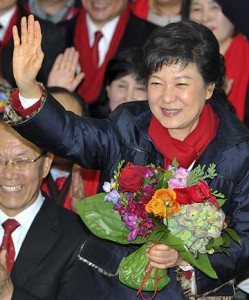
The election of Park Geun-hye as the 11th President of South Korea in December 2012 marked a historic shift in the nation’s political landscape, signaling the arrival of the country’s first female head of state. Representing the conservative Saenuri Party—formerly the Grand National Party—Park secured her victory by a narrow margin, a feat that was viewed by many as a revolutionary milestone for a society traditionally rooted in Confucian patriarchal values. However, her presidency was immediately shadowed by the complex legacy of her father, the late military leader Park Chung-hee, leading to intense debate regarding whether her ascension represented a genuine advancement for women or a continuation of dynastic political influence. Against this backdrop of political transition, the K-pop industry sought to capitalize on the cultural zeitgeist, most notably through the June 2013 release of the single "Female President" by the four-member girl group Girl’s Day.
While the track was marketed as an anthem of female empowerment, its reception highlighted a significant disconnect between symbolic political representation and the lived socio-economic realities of women in South Korea. The song’s central premise—that the election of a female president should embolden women to take the lead in romantic pursuits—raised critical questions about the depth of "girl power" concepts within the Korean music industry. To understand the implications of this cultural moment, it is necessary to examine the intersection of South Korea’s gender politics, the evolution of Girl’s Day as a commercial entity, and the broader structural challenges facing women in the Republic of Korea.
The Political Context: Park Geun-hye and the Glass Ceiling
Park Geun-hye’s inauguration on February 25, 2013, was met with international scrutiny. As the first female leader in Northeast Asia, her presidency was theoretically a "watershed moment" for gender equality. Yet, the circumstances of her rise were unique. As the daughter of Park Chung-hee, who ruled South Korea from 1961 until his assassination in 1979, Park Geun-hye was often viewed through the lens of her family history. The opposition Democratic United Party frequently argued that her political capital was inherited rather than earned through a feminist platform.
During her campaign, Park utilized the slogan "The Prepared Female President," promising a "new era of hope." However, her brand of leadership did not necessarily align with progressive feminist goals. Her administration emphasized "creative economy" and national security, often sidelining specific policies aimed at dismantling the structural barriers that placed South Korea at the bottom of various international gender equality indices. For many observers, the existence of a female president was a powerful symbol that lacked a corresponding mandate for radical social reform.
Chronology of the "Female President" Release
The timeline of the song’s release and its subsequent impact on Girl’s Day’s career reflects a strategic attempt to align pop culture with national events:
- December 19, 2012: Park Geun-hye is elected as the first female president of South Korea.
- February 25, 2013: Park is officially inaugurated, sparking nationwide discussion on the role of women in leadership.
- March 2013: Girl’s Day releases "Expectation," a track that signaled a shift from their previous "cute" image to a more mature, "sexy" concept. This transition proved successful, significantly raising the group’s profile.
- April 2013: Member Hyeri’s relationship with veteran idol Tony Ahn (of H.O.T.) becomes public, generating substantial media attention for the group.
- June 24, 2013: Girl’s Day releases the repackaged album and title track "Female President."
- July 2013: The song earns the group their first-ever music show win on SBS Inkigayo, though the broadcast was canceled due to a breaking news report, leading to the trophy being awarded later.
Analyzing the "Empowerment" Narrative in Popular Media
The lyrics of "Female President" ostensibly celebrate the progress of women. The chorus asks, "The president of our country is now a woman / So what’s the problem? Why can’t you do it? / Why is the girl doing it first a crime?" On the surface, this suggests a call for women to break traditional social taboos. However, the scope of this "empowerment" is strictly confined to the domestic and romantic spheres. The song argues that because a woman can lead a nation, a woman should also be able to initiate a kiss or confess her feelings to a man first.
Critics have noted that this framing reduces a major political achievement to a tool for romantic negotiation. The "empowerment" offered is reactive; it defines a woman’s agency solely in relation to her pursuit of a male partner. Furthermore, the music video’s imagery often contradicts the message of strength. Despite the "presidential" theme, the choreography and styling—including the controversial "nude-tone" outfits and skin-tight silhouettes—adhere strictly to the "sexy" trope designed for the male gaze. The video features a sub-plot involving members Minah and Hyeri, with the latter dressed in a masculine suit, culminating in a near-kiss intended to provoke "shock value" rather than explore genuine gender fluidity or queer identity.
Supporting Data: The Reality of Gender Inequality in South Korea
The discrepancy between the triumphant tone of "Female President" and the actual status of women in South Korea is supported by historical data from the period. In 2013, South Korea’s gender metrics were among the most lopsided in the industrialized world:
- Gender Wage Gap: According to OECD data from 2013, South Korea possessed the highest gender wage gap among member nations, standing at approximately 36.3%. This meant women earned nearly 40% less than their male counterparts for similar work.
- Labor Force Participation: While South Korean women are among the most highly educated in the world, the "M-curve" phenomenon remained prevalent. This trend shows a sharp drop in female labor participation in their late 20s and 30s due to marriage and childbirth, with many women unable to return to the workforce in equivalent positions.
- Political Representation: Despite having a female president, women held only 15.7% of the seats in the 19th National Assembly (2012–2016).
- Legal Restrictions: In 2013, abortion remained illegal in South Korea except in cases of rape, incest, or threat to the mother’s health—a law that feminist groups argued was a fundamental violation of bodily autonomy, yet it was not a priority for the Park administration.
These statistics suggest that the "watershed" moment celebrated by Girl’s Day was largely symbolic. The ability to "kiss a man first" was a negligible freedom compared to the systemic economic and legal hurdles facing the average South Korean woman.
Industry and Official Responses
The K-pop industry’s response to "Female President" was largely characterized by a focus on commercial performance rather than social discourse. Management agencies in 2013 were increasingly leaning into "sexy" concepts to differentiate groups in a saturated market. Groups like Sistar, After School, and AOA were all participating in this trend, where "empowerment" became a marketing buzzword used to justify provocative imagery.
Social commentators and feminist bloggers in Korea expressed mixed reactions. While some appreciated the visibility of the "female president" concept in pop culture, others viewed it as a "disgraceful execution" of a potent idea. The consensus among critics was that the song utilized the image of the presidency as a gimmick to sell a conventional "sexy" comeback. There were no official statements from the Blue House regarding the song, as the administration typically maintained a distance from specific idol group releases, despite their role in the "Hallyu" (Korean Wave) cultural export strategy.
Broader Impact and Long-term Implications
The legacy of "Female President" serves as a case study in the limitations of "commodity feminism"—a phenomenon where feminist ideas are distilled into consumable products that do not challenge the status-quo. For Girl’s Day, the song was a pivotal success that solidified their status as a top-tier girl group, proving that controversial or "edgy" titles could generate the necessary "noise marketing" to dominate digital charts.
However, the long-term social impact was minimal. The presidency of Park Geun-hye eventually ended in 2017 with her impeachment and removal from office following a massive corruption scandal, an event that further complicated the narrative of female leadership in South Korea. The downfall of the nation’s first female president led to a period of intense polarization and, arguably, a setback for women in politics, as her failures were occasionally unfairly attributed to her gender by detractors.
In the years following the release of "Female President," the South Korean feminist movement evolved significantly, moving away from the shallow "girl power" tropes of the early 2010s toward more militant and organized activism, such as the "Escape the Corset" movement and the "Me Too" movement. These later movements addressed the very issues—digital sex crimes, workplace discrimination, and reproductive rights—that the 2013 pop landscape had largely ignored.
Ultimately, Girl’s Day’s "Female President" remains a cultural artifact of a specific era: a time when South Korea was grappling with the novelty of a female leader while remaining firmly entrenched in traditional patriarchal structures. The song’s failure to address substantive issues reflected a broader societal hesitation to move beyond symbolism toward genuine structural change. While it provided a catchy hook for music shows, it offered no roadmap for the "revolutionary" change it purported to celebrate.
Related News