Girl’s Day Female President and the Sociopolitical Implications of South Korea’s First Woman in the Blue House
Article Editorial Team
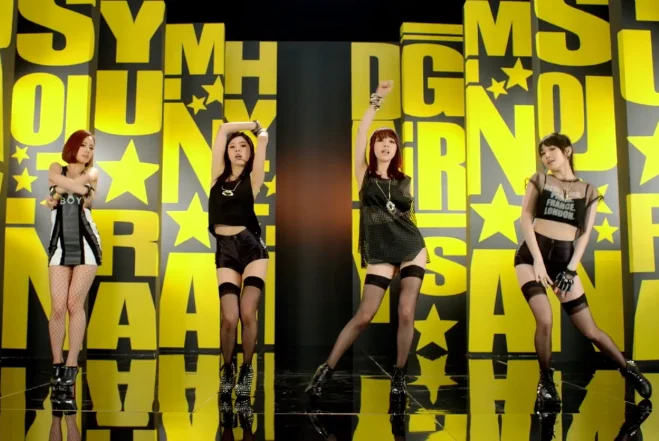
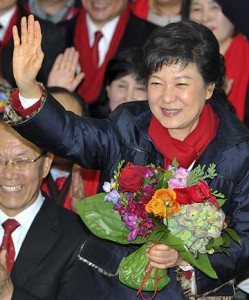
The transition of power in South Korea between late 2012 and mid-2013 marked a significant juncture in the nation’s democratic history, characterized by the inauguration of Park Geun-hye as the first female president of the Republic of Korea. Representing the conservative Saenuri Party, Park’s narrow victory in the December 2012 election was framed by many as a potential "watershed moment" for gender equality in a country historically defined by deeply entrenched patriarchal structures. This political milestone coincided with a shifting landscape in the Korean pop music industry, exemplified by the June 2013 release of "Female President" by the K-pop quartet Girl’s Day. The song and its accompanying music video attempted to capitalize on the national zeitgeist, though its execution prompted a broader discussion regarding the intersection of political symbolism, commercial interests, and the reality of women’s rights in South Korea.
The Political Context: The Rise of Park Geun-hye
Park Geun-hye’s ascent to the presidency was a complex narrative of legacy and modern political strategy. As the daughter of Park Chung-hee—the military leader who governed South Korea from 1961 until his assassination in 1979—her candidacy was inextricably linked to the "Miracle on the Han River," a period of rapid economic growth overseen by her father. While supporters revered the elder Park for lifting the nation out of poverty, critics viewed his era as a dark period of authoritarianism and human rights abuses.
During the 2012 presidential campaign, the opposition Democratic United Party (Minju Party) frequently alleged that Park Geun-hye was utilizing her father’s political ghost to secure votes among the older, conservative demographic. Despite these controversies, Park campaigned on a platform of "economic democratization" and "social trust." Her victory, secured with 51.6% of the vote, made her the first female head of state in modern Northeast Asian history. To international observers, her presence in CheongWaDae (the Blue House) suggested that South Korea was ready to confront its long-standing gender disparities.
Chronology of the "Female President" Release
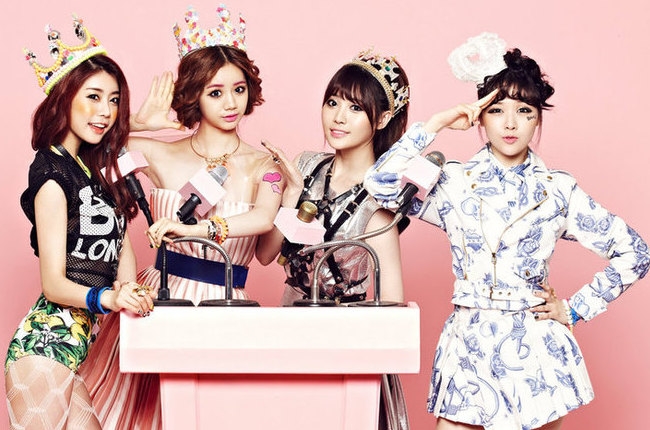
The timeline of the song’s release suggests a calculated effort by Dream Tea Entertainment, the management agency for Girl’s Day, to align the group’s brand with the new political reality.
- December 19, 2012: Park Geun-hye wins the 18th presidential election.
- February 25, 2013: Park Geun-hye is officially inaugurated as President.
- March 2013: Girl’s Day releases "Expectation," a song that marked their transition from a "cute" concept to a more mature, "sexy" image. The song becomes a massive hit, elevating the group’s status.
- June 24, 2013: Girl’s Day releases the repackaged album Female President. The title track is marketed as a "girl power" anthem, explicitly referencing the fact that the nation now has a female leader.
- July 2013: The song reaches the top of the Gaon Digital Chart, cementing Girl’s Day as a top-tier girl group, though the video faces scrutiny for its styling and themes.
Analyzing the Pop Culture Response: A Missed Opportunity?
The song "Female President" opens with a direct acknowledgement of the political climate: "The president of our country is now a woman / So what’s the problem? Why can’t a girl do it?" However, as the track progresses, the lyrics pivot away from systemic empowerment toward interpersonal relationship dynamics. The primary "revolution" advocated by the song is the suggestion that women should feel comfortable initiating a kiss or expressing romantic interest before a man does.
Journalistic analysis of the lyrics reveals a stark contrast between the gravity of the title and the simplicity of the message. While the chorus encourages boldness, the verses frequently describe the female protagonist as feeling "dizzy," "nervous," and "like a baby" in the presence of a male love interest. This dichotomy suggests that while the industry was willing to use the imagery of political power, it remained hesitant to move beyond traditional tropes of female vulnerability and domesticity.
The music video further complicated this message. It featured high-gloss production, including a notable scene where member Minah pulls member Hyeri (dressed in an androgynous, suit-clad role) in for a near-kiss. While some viewed this as a daring subversion of gender roles, others argued it was a "queerbaiting" tactic designed to generate headlines rather than advocate for LGBTQ+ or feminist progress.
Supporting Data: The Reality of Gender Equality in 2013
To understand why the song’s message was viewed as superficial by some critics, one must examine the statistical reality of women in South Korea during the first year of the Park administration. Despite having a woman at the helm of the government, South Korea’s metrics for gender equality remained among the lowest in the developed world.
- Gender Wage Gap: According to 2013 OECD data, South Korea possessed the largest gender wage gap among member nations, with women earning approximately 36.3% less than their male counterparts. This was significantly higher than the OECD average of roughly 15%.
- Labor Force Participation: While South Korean women are among the most highly educated in the world, the 2013 labor force participation rate for women aged 15-64 was approximately 55%, compared to over 75% for men. This "M-curve" phenomenon—where women leave the workforce in their 30s due to childcare and return later in low-paying roles—remained a structural barrier.
- Political Representation: Even with a female president, women held only 15.7% of the seats in the 19th National Assembly (2012–2016).
- Reproductive Rights: In 2013, abortion remained illegal in South Korea except in cases of rape, incest, or severe health risks to the mother, a law that would not be overturned until a constitutional court ruling in 2019.
These figures illustrate a disconnect: the "Female President" was a symbolic victory, but the legislative and social changes required to achieve parity were largely absent from the national discourse and, by extension, from the pop culture that claimed to represent it.
Industry Reactions and Public Perception
The reaction to "Female President" was divided. Within the K-pop industry, the song was viewed as a marketing triumph. It successfully transitioned Girl’s Day from a struggling mid-tier group to a household name. The "sexy" concept—characterized by the controversial "nude-tone" outfits and the "fox tail" choreography—was a staple of the 2013 K-pop era, where groups like AOA and Rainbow were also shifting toward more provocative imagery to capture the male-dominated "fanboy" demographic.
However, cultural critics and feminist scholars in Seoul offered a more nuanced critique. Many noted that the song’s "empowerment" was framed entirely through the lens of the male gaze. The "boldness" of the woman was not directed toward achieving career success or social reform, but toward securing a boyfriend.
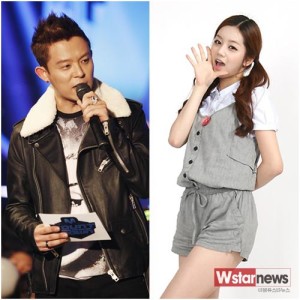
In various fan forums and social media platforms, the response was similarly split. International fans often praised the group for their confidence and the "catchy" nature of the song. Conversely, domestic commentators questioned the appropriateness of using the presidential office as a prop for a dance track, particularly given the polarizing nature of Park Geun-hye’s actual policies.
Broader Impact and Long-term Implications
The legacy of "Female President" serves as a case study in how pop culture sanitizes political movements for commercial consumption. By reducing the concept of a female presidency to a "dating tip," the song arguably undermined the gravity of the glass ceiling that Park Geun-hye had shattered.
Furthermore, the Park presidency itself did not result in a significant advancement for women’s rights. Her administration was eventually overshadowed by the 2016 political scandal involving her confidante Choi Soon-sil, leading to her impeachment and removal from office in 2017. This downfall led to a temporary backlash against female leadership in some conservative circles, with critics unfairly citing her gender as a factor in her administrative failures.
In the years following 2013, the K-pop industry began to see a shift. The "Escape the Corset" movement and a rising tide of feminism in South Korea led to the emergence of "girl crush" concepts that focused more on internal strength and female solidarity than on romantic pursuit. Groups like MAMAMOO, BLACKPINK, and (G)I-DLE began to navigate empowerment in ways that felt more aligned with the genuine frustrations of the younger female generation.
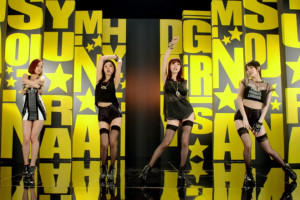
Ultimately, "Female President" remains a artifact of its time—a moment when South Korea was grappling with a new identity. It reflected a society that was comfortable with the symbol of a powerful woman but remained deeply conflicted about the reality of female agency outside of traditional romantic and social structures. While Girl’s Day achieved commercial success with the release, the "watershed" for gender equality that the title hinted at would require much more than a change in romantic etiquette; it would require the very systemic overhauls that the song chose to ignore.
Related News