Girl’s Day’s Female President and the Intersection of K-pop Politics and Gender Rights in South Korea
Article Editorial Team
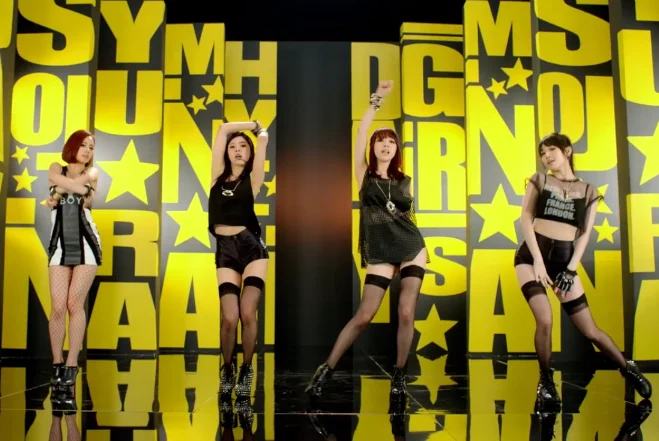
The years 2012 and 2013 marked a transformative era in the political and cultural history of the Republic of Korea, characterized by the ascension of the nation’s first female head of state and a subsequent wave of cultural responses within the Hallyu industry. In December 2012, Park Geun-hye, a veteran representative of the conservative Saenuri Party (New Frontier Party), secured the presidency by a narrow margin. Her victory was viewed globally as a landmark event for a nation historically rooted in Confucian patriarchal values. However, the intersection of this political milestone with the hyper-commercialized world of K-pop produced complex results, most notably exemplified by the girl group Girl’s Day and their 2013 single, "Female President." While the song sought to capitalize on the zeitgeist of female leadership, it ultimately sparked a broader debate regarding the depth of gender empowerment in South Korean popular culture and the stark realities facing women in the workforce and society.
The Political Ascent of Park Geun-hye
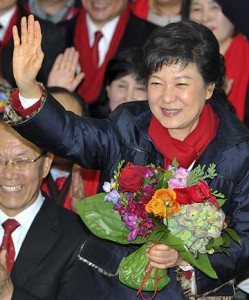
Park Geun-hye’s journey to the Blue House (Cheong Wa Dae) was steeped in both prestige and controversy. As the daughter of Park Chung-hee, the military strongman who ruled South Korea from 1961 to 1979, her candidacy was viewed through a polarized lens. Supporters credited her father’s era with the "Miracle on the Han River," the rapid economic development that transformed South Korea from a war-torn agrarian society into a global industrial power. Conversely, critics and the opposition Democratic United Party (Minju Party) pointed to the human rights abuses and suppression of democracy during her father’s regime, accusing Park Geun-hye of leveraging a dynastic legacy rather than individual merit.
Despite these divisions, Park’s inauguration on February 25, 2013, was a symbolic breakthrough. For many, the sight of a woman holding the highest office in the land suggested a "watershed moment" for gender equality. In a country that consistently ranked at the bottom of the Organization for Economic Cooperation and Development (OECD) regarding gender parity, the presence of a female president was expected to catalyze legislative and social shifts in favor of women’s rights.
Girl’s Day and the "Female President" Rebranding
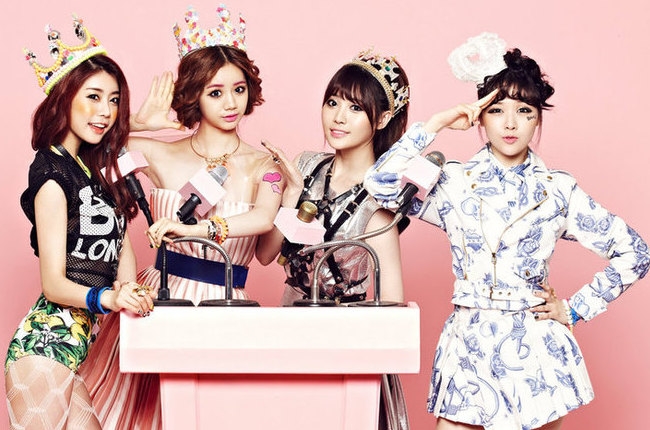
In the wake of this political shift, the K-pop industry—known for its agility in reflecting and monetizing social trends—attempted to incorporate themes of "girl power." Girl’s Day, a group that had debuted in 2010 and struggled to find a definitive identity among "tier-one" acts like Girls’ Generation or 2NE1, underwent a significant image overhaul in 2013. Following the success of their provocative hit "Expectation," the group released "Female President" on June 24, 2013.
The song was marketed as an anthem of empowerment, explicitly referencing the national news. The lyrics and music video were designed to capture the attention of a public still acclimating to the idea of female authority. However, the promotional strategy relied heavily on the "sexy concept" trend that dominated the K-pop landscape at the time. This created an immediate tension between the song’s titular message of leadership and its visual presentation, which focused on the members’ physical appeal to a predominantly male demographic.
Lyrical Analysis: Political Metaphor vs. Romantic Agency
The central critique of "Female President" lies in the disconnect between its title and its lyrical content. While the title suggests a commentary on social progress or the breaking of glass ceilings, the lyrics narrow the scope of "empowerment" to the domestic and romantic sphere. The song’s primary hook asks why women should wait for men to take the lead in dating: "The president of our country is now a woman / So why are you so worried? / Why are you so shy? / Can’t a woman kiss a man first?"
From a journalistic and sociological perspective, this framing reduces the gravity of a female presidency to a justification for minor shifts in dating etiquette. The song suggests that because a woman has reached the pinnacle of political power, it is now socially acceptable for a woman to be more assertive in her pursuit of a boyfriend. Critics argued that this was a missed opportunity to address the systemic barriers that Park Geun-hye’s election was supposed to challenge. Instead of celebrating financial independence, professional achievement, or legal rights, the "empowerment" presented by Girl’s Day remained tethered to the approval and presence of a male counterpart.
The Socio-Economic Reality: Data on Gender Inequality
To understand the criticism leveled against the song’s superficiality, one must examine the data regarding the status of women in South Korea during the 2012-2013 period. Despite the symbolic victory of a female president, the structural reality remained grim:
- The Gender Wage Gap: In 2013, South Korea maintained the largest gender wage gap among OECD nations, a position it has held for decades. Women earned approximately 36% to 39% less than their male counterparts for similar work.
- Labor Force Participation: While South Korean women are among the most highly educated in the world, their participation in the labor market follows an "M-curve." This indicates that women often drop out of the workforce in their late 20s and 30s due to marriage and childbirth, frequently finding it impossible to return to high-level career tracks due to institutionalized sexism and a lack of childcare support.
- Legal Restrictions: At the time of the song’s release, abortion remained a criminal offense in South Korea under the 1953 Criminal Code, with very few exceptions. It was not until 2019 that the Constitutional Court ruled the ban unconstitutional, leading to decriminalization in 2021.
- Corporate Representation: In 2013, women held less than 2% of board seats in South Korea’s top 100 companies, highlighting the "glass ceiling" that remained largely untouched by the presence of a woman in the Blue House.
Visual Controversy and Production Choices
The music video for "Female President" further complicated its message of empowerment. Directed with a focus on high-contrast aesthetics and provocative choreography, the video featured the members in "nude-illusion" body suits and utilized camera angles that prioritized the male gaze. One specific scene involved a "kiss" between members Minah and Hyeri (who was dressed in an androgynous suit). While some international fans interpreted this as a nod to LGBTQ+ visibility or a subversion of gender roles, domestic critics largely viewed it as a "shock factor" tactic intended to generate headlines and digital views.
Furthermore, the styling and choreography were seen as contradictory to the theme of leadership. While the song claimed women were "bosses," the visual narrative often depicted the members in submissive or hyper-sexualized poses. This paradox is common in the K-pop industry, where "girl crush" or "empowerment" concepts are often filtered through a commercial lens that must remain palatable to a conservative domestic market and a male-dominated fan culture.
Industry and Public Response
The reception of "Female President" was a mixture of commercial success and critical skepticism. The song performed well on digital charts, peaking in the top ten of the Gaon Digital Chart, and earned Girl’s Day their first music show win on SBS’s Inkigayo. This victory was a milestone for the group, propelling them into the upper echelon of K-pop girl groups for the remainder of the mid-2010s.
However, social commentators and feminist bloggers in South Korea pointed out the irony of the timing. The Saenuri Party, under President Park, was often criticized for its conservative stance on social welfare and its failure to implement aggressive policies to close the gender gap. By using the president as a backdrop for a pop song, Girl’s Day and their management, Dream Tea Entertainment, were accused of "pinkwashing"—using the veneer of feminism to sell a product that did nothing to challenge the status quo.
Broader Implications and Cultural Impact
The "Female President" era serves as a case study in how popular culture interacts with political reality. It demonstrated that while a political event can provide a "hook" for cultural production, the transition from symbolism to substantive social change is often lost in translation. For Girl’s Day, the song was a successful marketing tool that solidified their fame; for the South Korean public, it was a reminder of the vast distance between having a female leader and achieving gender equality.
In the years following the release, the narrative surrounding Park Geun-hye herself took a dramatic turn, culminating in her 2017 impeachment and removal from office following a massive corruption scandal involving Choi Soon-sil. This downfall added a layer of historical irony to the song, as the "Female President" it referenced became a symbol of political failure rather than a beacon of progress.
Ultimately, the discourse surrounding "Female President" highlights the limitations of "commodity feminism" within the music industry. While the song encouraged women to "kiss men first," the more pressing issues of the era—equal pay, reproductive rights, and professional advancement—remained outside the purview of the K-pop idol system. The song remains a significant artifact of 2013, representing a moment when South Korea was grappling with its identity as a modern democracy led by a woman, while still being deeply entrenched in traditional gender hierarchies.
Related News