

The landscape of the international music industry experienced a significant paradigm shift on November 3, 2013, as the South Korean girl group Girls’ Generation was announced as the winner of the Video of the Year award at the inaugural YouTube Music Awards (YTMA). Held at Pier 36 in New York City, the event was designed to celebrate the artists and videos that turned the video-sharing platform into a global powerhouse of music discovery. By securing the night’s most prestigious honor for their hit single "I Got a Boy," Girls’ Generation did more than just accept a trophy; they provided empirical evidence of the growing dominance of K-pop in the digital age and the unprecedented mobilization capabilities of international fanbases.
The victory was particularly notable given the caliber of the competition. Girls’ Generation, represented at the ceremony by member Tiffany Hwang, emerged victorious over a field of nominees that included some of the most prominent names in Western pop music. The shortlist featured Justin Bieber ("As Long As You Love Me"), Miley Cyrus ("We Can’t Stop"), Lady Gaga ("Applause"), One Direction ("Best Song Ever"), Macklemore & Ryan Lewis ("Thrift Shop"), Selena Gomez ("Come & Get It"), Demi Lovato ("Heart Attack"), and fellow Korean artist Psy ("Gentleman"). The win placed the nine-member ensemble under a bright international spotlight, echoing the cultural ripples created by Psy’s "Gangnam Style" the previous year, yet representing a more traditional idol-group model of Korean entertainment.
The Mechanics of a Digital Victory
The YouTube Music Awards differed from traditional ceremonies like the Grammys or the MTV Video Music Awards by utilizing a metric-based selection process centered on user engagement. The winners were determined by the frequency and speed with which videos were shared across social media platforms, including Twitter, Facebook, and Google+. This criteria favored artists with highly active, digitally savvy fanbases rather than those who relied solely on radio airplay or traditional record sales.
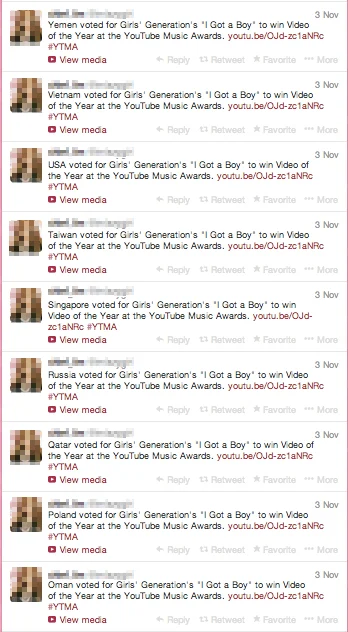
According to internal data and observations of the voting period, the "I Got a Boy" music video demonstrated a unique trajectory of viral dissemination. Unlike many Western hits that experience a steady climb, K-pop releases often benefit from a concentrated burst of activity driven by organized fan efforts. For Girls’ Generation, the voting process became a showcase of systematic team effort. Fans, known collectively as "SONEs," coordinated "relay sessions" to ensure that voting activity remained constant 24 hours a day. By dividing responsibilities based on time zones, the fandom maintained a continuous stream of shares and mentions, effectively gaming the algorithmic requirements of the YouTube platform.
Reports from social media tracking during the voting window indicated that fans utilized multiple accounts and devices to maximize their impact. This level of organization is a hallmark of the K-pop industry, where the relationship between the artist and the consumer is characterized by a high degree of interactive loyalty. The result was a digital "flood" that ensured Girls’ Generation’s metrics remained untouchable by even the most established American superstars.
Chronology of the "I Got a Boy" Phenomenon
To understand the weight of this win, one must look at the timeline of the "I Got a Boy" release and its subsequent impact.
- January 1, 2013: Girls’ Generation released "I Got a Boy," the title track of their fourth Korean-language studio album. The song was noted for its experimental structure, blending various genres including electropop, hip-hop, and rock.
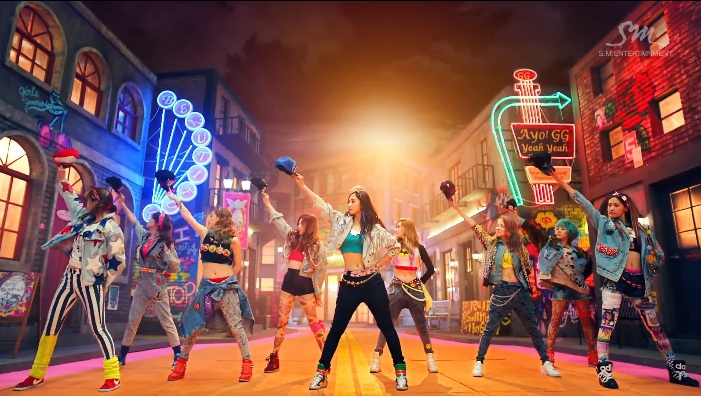
- January 2013: The music video achieved 10 million views in just 55 hours, a record-breaking feat at the time for a K-pop group. It was lauded for its vibrant aesthetics and intricate choreography, elements that are highly "shareable" in a visual-first digital economy.
- September 2013: YouTube announced the creation of its own music awards to rival established televised ceremonies, highlighting the platform’s role as a primary source of music consumption.
- October 2013: Nominees were announced based on YouTube data from the previous 12 months. Girls’ Generation was identified as a top contender due to the high engagement levels of their January release.
- November 3, 2013: The live-streamed ceremony, directed by Spike Jonze, took place. Tiffany Hwang accepted the Video of the Year award on behalf of the group, delivering an acceptance speech in English that thanked the fans and the platform for the global recognition.
Statistical Context and Fandom Dynamics
The win by Girls’ Generation highlights a broader trend in how music is valued in the 21st century. While "I Got a Boy" may not have had the same level of U.S. radio saturation as Miley Cyrus or Justin Bieber, its digital footprint was immense. At the time of the awards, the video had amassed tens of millions of views, but more importantly, it had a high ratio of "active" viewers—those who did not just watch the video but actively promoted it within their social circles.
Analysis of the voting patterns suggests that a minority of highly dedicated users can exert a disproportionate influence on digital outcomes. This "power voting" phenomenon is a subject of ongoing debate within the music industry. Critics argue that such systems do not reflect the preferences of the general public, while proponents suggest that they accurately measure the "passion" and "engagement" of a modern audience. For Girls’ Generation, the victory was a testament to the "loyalty-based" economic model that SM Entertainment, their management agency, had perfected over decades.
Industry Reactions and Cultural Backlash
The announcement of Girls’ Generation as Video of the Year was met with a mixture of celebration and confusion. Within the K-pop community, the win was hailed as a milestone, validating years of effort to break into the mainstream Western market. It served as a "coming of age" moment for the genre, proving that Korean pop culture had moved beyond the "one-hit wonder" status associated with "Gangnam Style."
However, the win also triggered a significant backlash from fans of Western artists. Social media platforms were flooded with derogatory comments and expressions of confusion, with many users asking, "Who is Girls’ Generation?" This reaction highlighted the cultural divide between the digital "global village" and traditional Western media bubbles. The friction between the vocal minority of K-pop supporters and the surprised general public underscored the challenges of globalizing music in a fragmented media landscape.
Official responses from SM Entertainment focused on the future. The agency emphasized that the award was not a "fluke" but the result of a long-term strategy involving high-quality production, international collaborations, and a robust digital presence. The win was viewed as a strategic victory for "Hallyu" (the Korean Wave), providing a platform for further expansion into the North American market.
Broader Impact and Long-term Implications
The success of Girls’ Generation at the 2013 YouTube Music Awards has had lasting implications for the music industry. Firstly, it forced Western record labels and award shows to take the "social media share" metric more seriously. In the years following the 2013 YTMAs, other major ceremonies, including the Billboard Music Awards, began to incorporate social media data into their ranking systems, eventually leading to the creation of categories like "Top Social Artist."
Secondly, the win solidified the role of YouTube as a democratizing force in the music industry. It allowed artists from non-English speaking markets to compete on an equal footing with Western icons, provided they could cultivate a dedicated global following. This paved the way for future K-pop acts like BTS and BLACKPINK to achieve unprecedented levels of success on the Billboard charts and global streaming platforms.
Finally, the event raised questions about the future of Girls’ Generation’s international career. Following the win, there was significant speculation regarding a potential full-scale American debut and the group’s partnership with Interscope Records. While the group continued to focus primarily on the Asian market in the years that followed, the 2013 YTMA win remains a definitive moment in their history—a proof of concept that K-pop’s meticulous production and fan-centric marketing could indeed conquer the digital world.
As the music industry continues to evolve, the 2013 YouTube Music Awards serve as a historical marker for the moment the "East-to-West" cultural flow became an undeniable reality. The victory of Girls’ Generation was not merely a win for one group, but a signal that the future of music would be dictated by global digital communities rather than traditional geographic borders.



Leave a Reply