
Myung Jaehyun, a prominent member of the burgeoning K-Pop group BOYNEXTDOOR, has directly addressed recent allegations concerning his past part-time jobs, specifically a contentious claim involving work at a coal mine. The artist’s clarification aims to quell rapidly spreading speculation and rumors across online communities, reaffirming his dedication to his craft and the integrity of his pre-debut journey.
Genesis of the Controversy: A Deep Dive into Jaehyun’s Pre-Debut Work Ethic
The narrative surrounding Myung Jaehyun’s pre-debut life has long highlighted his remarkable work ethic and determination to pursue a career in music. Prior to his highly anticipated debut with BOYNEXTDOOR in May 2023, Jaehyun reportedly undertook a diverse array of part-time jobs, known as "alba" in South Korea. These roles spanned various sectors, including demanding physical labor at construction sites, managing parking facilities, assisting at wedding halls, and working in common service industry roles such as convenience stores, cafes, and restaurants. This extensive work history, often shared during interviews and fan interactions, initially garnered admiration from fans who viewed it as a testament to his resilience and commitment.

Jaehyun’s motivation for engaging in such intensive work was consistently cited as his desire to independently finance essential music equipment. While he has previously clarified that his family background was not one of poverty—even mentioning a period of studying abroad in the U.S.—he noted that his parents were unable to provide immediate financial assistance for his musical aspirations at that specific juncture. This situation prompted him to seek out jobs that, despite being physically demanding or requiring unconventional hours, offered higher wages for shorter periods, allowing him to maximize his earnings while dedicating significant time to his musical training.
The controversy ignited when details of one particular part-time job, ostensibly involving a "coal mine," began circulating more widely. Netizens, scrutinizing the information, raised concerns about the legality and safety of such work, particularly questioning whether Jaehyun might have been a minor at the time, or if the nature of the work itself was in violation of labor laws. This specific accusation quickly became the focal point of online debate, overshadowing his broader narrative of self-reliance.
Clarifications Emerge: Dispelling Misconceptions
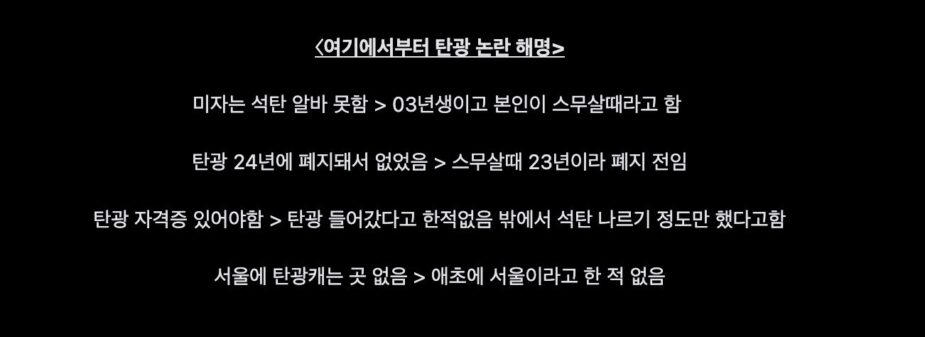
As the online discussion escalated, an anonymous user, identified as "OP" (Original Poster), took to an online community forum to defend Myung Jaehyun, providing crucial context and challenging the burgeoning claims of illegal activity. This post, widely shared, aimed to debunk several key points of contention:

- Age Verification: The defender asserted that Myung Jaehyun, born in 2003, was 20 years old in 2023, the period when the work in question was likely performed. In South Korea, individuals are considered legal adults at 19 years of age (Korean age system, which would mean 18 in international age). Therefore, at 20, he would have been well past the legal age for employment, negating claims of minor labor.
- Coal Mine Abolition: Addressing assertions that coal mines were abolished by 2024, the OP pointed out that Jaehyun’s work would have taken place in 2023 or earlier, a time when several coal mines were still operational, albeit dwindling. South Korea’s last active commercial coal mine, Gangwon Mining Corporation’s Jangseong mine, only officially ceased operations in June 2024, underscoring that coal mining was still a reality in the years immediately preceding.
- Nature of Work: Crucially, the online defender clarified that Jaehyun "never said he was a coal miner" but rather "only did things like carrying coal from the outside." This distinction is vital, as it implies he was not engaged in the hazardous underground work typically associated with mining, but rather auxiliary tasks on the surface, which would generally be less regulated and not require specialized mining licenses.
- Location: Responding to claims that "there are no coal mines in Seoul," the OP noted that Jaehyun "never said it was Seoul in the first place," implying the work occurred in a region where coal mining operations were historically or currently present, such as Gangwon Province.
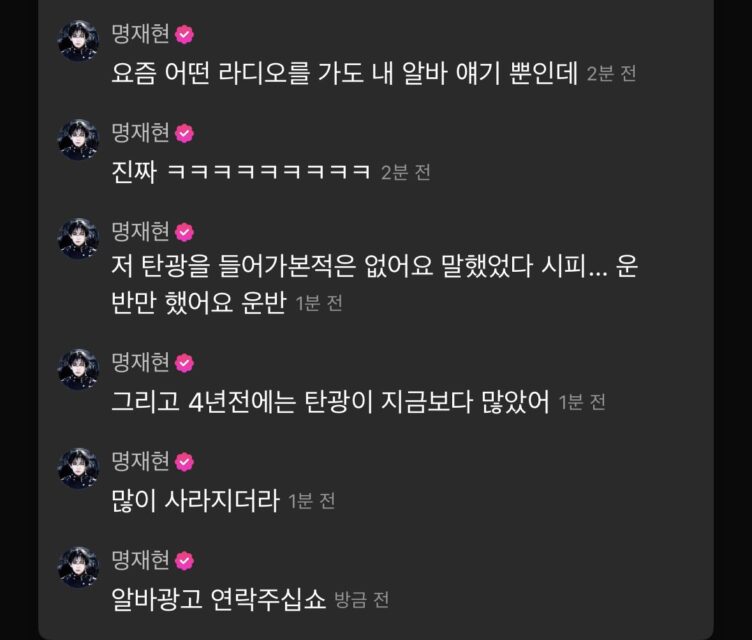
Not long after these defenses emerged, Myung Jaehyun himself opted to provide a direct explanation, leveraging a public platform to address the controversy head-on. With characteristic candor, he stated, "No matter what radio station I go to these days, there is only talk about my part-time jobs. Seriously LOL." He then reiterated the core points of clarification: "Like I’ve said before, I’ve never gone inside a coal mine. I only moved the coal." He further added, providing historical context, "And four years ago [circa 2022], there were more coal mines than there are now. A lot of them have disappeared." His final remark, a lighthearted "Part-time job advertisements, please contact me," served to inject a moment of levity and underscore his continued work ethic.
Legal Context and Industry Practices in South Korea
South Korean labor laws are designed to protect workers, with specific provisions for minors and those engaged in hazardous occupations. The minimum age for general employment is 15, but strict regulations prohibit individuals under 18 from working in jobs deemed dangerous, harmful, or morally compromising. This includes occupations involving toxic substances, high temperatures, heavy machinery, or underground work like mining.
For an adult, even surface-level work related to a coal mine, such as transporting materials, would not inherently be illegal, provided the employer adhered to standard labor practices regarding wages, working hours, and safety. The key distinction Jaehyun made—that he "only moved the coal" and "never gone inside a coal mine"—is critical. This suggests his role was likely in logistics or general labor on the periphery of a mining operation, rather than direct, underground extraction, which is highly specialized and dangerous.

The decline of the coal mining industry in South Korea has been a long-term trend, driven by environmental concerns and a shift towards cleaner energy sources. From a peak of over 300 mines in the 1960s, the number has steadily decreased, with the last major commercial mine closing in 2024. This historical context validates Jaehyun’s statement about there being more mines "four years ago," making his part-time experience plausible within the legal and industrial landscape of the time.
Public and Fan Reactions: Support and Scrutiny in the Digital Age
The reaction from netizens and BOYNEXTDOOR’s fanbase to Jaehyun’s clarification was overwhelmingly supportive. Many expressed confusion as to why his hard work and past struggles were being weaponized into a controversy. Comments frequently lauded his honesty and transparency, viewing his dedication as an admirable trait rather than a source of scandal. Fans articulated pride in his journey, seeing his pre-debut efforts as foundational to his success as an idol.
This incident underscores the intense scrutiny K-Pop idols face, where every aspect of their past, no matter how seemingly innocuous, can be dissected and debated in online communities. The speed at which rumors can propagate and escalate on platforms like X (formerly Twitter) and Korean online forums like Instiz highlights the constant pressure on idols to maintain an impeccable public image. While sharing personal stories can foster deeper connections with fans, it also opens avenues for misinterpretation or deliberate distortion by detractors.
Broader Implications for K-Pop and Idol Narratives
This controversy serves as a poignant example of the double-edged sword of transparency in the K-Pop industry. Many agencies and idols strategically share pre-debut stories of struggle and perseverance, as these narratives often resonate deeply with audiences, creating a sense of relatability and inspiring admiration for their journey to stardom. Jaehyun’s story of working multiple jobs to fund his music equipment fits perfectly within this inspiring archetype.
However, as seen in this case, even genuine accounts of hard work can become targets for intense scrutiny, particularly when details are vague or misinterpreted. The internet’s capacity for rapid information dissemination, coupled with a culture of demanding immediate and comprehensive explanations, means that idols and their agencies must be prepared to address even minor ambiguities.
For BOYNEXTDOOR, a relatively new group under HYBE’s subsidiary KOZ Entertainment, managing such controversies effectively is crucial for their long-term image and stability. Jaehyun’s direct and clear explanation, rather than a corporate statement, likely helped to personalize the issue and reinforce his authenticity with the fanbase. This approach often proves more effective in defusing online speculation, as it comes directly from the source and avoids the perception of an evasive or overly managed response.
The incident also subtly highlights the economic realities faced by many aspiring artists in South Korea. The journey to becoming a K-Pop idol is often long, arduous, and financially demanding, with many trainees relying on part-time work to support themselves or their dreams. Jaehyun’s willingness to share his experiences, even the less glamorous ones, paints a more realistic picture of the immense dedication required to break into one of the world’s most competitive entertainment industries.
The Road Ahead for Myung Jaehyun and BOYNEXTDOOR
With Myung Jaehyun’s clear explanation, the immediate storm surrounding his past part-time jobs appears to have largely subsided, replaced by a renewed wave of support from his fans. This episode, while challenging, has arguably reinforced his image as a hardworking and transparent artist. It underscores the importance of direct communication from idols themselves in navigating the complexities of public scrutiny in the digital age.
As BOYNEXTDOOR continues to build its presence in the competitive K-Pop landscape, such incidents, while potentially distracting, can also serve to deepen the bond between the artist and their audience, especially when handled with honesty and integrity. Myung Jaehyun’s pre-debut story, including his diligent efforts to fund his musical dreams, will likely remain a significant part of his narrative, now further solidified by his transparent handling of this recent controversy. The group is expected to continue focusing on their music and performances, with this particular incident fading into a testament to their member’s unwavering dedication.