Welcome back to another instalment of For Your Viewing Pleasure, where weekly curated photo sets from the K-pop landscape highlight prevailing trends and iconic looks. This week’s focus zeroes in on an understated yet undeniably potent sartorial element: the white t-shirt. Far from a mere wardrobe basic, the white t-shirt, in the hands of K-pop’s most influential idols and actors, transcends its humble origins to become a canvas for diverse stylistic expressions, embodying everything from casual elegance to avant-garde sophistication. Its enduring presence underscores its versatility and its capacity to anchor, or even define, a fashion narrative within the dynamic and globally impactful realm of K-pop.
The white t-shirt’s journey from military undergarment to global fashion staple is a testament to its unparalleled adaptability. Originating in the late 19th and early 20th centuries as functional wear for laborers and the U.S. Navy, it gained iconic status in the mid-20th century through figures like Marlon Brando in "A Streetcar Named Desire" and James Dean in "Rebel Without a Cause." These cinematic portrayals cemented its image as a symbol of cool, rebellion, and understated masculinity. Over subsequent decades, designers from Calvin Klein to Giorgio Armani embraced its simplicity, elevating it to a high-fashion item. In the contemporary context, particularly within the K-pop sphere, the white t-shirt acts as a foundational element, allowing stylists and idols to project a spectrum of images—from the relatable ‘boy-next-door’ to the untouchably chic fashionista. Its blank slate quality makes it ideal for integrating diverse accessories, layering techniques, and silhouette variations, ensuring its perennial relevance across seasons and trends.

K-Pop Idols Redefine the Basic: A Spectrum of Interpretations
The recent compilation of images showcases how K-pop’s leading figures are reinterpreting this classic piece, offering a masterclass in styling. The common thread of simplicity belies the intricate thought behind each ensemble, demonstrating how minor adjustments can yield vastly different aesthetic outcomes.
The Casual Yet Classic Combo: Monsta X’s Hyungwon and Shownu

The pairing of a white t-shirt with jeans is often considered the quintessential casual ensemble. Monsta X members Hyungwon and Shownu exemplify this with their choice of slouchy graphic t-shirts combined with ripped blue jeans. This aesthetic taps into the "normcore" trend, which celebrates an anti-fashion stance through deliberately unpretentious clothing, yet elevates it through the idols’ inherent charisma and careful attention to fit and subtle detailing. For Hyungwon and Shownu, the relaxed fit of their graphic tees conveys an approachable, laid-back vibe, aligning with a desire for relatability among fans. The distressed denim adds a touch of ruggedness, a subtle nod to youth culture and an effortless cool. This particular styling choice often resonates strongly with a broad audience, offering a sense of aspirational accessibility where fans can easily replicate similar looks, thereby bridging the gap between idol and admirer. The graphic element on the t-shirt, while simple, often provides a focal point, reflecting current art trends or subtly incorporating brand affiliations that might not be immediately obvious but add to the overall narrative of the outfit.
Elevated Simplicity: Byeon Woo-seok and Luxury Integration
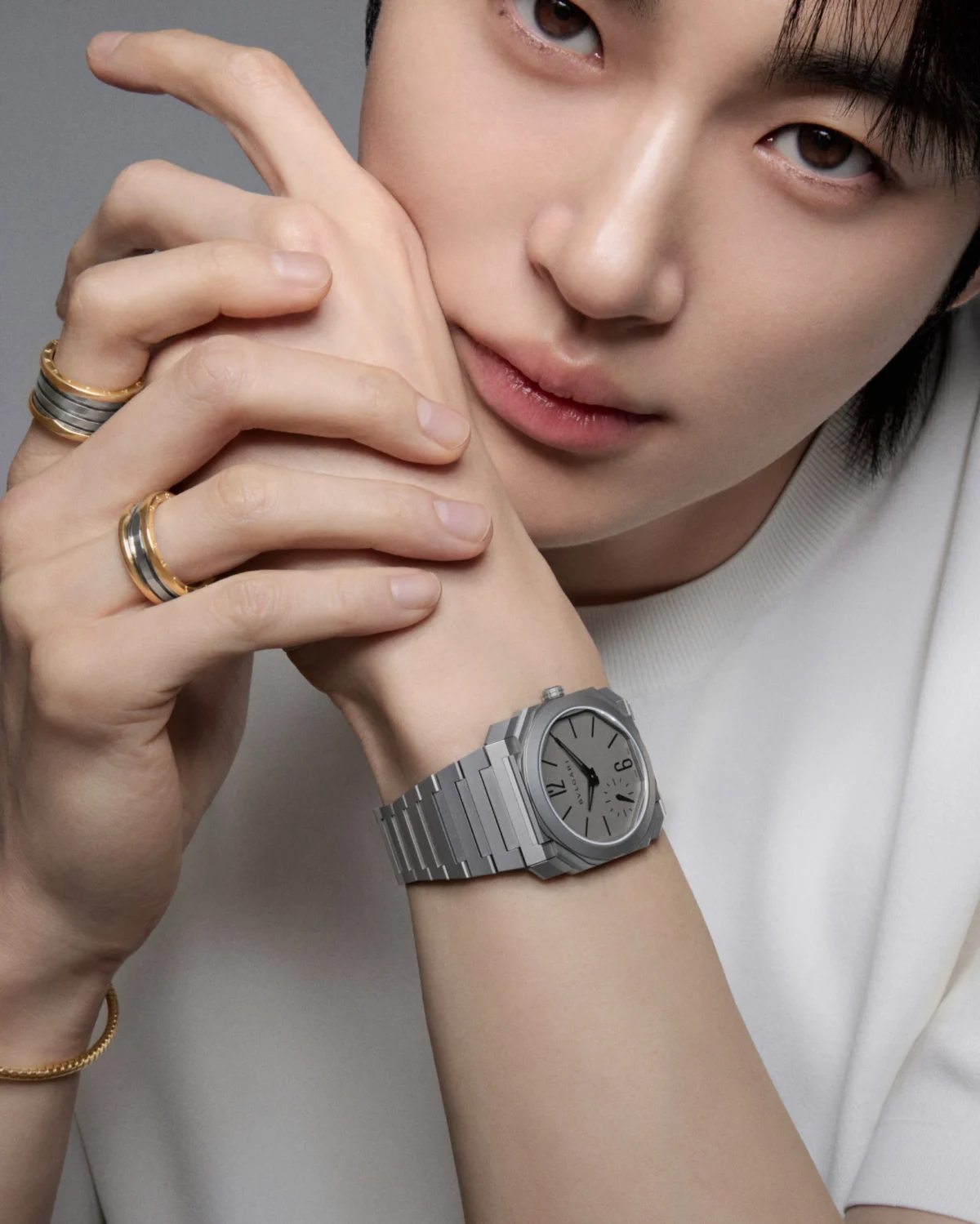
Actor Byeon Woo-seok presents a more refined interpretation, pairing his white t-shirt with a sleek silver watch and chunky rings from Bulgari. This demonstrates the powerful synergy between a basic garment and high-end accessories. The crispness of his white t-shirt, likely tailored for a precise fit, serves as an immaculate backdrop, allowing the luxury items to truly stand out. Bulgari, a renowned Italian luxury brand, specializes in jewelry, watches, and accessories, known for its bold designs and exceptional craftsmanship. The inclusion of such prominent pieces instantly elevates the entire look from casual to high-fashion, signaling sophistication and an understanding of nuanced style. This strategic accessorizing highlights the potential of the white t-shirt to transition seamlessly from daywear to evening wear, or from a casual outing to a red-carpet event, simply by adjusting the accompanying elements. The choice of a silver watch and chunky rings suggests a contemporary masculine elegance, asserting a confident and polished image without resorting to overly formal attire. This approach is particularly effective in K-entertainment, where idols and actors often blur the lines between celebrity and fashion icon, making luxury brands more relatable and desirable to a younger demographic.

Fluid Silhouettes: Park Ji-hoon’s Artistic Expression
Park Ji-hoon’s choice of a flowy shirt, while not a traditional t-shirt, embodies a similar spirit of understated elegance and fluidity that the white t-shirt can offer in its various iterations. This look leans into broader fashion trends that challenge conventional gender norms in clothing, favoring softer lines, relaxed drapes, and a more ethereal aesthetic. The flowy nature of the shirt adds movement and a sense of artistic flair, contrasting with the more structured or form-fitting options. This stylistic choice is indicative of K-pop’s broader embrace of diverse aesthetics, where idols are increasingly seen in garments that transcend rigid gender categorizations, promoting a more inclusive and experimental approach to fashion. Such an ensemble often pairs well with tailored trousers or minimalist accessories, ensuring the focus remains on the garment’s unique silhouette and texture. It speaks to a conscious decision by stylists to push boundaries and offer fresh perspectives on idol fashion, making a statement about individuality and creative freedom.
Comfort Meets Chic: Le Sserafim’s Chaewon and Itzy’s Ryujin

The rise of athleisure and the resurgence of Y2K fashion have significantly influenced contemporary styling, evident in the looks sported by Le Sserafim’s Chaewon and Itzy’s Ryujin. Both opt for cute crop tops paired with baggy trousers, a combination that prioritizes comfort without sacrificing style. The cropped white t-shirt has become a staple, particularly among female idols, offering a youthful and energetic vibe that highlights midriffs while maintaining an overall relaxed silhouette. Baggy trousers, a nod to 90s and early 2000s street style, provide a comfortable contrast to the fitted top, creating a balanced and dynamic look. This styling choice is popular for dance practices, casual outings, and even stage performances, reflecting a desire for practical yet fashionable attire that allows for freedom of movement. It also aligns with a growing trend of self-expression through fashion, where individuals prioritize comfort and personal style over rigid fashion rules. The "cute" element often comes from subtle details, prints, or the overall youthful energy projected by the idols, making these outfits widely popular among their demographic.
The Ultimate Statement: BTS’s Jungkook’s Sequined All-White Ensemble
A special mention must unequivocally go to BTS’s Jungkook, whose sequined all-white ensemble dramatically elevates the concept of the white t-shirt into the realm of high-octane performance wear. While a traditional t-shirt might not feature sequins, Jungkook’s outfit demonstrates the extreme versatility and transformative power of the "white top" concept when pushed to its artistic limits. This look moves beyond casual wear, embodying the spectacle and glamour inherent in K-pop performances. The sequins catch and reflect light, creating a dazzling visual effect that enhances stage presence and ensures visibility even in large venues. The all-white color scheme, traditionally associated with purity and simplicity, is juxtaposed with the maximalist embellishment, creating a striking contrast that is both elegant and audacious. This particular styling choice highlights how K-pop idols often blend everyday fashion with theatrical elements, crafting memorable looks that are as much a part of the performance as the music itself. It exemplifies how a basic color palette can be transformed into a show-stopping statement through texture, material, and thoughtful design, reflecting the cutting-edge nature of K-pop fashion.

The Stylist’s Craft: Behind the Scenes of Idol Fashion
The meticulous curation of these looks is a testament to the expertise of K-pop stylists, who play a pivotal role in shaping an idol’s public image and influencing global fashion trends. While no direct statements from the stylists involved were provided in the initial brief, their inferred strategies are evident. Stylists aim to balance brand identity with individual personality, often using versatile pieces like the white t-shirt to create a cohesive yet diverse wardrobe. They understand that every outfit worn by an idol, whether on stage, at an event, or in a magazine spread, serves as a powerful communication tool. The decision to feature a white t-shirt, for instance, might be strategic: to make an idol appear more approachable and "real," or to highlight their natural beauty without the distraction of elaborate clothing. Conversely, it can be a deliberate choice to demonstrate how even the most basic item can be transformed into a luxury statement with the right accessories and attitude. This strategic deployment of fashion elements contributes significantly to an idol’s marketability and overall cultural impact.
K-Pop’s Global Fashion Influence and Economic Implications

The global reach of K-pop has transformed its idols into significant fashion arbiters. According to a 2023 report by the Korea Creative Content Agency, the K-pop industry’s economic impact extends far beyond music, influencing sectors like fashion, beauty, and tourism. The fashion choices of idols, particularly those featured in high-circulation magazines like Cosmopolitan, Harper’s Bazaar, and Singles, or endorsed by luxury brands like Bulgari, instantly become global trends. When an idol like BTS’s Jungkook wears a specific style, or Byeon Woo-seok sports Bulgari, the associated items often experience a surge in demand, frequently selling out within hours or days—a phenomenon often referred to as the "Jungkook effect" or the "BTS effect." This immense purchasing power is not limited to high-end brands; it also boosts sales for more accessible items like graphic t-shirts or baggy jeans, turning simple fashion choices into significant market drivers. This influence underscores the crucial role of celebrity endorsements and the power of visual media in shaping consumer behavior in the modern fashion landscape. The partnerships with publications and brands mentioned (Cosmopolitan, Harper’s Bazaar, Singles, BVLGARI, JYP Entertainment, HYBE, Starship Entertainment) further cement the symbiotic relationship between K-pop and the fashion industry, showcasing idols as influential figures capable of dictating global style narratives.
Social Media, Fan Culture, and Trend Amplification
The rapid dissemination of idol fashion trends is heavily amplified by social media platforms and dedicated fan communities. Images from photoshoots and public appearances are instantly shared across Twitter, Instagram, TikTok, and fan forums. These platforms become virtual runways where fans meticulously analyze, discuss, and attempt to replicate idol outfits. Hashtags dedicated to idol fashion, "where to buy" guides created by fans, and "get the look" tutorials proliferate, democratizing access to idol-inspired styles. This grassroots engagement further solidifies the impact of features like "For Your Viewing Pleasure," turning curated collections into catalysts for broader fashion movements. The accessibility of a white t-shirt, in particular, makes it a popular item for fans to emulate, allowing them to feel a closer connection to their idols without necessarily investing in high-end designer pieces. This interactive ecosystem ensures that every fashion choice, no matter how seemingly simple, contributes to the ongoing dialogue about style and identity within the K-pop fandom.

Conclusion: The Unyielding Power of the White T-Shirt
The white t-shirt, as demonstrated by K-pop’s leading idols and actors, is far more than a basic garment; it is a chameleon of fashion, adapting to countless stylistic demands and reflecting diverse personalities. From the effortless cool of Monsta X’s Hyungwon and Shownu to the luxurious refinement of actor Byeon Woo-seok, the artistic fluidity of Park Ji-hoon, the modern comfort of Le Sserafim’s Chaewon and Itzy’s Ryujin, and the show-stopping brilliance of BTS’s Jungkook, each interpretation underscores the item’s enduring relevance. This seemingly simple piece serves as a potent canvas for individual expression, a bridge between high fashion and everyday wear, and a testament to the strategic genius of K-pop stylists. As K-pop continues to expand its global influence, its idols will undoubtedly continue to redefine and reimagine fashion staples, with the white t-shirt remaining a foundational element in their ever-evolving sartorial narrative, affirming its status as a timeless and indispensable icon in the world of style.