HYBE Under Scrutiny as Netizens Allege Striking Similarities in Content Across ILLIT, LE SSERAFIM, and KATSEYE
Article Editorial Team

HYBE Corporation, one of South Korea’s most influential entertainment conglomerates, is currently facing a renewed wave of criticism following a growing chorus of online voices alleging a noticeable lack of creative distinction across several of its prominent girl groups. The discussion intensified dramatically with the recent release of ILLIT’s dance challenge for their track "It’s Me," which swiftly became a focal point for comparisons to the choreographic styles and overall aesthetic sensibilities observed in labelmates LE SSERAFIM and the globally-focused group KATSEYE. This development has reignited a long-standing debate within the K-Pop industry regarding artistic originality versus the strategic adoption of successful trends, particularly within the vast and interconnected ecosystem of a major entertainment powerhouse like HYBE.
The Catalyst: ILLIT’s "It’s Me" Dance Challenge Sparks Debate
The current wave of scrutiny was primarily ignited on April 28, 2026, when ILLIT, a relatively new group under HYBE’s multi-label system (specifically Belift Lab), unveiled their much-anticipated dance challenge for "It’s Me." The challenge, a common promotional tool in K-Pop, features a segment of the song’s choreography, designed for widespread participation on social media platforms. Almost immediately following its release, the internet buzzed with comments and side-by-side analyses pointing out what many perceived as striking resemblances. Netizens across various online communities, including popular forums like theqoo and platforms such as X (formerly Twitter) and YouTube, began compiling visual evidence, highlighting specific dance moves, overall formations, and even the general "vibe" that they felt mirrored the performance styles of other HYBE-affiliated groups. The initial reaction was a mix of confusion and mild disappointment among some fans, quickly escalating into more pointed critiques concerning creative originality. The distinctive "hard-hitting beat" and what was described as "kitschy choreography" within ILLIT’s new material became key identifiers in these comparisons.
Tracing the Threads: Allegations Against LE SSERAFIM and KATSEYE
The discussion quickly expanded beyond ILLIT, drawing in other groups under the HYBE umbrella, notably LE SSERAFIM and the nascent global group KATSEYE. These comparisons are not entirely new, but the "It’s Me" challenge acted as a powerful aggregator for pre-existing observations.
LE SSERAFIM’s "Celebrate" and the ‘Kitschy’ Aesthetic:
LE SSERAFIM, managed by Source Music (a subsidiary of HYBE), recently made their comeback with "Celebrate." Fans and critics alike noted that "Celebrate" features a distinct sound profile characterized by its hard-hitting electronic dance music (EDM) elements and a similarly "kitschy" choreographic approach. The term "kitschy" in this context often refers to an aesthetic that embraces a playful, sometimes exaggerated, or deliberately gaudy style, often associated with bright colors, bold movements, and a sense of irreverence. While LE SSERAFIM has cultivated a strong image centered on themes of self-confidence and fearlessness since their debut, the choreographic language and musical production of "Celebrate" were flagged as sharing a similar energetic and visually impactful style with ILLIT’s recent offering. Specific hand gestures, dynamic group formations, and an emphasis on sharp, synchronized movements were frequently cited as common threads. For a group as established and conceptually driven as LE SSERAFIM, these comparisons risk diluting their unique artistic identity, potentially leading to questions about the distinctiveness of their creative output within the larger HYBE ecosystem.
KATSEYE’s Signature Style: EDM and Unique Moves:
Further fueling the debate are observations regarding KATSEYE, a global girl group formed through the "The Debut: Dream Academy" competition, a collaboration between HYBE and Geffen Records. KATSEYE, while still in their early stages, has already garnered attention for their distinct "EDM party tunes" and what were initially celebrated as "unique moves." However, in the context of the burgeoning criticism, these characteristics are now being re-evaluated by some netizens as part of a broader, shared stylistic palette within HYBE. Their music often features driving electronic beats, catchy hooks, and choreography designed for high energy and visual impact, aligning them with the very traits being highlighted in the comparisons between ILLIT and LE SSERAFIM. The implication is that despite being developed through a global competition and positioned for an international audience, KATSEYE’s creative direction might still be drawing from a similar wellspring of ideas or a standardized production methodology employed across HYBE’s labels.
A Deeper Dive into the Similarities: Choreography, Music, and Concept
The allegations of similarity extend beyond superficial observations, delving into the core elements of K-Pop production: choreography, musical composition, and overall conceptual execution.

Choreographic Overlaps:
Netizens have meticulously compiled screenshots and video snippets to illustrate the perceived choreographic overlaps. Common elements cited include:
- Sharp, Angular Movements: A prevalent use of precise, almost robotic arm and leg movements that contribute to a powerful, impactful visual.
- Repetitive Hook Movements: Signature gestures or short sequences designed to be catchy and easily memorable, often serving as the central motif of a dance challenge.
- Dynamic Formations: Frequent shifts in group formations that create visually interesting patterns, often involving members moving into and out of central positions with high energy.
- "Confident" Posturing: Poses and expressions that exude a strong, self-assured attitude, consistent with a "girl crush" or empowered female concept.
- Floor Work/Level Changes: While not identical, a shared tendency to incorporate movements that utilize different levels, including occasional floor work or deep lunges, adding dynamism.
These elements, while individually common in K-Pop, are seen as forming a consistent "language" across the groups, suggesting a shared choreographic philosophy or even a limited pool of choreographers/creative directors influencing multiple projects.
Musical Palette: The Dominance of EDM and Catchy Hooks:
Musically, the common thread is often identified as a heavy reliance on EDM elements. This includes:
- Synthesizer-Heavy Production: Prominent use of synthesizers for melodic lines, bass, and atmospheric effects, characteristic of modern EDM.
- Driving Beats: Strong, propulsive percussion that encourages dancing, often with a four-on-the-floor rhythm or similar energetic patterns.
- "Hook-ish" Melodies: Simple, repetitive, and highly memorable melodic phrases designed to stick in the listener’s head.
- Anthemic Qualities: Songs structured to build to powerful, often chant-like choruses, fostering a sense of collective energy and excitement.
This sonic uniformity, while potentially appealing to a broad audience and fitting current trends, raises questions about the distinct sound identity of each group. Critics argue that while EDM is popular, its application across multiple groups in a similar fashion can lead to an auditory blurring, making it difficult to differentiate one group’s sound from another without close attention.
Conceptual Alignment: The "Confident Girl" Aesthetic:
Conceptually, all three groups, to varying degrees, embrace an empowered, confident, and often vibrant "girl crush" aesthetic. This manifests in:
- Styling: Bold fashion choices, often incorporating street style elements, athleisure, or high-fashion looks with an edgy twist.
- Visual Direction: Music videos and stage performances characterized by bright, dynamic lighting, high-energy sets, and a focus on powerful individual and group charisma.
- Lyrical Themes: Messages often revolving around self-belief, breaking free from expectations, and celebrating individuality, even if expressed through different narratives.
While these themes are broadly popular in K-Pop, the consistent execution of this overarching aesthetic contributes to the perception of a streamlined, almost factory-produced creative output rather than unique artistic visions emerging from distinct teams.
The Broader Context: HYBE’s Multi-Label System and Creative Direction
To understand the current criticisms, it’s essential to consider HYBE’s organizational structure. HYBE operates on a multi-label system, a strategy designed to foster diverse musical styles and creative autonomy while leveraging the resources of the parent company. ILLIT is managed by Belift Lab, LE SSERAFIM by Source Music, and KATSEYE is a joint venture with Geffen Records, managed under HYBE LABELS JAPAN/America. Ostensibly, each label is meant to cultivate a distinct artistic identity for its groups.
However, the reality of a conglomerate often involves shared resources, cross-pollination of ideas, and central creative oversight at a higher level. This can manifest in:
- Shared Creative Teams: While specific producers and choreographers might differ, a common pool of creative directors, visual directors, or even marketing strategists might work across multiple labels or influence their output.
- "HYBE Sound/Visual" Identity: Over time, a large corporation can inadvertently develop a discernible "company style" that permeates its various labels, even if individual teams aim for distinction. This can be driven by market research, a desire to replicate past successes, or a top-down artistic vision.
- Trend Prioritization: In a highly competitive market like K-Pop, companies are under immense pressure to capitalize on popular trends. If "EDM party tunes" and "kitschy, hard-hitting choreography" are identified as commercially successful formulas, there might be a strategic decision to apply variations of this formula across multiple groups to ensure market relevance and appeal.
This internal structure, while efficient from a business perspective, presents a constant challenge for maintaining artistic individuality and avoiding creative stagnation, especially when public perception points towards homogeneity.

The Shadow of Previous Controversies: The Min Hee-jin vs. HYBE Dispute
This latest wave of criticism against HYBE’s girl groups cannot be fully understood without acknowledging the significant and ongoing internal dispute between HYBE and ADOR CEO Min Hee-jin, which erupted in the preceding months. In early 2024, Min Hee-jin, the creative director behind HYBE’s highly successful girl group NewJeans, publicly accused HYBE’s new group ILLIT of "plagiarizing" NewJeans’ unique concept, styling, and overall aesthetic. This accusation led to a very public and acrimonious battle, involving lawsuits, counter-allegations, and widespread media coverage.
While the current criticisms regarding ILLIT, LE SSERAFIM, and KATSEYE focus on choreographic and musical similarities (distinct from Min Hee-jin’s specific allegations of conceptual copying related to NewJeans), the underlying sentiment of a lack of creative originality within HYBE’s ecosystem is strikingly similar. The Min Hee-jin controversy heightened public scrutiny of HYBE’s creative practices, making fans and industry observers far more sensitive to any perceived overlaps or instances of derivative content. The current allegations, therefore, are amplified by the lingering questions raised during the ADOR dispute, creating an environment where even subtle resemblances are quickly flagged and dissected. It suggests that the broader public concern isn’t just about one instance of copying, but potentially a systemic issue within the company’s creative management, leading to a homogenous output despite the multi-label facade. This makes the present situation particularly precarious for HYBE’s reputation.
Public and Industry Reactions
The reactions to these allegations have been diverse, reflecting the complexity of the K-Pop fandom and industry.
Netizen Sentiment:
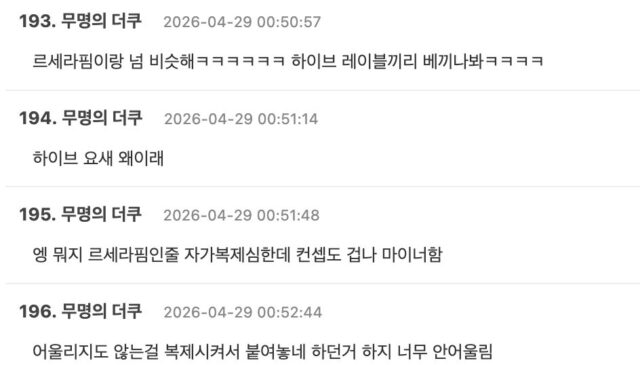
Online forums and social media platforms are rife with discussions. Many netizens express disappointment, feeling that HYBE, known for fostering unique and groundbreaking acts, is now falling into a pattern of formulaic production. Comments range from "It feels like I’m watching the same group perform different songs" to "Where is the innovation? Each group should have its own color." There’s a strong desire among fans for distinct identities for each group, especially given the fierce competition in the K-Pop landscape. Some have even gone as far as to accuse the company of deliberately applying a successful formula across multiple acts to ensure commercial viability, prioritizing market trends over artistic originality.
Fan Defenses:
Conversely, many fans of ILLIT, LE SSERAFIM, and KATSEYE have come to the defense of the groups and HYBE. They argue that:
- "Company Style": Similarities are simply a "HYBE style" or a reflection of shared creative influences, akin to how certain producers or agencies develop a signature sound.
- Current Trends: The music and choreography simply align with popular trends in K-Pop and global pop music, and it’s unfair to label them as plagiarism or lack of originality.
- Inherent Challenges: In a highly saturated market, it’s increasingly difficult to create something entirely novel, and some degree of overlap is inevitable.
- Individual Charms: Fans emphasize the unique charms, vocal tones, and stage presence of each group, arguing that these individual qualities make them distinct despite any superficial similarities.
Absence of Official Commentary:
As of the current reporting, HYBE Corporation has not issued an official statement directly addressing these specific allegations of creative similarities across ILLIT, LE SSERAFIM, and KATSEYE. This non-response is a common practice in the K-Pop industry when faced with online controversies, often to avoid legitimizing the discussions or to prevent further escalation. However, the silence often fuels more speculation and debate among the public, intensifying the pressure on the company to eventually acknowledge or address the concerns. The absence of a clear statement allows the narrative to be shaped largely by public interpretation and analysis.
Implications for HYBE and Its Artists
This ongoing debate carries significant implications for HYBE Corporation, its various labels, and the artists themselves.
Brand Perception:
HYBE has built a formidable global reputation as an innovator in the K-Pop industry, largely thanks to the unprecedented success and unique artistic vision of groups like BTS and NewJeans. Allegations of creative homogeneity risk tarnishing this image, potentially leading to a perception that the company is becoming overly reliant on formulas rather than fostering genuine artistic diversity. This could affect investor confidence and public trust in the long run.
Artist Identity and Development:
For the individual groups, particularly newer acts like ILLIT and a globally targeted group like KATSEYE, these comparisons pose a significant challenge. Establishing a distinct identity is crucial for long-term success and fan engagement in the competitive K-Pop market. If groups are continually perceived as too similar to their labelmates, it can hinder their ability to carve out a unique niche, potentially leading to fan fatigue or a lack of strong individual connection with the artists. Even for a more established group like LE SSERAFIM, questions about originality can subtly undermine their artistic narrative.
Future Creative Strategies:
The heightened scrutiny may force HYBE to re-evaluate its creative strategies across its multi-label system. This could involve:
- Enhanced Creative Differentiation: Implementing stricter guidelines or encouraging more distinct creative directions for each label and group.
- Diversifying Creative Teams: Actively seeking out a broader range of producers, choreographers, and creative directors to ensure a wider spectrum of artistic input.
- Internal Review: Conducting internal assessments to identify and address any unintentional overlaps in creative output.
Market Dynamics and Industry Standards:
The debate also reflects broader industry dynamics. K-Pop is a global phenomenon that thrives on innovation and high-quality production, but also on efficiency and trend-following. The tension between creating truly unique content and leveraging proven commercial successes is ever-present. This situation with HYBE highlights the evolving expectations of K-Pop fans, who increasingly demand not just polished performances but also genuine artistic individuality and originality from their beloved artists and the companies that manage them.
Conclusion
The ongoing discussion surrounding the alleged creative similarities across ILLIT, LE SSERAFIM, and KATSEYE underscores a critical dilemma facing major entertainment conglomerates like HYBE: how to balance commercial success and efficiency within a multi-label system against the imperative of fostering genuine artistic originality and distinct identities for each artist. While the use of popular trends and a cohesive "company style" can offer benefits, the intense scrutiny from a highly engaged global fanbase indicates that the demand for unique creative expression remains paramount.
Coming on the heels of the contentious Min Hee-jin dispute, these new allegations amplify the public’s sensitivity to questions of originality within HYBE’s expanding universe. As the K-Pop industry continues its global expansion, the ability of companies to consistently deliver diverse and distinctive content will be crucial not only for the success of individual groups but also for maintaining the industry’s reputation for innovation and artistic integrity. All eyes remain on HYBE to see how it navigates this complex challenge and addresses the growing concerns regarding its creative direction.
Related News