
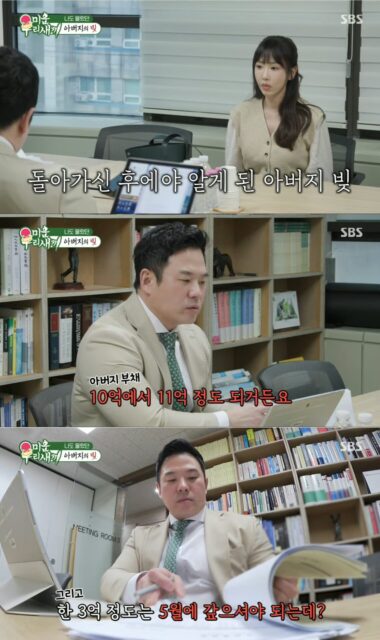
The South Korean entertainment industry and the public have recently been moved by the personal struggles of actress Kang Ye Won, who recently shared the harrowing financial and emotional aftermath of her father’s death. During the June 14 broadcast of the popular SBS reality program My Little Old Boy, Kang provided an intimate look into her efforts to navigate a complex legal and financial landscape. Her father, who passed away on April 30, left behind a legacy complicated by a debt totaling approximately 1.10 billion KRW (roughly $725,000 USD). The episode detailed her meeting with legal counsel to determine her responsibilities and her subsequent interactions with long-term employees of her father’s business, highlighting the intersection of legal obligation and moral duty.
The Discovery of Financial Liability
The revelation of the debt came as a significant shock to Kang Ye Won, who was unaware of the extent of her father’s financial liabilities during his lifetime. During the broadcast, Kang met with a legal representative to gain clarity on the inheritance process. It was confirmed that her father’s liabilities reached the 1.1 billion KRW mark, a figure that far exceeded the immediate liquid assets available to the family.
Kang’s reaction was one of profound distress and confusion. She expressed the overwhelming nature of the situation, noting that while she felt a daughter’s natural inclination to honor her father’s legacy and resolve his affairs, the sheer scale of the debt and the technicalities of the law were daunting. "I found out after he passed away that there was debt," she shared during the episode. "It all came at once… I really don’t know. This is so hard, and I don’t even understand what any of it means. What am I supposed to do if I don’t have money right now?" Her vulnerability resonated with many viewers, shedding light on the often-hidden burdens faced by families after the loss of a patriarch who managed business affairs independently.
Legal Framework: Limited Acceptance and Renunciation
To address the 1.1 billion KRW deficit, Kang’s legal counsel introduced the concept of "limited acceptance" (hanjeong seung-in), a specific provision under South Korean inheritance law. This legal mechanism is designed to protect heirs from being personally bankrupted by the debts of the deceased. Under limited acceptance, an heir agrees to repay the deceased’s debts only to the extent of the assets they have inherited. If the debts exceed the assets, the heir is not required to use their personal wealth or future earnings to cover the remaining balance.

The lawyer provided a hypothetical example to clarify the process: if an individual inherits 1.00 billion KRW in assets but is faced with 2.00 billion KRW in debt, the "limited acceptance" filing ensures that they only pay back the 1.00 billion KRW they received. They are legally absolved of the remaining 1.00 billion KRW.
In Kang Ye Won’s specific case, the legal advice was multi-pronged. The lawyer recommended that Kang’s mother apply for limited acceptance. This would necessitate the liquidation of inherited assets—most notably the family’s primary residence—to satisfy as many creditors as possible. Simultaneously, the lawyer advised Kang Ye Won and her younger sibling to officially "renounce" their inheritance. By renouncing, the children waive any claim to their father’s assets but also legally insulate themselves from any claims by creditors, ensuring that the debt does not follow them into their professional or personal lives.
The Emotional Cost of Debt Settlement
While the legal path offered a solution to the financial liability, it came with a heavy emotional price. The primary asset identified for liquidation was the family home, a residence where the family of four had lived for over three decades. Kang Ye Won became visibly emotional when discussing the prospect of losing the house, which she associated with her upbringing and her father’s presence.
"It’s the home where our family of four lived for over 30 years, since I was in high school," Kang explained. "We only have that one home, and to think of selling it… It hurts so much." This aspect of the broadcast highlighted a common tragedy in inheritance disputes: the loss of sentimental landmarks and stability in the wake of financial mismanagement or business failure. For Kang, the house was not merely a piece of real estate but the final physical link to the family unit as it existed before her father’s passing.
Corporate vs. Personal Debt and Moral Responsibility
A significant portion of the legal consultation focused on the distinction between personal debt and corporate debt. The lawyer clarified that if certain debts were held under the name of a corporation or a business entity rather than her father’s personal name, Kang Ye Won and her mother would have no legal obligation to repay them. In many jurisdictions, including South Korea, the "corporate veil" protects individuals from the liabilities of a business entity.

However, Kang Ye Won expressed a sense of "moral responsibility" that transcended legal requirements. She was particularly concerned about the unpaid wages of her father’s employees. The broadcast showed her meeting with a vice president and an employee who had worked alongside her father for 17 years. These individuals were described not just as staff, but as extended family members who had shared meals, drinks, and decades of life experiences with the deceased.
Despite the legal advice that she was not responsible for these business-related arrears, Kang felt a deep-seated need to compensate them. "My heart just goes out to them," she said. "They were people who stayed by my dad’s side for so long, so they feel more like family than I do." In a poignant moment, she was shown meeting with these longtime associates and providing them with a portion of their overdue wages from her own funds.
The employees, in turn, showed a remarkable degree of loyalty. Rather than demanding payment, they reportedly urged Kang to stop worrying about the money and focused their conversation on their memories of her father. This mutual respect underscored the ethical complexities that celebrities often face when their family members’ business dealings go awry.
Context: The "Debt-Too" Phenomenon and Celebrity Accountability
Kang Ye Won’s situation occurs within a broader cultural context in South Korea known as the "Debt-too" movement. In recent years, several high-profile Korean celebrities have faced public scrutiny and "cancel culture" after it was revealed that their parents or relatives had defaulted on loans or defrauded others decades earlier. While the legal system generally does not hold children responsible for their parents’ debts, the court of public opinion in South Korea often demands that celebrities take responsibility for their family’s financial "sins" as a matter of filial piety and public morality.
By proactively addressing the debt on a public platform like My Little Old Boy, Kang Ye Won has taken a transparent approach to a potentially damaging situation. Her willingness to use her own income to pay employees—even when not legally required—serves as a defense against the criticism that often follows such revelations. It shifts the narrative from one of financial scandal to one of personal sacrifice and integrity.

Chronology of Events
The timeline of Kang Ye Won’s current crisis can be summarized as follows:
- April 30: The passing of Kang Ye Won’s father. The family enters a period of mourning.
- May – Early June: The discovery of the 1.1 billion KRW debt. Kang and her family begin consulting with legal experts to understand the scope of the liability.
- June 14: The broadcast of My Little Old Boy on SBS. Kang reveals the financial situation to the public, documents her legal consultation, and shares her emotional struggle regarding the family home.
- Post-Broadcast: Kang meets with her father’s longtime employees to settle a portion of their unpaid wages, demonstrating her commitment to moral restitution despite legal exemptions.
Broader Implications and Data on Household Debt
Kang Ye Won’s struggle reflects a wider systemic issue in South Korea regarding household and small business debt. According to data from the Bank of Korea, South Korea has one of the highest household debt-to-GDP ratios in the world, frequently exceeding 100%. Many small business owners, like Kang’s father, rely on personal guarantees or complex loan structures that can leave their families in precarious positions upon their death.
The "limited acceptance" system is a vital safety net in the South Korean Civil Act, but it requires strict adherence to filing deadlines—usually within three months of the heir becoming aware of the death and the debt. Failure to file for limited acceptance or renunciation within this window can result in "simple acceptance," where the heir unintentionally becomes fully responsible for all of the deceased’s debts. Kang’s public discussion of this process serves as an educational moment for viewers who may find themselves in similar circumstances.
Analysis: The Intersection of Fame and Grief
For an actress like Kang Ye Won, who has built a career on successful projects such as the film Haeundae and the drama The One and Only, the public nature of her grief and financial burden adds another layer of difficulty. The transition from her recent public appearances—where she was discussed for her honesty regarding aesthetic procedures—to the somber reality of debt management shows a shift toward a more vulnerable public persona.
Journalistic analysis suggests that Kang’s decision to share this journey on a reality program is a strategic move toward transparency. In an era where "celebrity privilege" is frequently critiqued, showing the "ugly" side of inheritance—the lawyers, the debt, and the potential loss of a home—humanizes her. It also highlights the reality that fame does not always equate to a life free of the common struggles associated with aging parents and business failures.
As the legal process continues, Kang Ye Won’s mother will likely proceed with the limited acceptance filing, and the family will face the difficult task of vacating their long-term home. However, by settling the moral debts to her father’s employees, Kang has secured a level of public sympathy and professional respect that may prove invaluable as she continues her career in the wake of this family tragedy. The story remains a stark reminder of the legal complexities of legacy and the enduring weight of filial responsibility in modern Korean society.