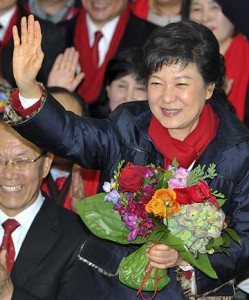
The years 2012 and 2013 marked a transformative era in the political and cultural history of South Korea, characterized by the ascendancy of the nation’s first female head of state and a subsequent shift in the thematic landscape of the K-pop industry. In December 2012, Park Geun-hye, a veteran representative of the conservative New Frontier Party—formerly known as the Grand National Party and later the Saenuri Party—secured the presidency by a narrow margin. Her victory was historically significant, representing the first time a woman had ever reached the highest office in the Blue House (Cheong Wa Dae). This political milestone coincided with a period of intense social scrutiny regarding gender roles in South Korea, a discourse that found its way into the mainstream music industry through the release of the single "Female President" by the K-pop group Girl’s Day in June 2013.
The Political Context of Park Geun-hye’s Presidency
Park Geun-hye’s rise to power was as controversial as it was historic. As the daughter of Park Chung-hee, the military leader who ruled South Korea with an iron fist from 1961 until his assassination in 1979, her political identity was inextricably linked to her father’s complex legacy. While many older conservatives revered her father for overseeing the "Miracle on the Han River"—the period of rapid economic growth that transformed South Korea into a global industrial power—progressives and human rights advocates criticized his authoritarianism and suppression of dissent.
During the 2012 election, the opposition Democratic United Party (Minju Party) frequently accused Park of benefiting from her familial lineage rather than her individual merits. Despite these criticisms, her inauguration in February 2013 was initially viewed by some as a potential watershed moment for women’s rights in a country traditionally dominated by patriarchal structures. The symbolic weight of a female president was expected to catalyze progress in a nation that consistently ranked at the bottom of the Organisation for Economic Co-operation and Development (OECD) in terms of gender equality.
The Social and Economic Landscape for Women in 2013
The reality for women in South Korea during the early 2010s was starkly different from the symbolic triumph represented by the presidency. According to data from the OECD, South Korea maintained the highest gender wage gap among member nations in 2013, with women earning approximately 36.3% less than their male counterparts. This gap was largely attributed to institutionalized sexism in hiring practices, the "glass ceiling" in corporate promotions, and the societal expectation that women should prioritize domestic responsibilities over professional careers.
Furthermore, South Korea’s labor market participation rate for women was notably low despite high levels of educational attainment. Sociological studies at the time highlighted an anomaly: while South Korean women were among the most highly educated in the world, the return on their investment in higher education was hindered by a lack of support for working mothers and a culture that penalized career breaks for childbirth. Additionally, social issues such as the illegality of abortion—which remained a criminal offense under the 1953 Criminal Code except in cases where the mother’s life was in peril—served as further evidence of the limited agency women held over their own lives and bodies.
Chronology of the "Female President" Release
Against this backdrop of political change and social stagnation, the K-pop industry attempted to capitalize on the zeitgeist. The group Girl’s Day, managed by Dream T Entertainment, had recently undergone a significant conceptual shift. After a series of member changes and a debut characterized by a "cute" aesthetic, the group found commercial success by transitioning to a more mature and provocative image.
- December 19, 2012: Park Geun-hye is elected as the 18th President of South Korea.
- February 25, 2013: Park Geun-hye is officially inaugurated.
- March 14, 2013: Girl’s Day releases "Expectation," a song that solidified their new "sexy" concept and boosted their popularity.
- June 24, 2013: Girl’s Day releases "Female President," the title track of their repackaged first studio album.
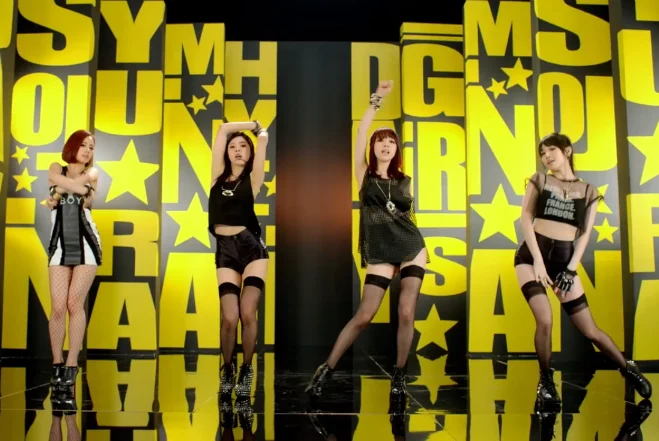
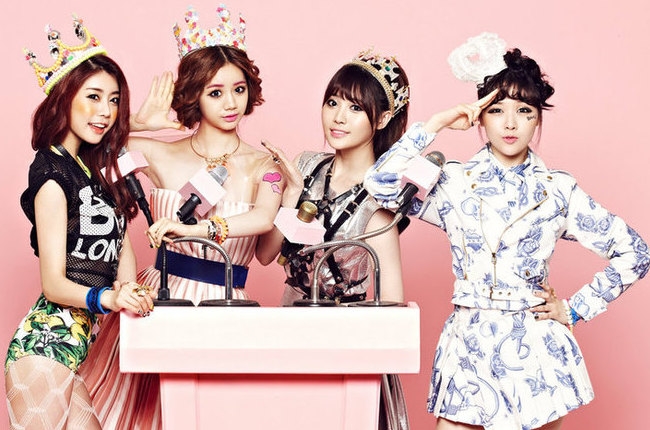
The song’s title and marketing were explicitly designed to evoke the current political climate. The music video featured members Minah, Hyeri, Yura, and Sojin in stylized outfits, including a controversial "nude-tone" bodysuit worn by Yura and a segment where Hyeri dressed in androgynous male attire. The visual climax of the video involved a near-kiss between Minah and the cross-dressed Hyeri, a move widely interpreted as a provocative attempt to challenge traditional gender norms and capture media attention.
Cultural Analysis and Critical Reception
While the title "Female President" suggested a song about political empowerment or systemic change, cultural critics and fans alike noted that the lyrics focused almost exclusively on romantic dynamics. The central "empowerment" message of the song was that women should feel confident enough to take the initiative in dating—specifically, by being the first to initiate a kiss or express romantic interest.
The lyrics state: "Our country’s president is now a woman / So what’s the problem? Why can’t you do it? / Why do you keep hesitating? / Is it a crime for a woman to kiss first?"
Critics argued that this framing trivialized the genuine struggles faced by South Korean women. By equating the political milestone of a female presidency with the "freedom" to initiate a kiss, the song was accused of reducing feminism to a marketing gimmick. Furthermore, the video’s reliance on the "male gaze"—emphasized through provocative choreography and revealing costumes—was seen by some as contradictory to the theme of empowerment. Instead of challenging the patriarchy, the imagery appeared to cater to the very audience that upheld traditional gender hierarchies.
Moreover, the song’s lyrics contained contradictory messages. Despite the "go-getter" chorus, other verses described the female protagonists as feeling "dizzy," "nervous," and "like a baby" in the presence of a man. This duality highlighted the tension within the K-pop industry: the desire to present a "girl power" image (often referred to as the "Girl Crush" concept) while simultaneously adhering to the submissive and aegyo-driven tropes that appeal to the domestic male fanbase.

Supporting Data: The Impact of Celebrity Influence
The controversy surrounding "Female President" did not hinder its commercial performance. The song peaked at number five on the Gaon Digital Chart and sold over 800,000 digital copies in 2013. This success demonstrated the potency of using political keywords in pop culture, even if the thematic depth was lacking.
However, the disconnect between pop culture and social reality was further evidenced by the lack of legislative progress regarding women’s rights during the early years of the Park administration. Despite the "watershed" rhetoric, the gender wage gap remained stagnant, and the "Presidential Committee on Young Generation" struggled to address the specific economic barriers facing young women. The use of the term "Female President" in a pop song was, in many ways, an indicator of how the presidency was being commodified as a trend rather than treated as a catalyst for policy reform.
Broader Impact and Implications
The release of "Female President" serves as a case study in how the K-pop industry engages with social issues. It marked an early iteration of the "empowerment" concepts that would become dominant in later years with groups like MAMAMOO, Blackpink, and (G)I-DLE. However, unlike the more overtly feminist movements that emerged in South Korea after 2016—such as the "Escape the Corset" movement and the massive protests against "molka" (spycam) pornography—the 2013 era of empowerment was largely confined to the realm of consumerism and romantic agency.
The legacy of Park Geun-hye herself ended in a manner that further complicated the narrative of female leadership in Korea. Her impeachment and removal from office in 2017 following a massive corruption scandal led to a period of intense public disillusionment. For many, her presidency did not result in the "watershed" for women’s rights that had been touted in 2012; instead, it became a cautionary tale about political nepotism and the dangers of inherited power.
In retrospect, Girl’s Day’s "Female President" stands as a cultural artifact of a specific moment in time—a moment when South Korea was grappling with its identity as a modern democracy led by a woman, while its pop culture remained tethered to traditional expectations. While the song encouraged women to "kiss first," the systemic barriers that prevented women from "leading first" in the boardroom and the legislature remained largely unaddressed by the pop anthems of the day. The impact of the song on society was ultimately deemed negligible by social commentators, as it prioritized aesthetic provocation over substantive discourse, leaving the actual "watershed" for gender equality to be fought for by activists in the years that followed.