A recent episode of MBC’s highly popular entertainment program, Radio Star, broadcast on July 8, 2026, sparked widespread discussion across South Korea as celebrity Lee Seon Min boldly declared himself the "sperm king." His candid revelation about his exceptionally high sperm count, shared during the show’s 971st installment, not only entertained viewers but also inadvertently shone a spotlight on male reproductive health and the evolving public discourse surrounding fertility in South Korea. The segment, featuring a lively exchange between Lee Seon Min and fellow guests, including seasoned host Kim Gu Ra, quickly became a focal point for both medical professionals and the general public, prompting conversations about health awareness, celebrity influence, and the nation’s ongoing struggle with its critically low birth rate.
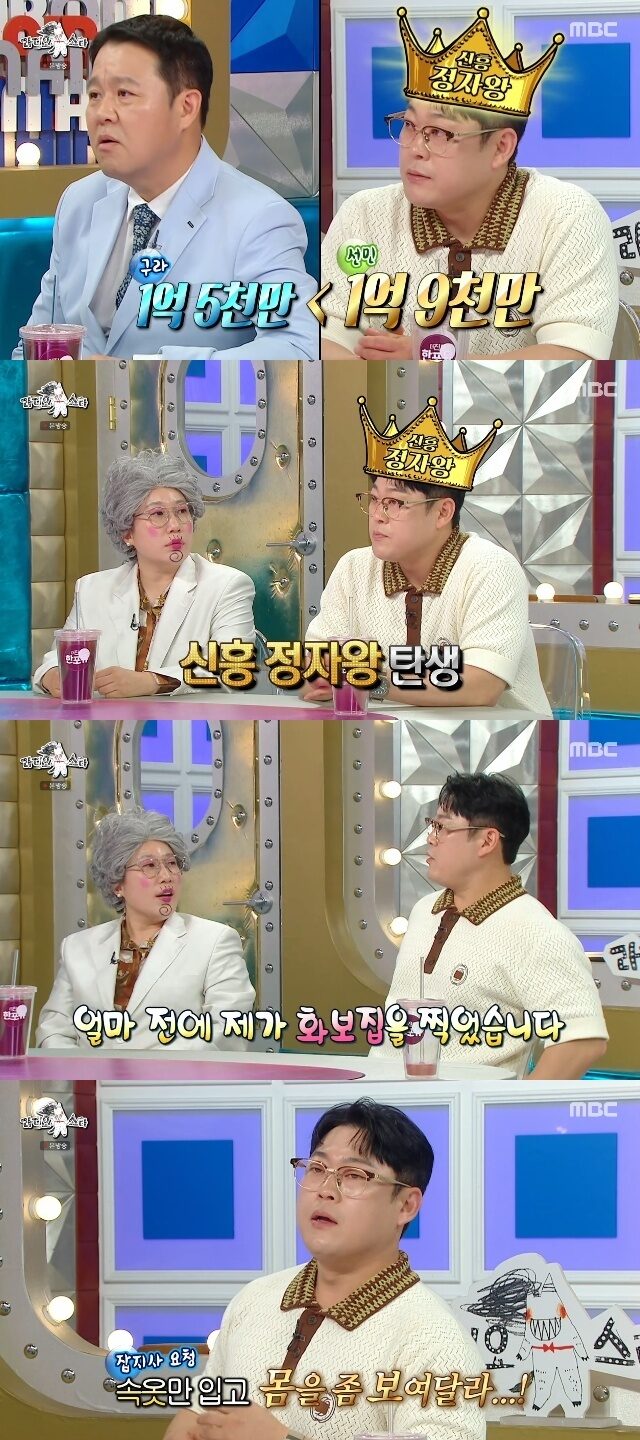
The broadcast event unfolded with a mix of humor and surprising medical detail, a hallmark of Radio Star‘s unique format. During the episode, which also hosted Lee Sung Mi, Jung Sun Hee, and Kim Young Hee, the conversation veered towards personal health, a common trajectory for the program known for its unscripted and often provocative interviews. Lee Seon Min seized the opportunity to challenge veteran entertainer Kim Gu Ra, who has previously discussed his own fertility journey. Lee Seon Min directly addressed Kim Gu Ra, stating, "Senior, please present your sperm count first," setting the stage for a light-hearted yet medically revealing competition. He then provided a crucial piece of context, informing the audience that "The average Korean male has about 15 million sperm per milliliter." This benchmark immediately framed the subsequent boasts in a medical context, allowing viewers to gauge the significance of the numbers being discussed.
Kim Gu Ra, known for his quick wit and willingness to engage in candid banter, responded by estimating his own count to be "in the hundreds of millions." This figure, while impressive, was swiftly overshadowed by Lee Seon Min’s confident retort: "I have 190 million sperm." The declaration was met with a mixture of awe and amusement from the other guests and hosts. When Kim Gu Ra’s precise count was revealed to be 150 million, Lee Seon Min’s claim of 190 million marked a clear victory in their impromptu "sperm king" contest. The numeric comparison provided a tangible measure of Lee Seon Min’s exceptional fertility, turning what could have been a private medical detail into a topic of public fascination.
Related Articles
Lee Seon Min further elaborated on his experience at the clinic, painting a vivid and memorable picture for the audience. He recounted how medical professionals typically present a sample video of highly active sperm, followed by the patient’s own. "I thought they were playing the same video again because mine had so many," he shared, humorously adding, "It felt like a crowded one-room apartment with about 40 people living in it." This vivid analogy, though informal, effectively conveyed the sheer density and vitality of his sperm sample, making the medical information accessible and entertaining for a broad audience. His willingness to share such intimate details with a national audience underscored a growing trend in South Korean entertainment where celebrities often divulge personal stories to connect with fans and generate buzz.
Adding another layer to the discussion, comedian Kim Young Hee shared a contrasting and poignant anecdote about her husband’s fertility journey. Her husband, who is ten years her junior, underwent a similar sperm test. Kim Young Hee described the disheartening results: "My husband’s sperm looked more like a photo than a video since everything was frozen still and the heads were cut off. I asked the doctor, ‘Is this a photo?’" Her description highlighted the stark reality of male infertility, contrasting sharply with Lee Seon Min’s vibrant portrayal. When the MCs probed, "Then how did you conceive a child?", Kim Young Hee responded with heartfelt emotion, "That’s why she’s so precious," emphasizing the profound value and miracle of her daughter, conceived despite the challenges. This moment provided a crucial counterpoint, reminding viewers that fertility is a complex and often challenging journey for many couples, and that the "sperm king" title, while entertaining, does not reflect the universal experience.
Beyond his fertility claims, Lee Seon Min also took the opportunity to promote his recently published photobook. He enthusiastically described the experience, stating, "They asked me to show my body wearing only underwear, and the photos came out so well. I was personally very satisfied." The visual evidence, displayed on screen, elicited praise from the MCs and guests, who lauded his physique with comments like "You look great" and "You really take pride in your body." This dual promotion—of his biological prowess and physical aesthetics—illustrated a calculated strategy to enhance his public image, blending personal revelations with professional endeavors. The photobook, showcasing his physical fitness, reinforced an image of vitality and confidence, complementing his "sperm king" persona.

The segment on Radio Star serves as a fascinating case study in the intersection of celebrity culture, personal health disclosures, and public discourse in South Korea. While the primary intent of such variety show segments is often entertainment and viewership ratings, they frequently trigger broader conversations. Lee Seon Min’s open discussion about sperm count, a topic traditionally considered private, contributes to a gradual destigmatization of male reproductive health. For years, fertility issues have often been disproportionately associated with women, leading to insufficient attention on male factors. By bringing this topic into the mainstream, Lee Seon Min’s public pronouncement may encourage more men to consider their own reproductive health and seek medical advice without shame.
Understanding Male Fertility: The Science Behind the Claims
To contextualize Lee Seon Min’s claims, it is important to understand the medical parameters of male fertility. The World Health Organization (WHO) provides global guidelines for healthy semen analysis, generally defining a normal sperm count as 15 million sperm per milliliter (mL) or higher, or a total count of 39 million sperm or more per ejaculate. Lee Seon Min’s stated 190 million sperm per milliliter is indeed significantly above this average, placing him in a very high percentile for sperm concentration. The average Korean male’s count of 15 million per milliliter, as cited by Lee Seon Min, aligns with the lower end of the WHO’s normal range, indicating that while it’s within normal limits, it’s not exceptionally high.
Several factors can influence sperm count, motility (ability to move), and morphology (shape), all of which are crucial for fertility. These include age, lifestyle choices such as diet, exercise, smoking, and alcohol consumption, exposure to environmental toxins, certain medical conditions like varicocele or infections, and medications. For instance, chronic stress, obesity, and even tight-fitting underwear can negatively impact sperm production and quality. Therefore, a high sperm count like Lee Seon Min’s suggests not only robust reproductive health but also potentially a healthy lifestyle and favorable genetic predispositions. The clinic’s video showing "active" sperm is particularly telling, as motility is often considered as important as, if not more important than, sheer count for successful conception.
Male infertility is a significant global health issue, contributing to approximately 40-50% of all infertility cases worldwide. In South Korea, where the national birth rate is critically low, understanding and addressing male fertility factors are increasingly crucial. Clinics specializing in reproductive medicine in South Korea report a steady increase in male patients seeking fertility assessments. Discussions like the one on Radio Star, while simplified for entertainment, can raise general awareness, prompting individuals to consider preventative measures or seek early diagnosis for potential issues. However, it’s vital for the public to understand that while a high sperm count is beneficial, it is just one component of overall male fertility, which also encompasses sperm motility, morphology, and genetic integrity.
The Broader Context of "Radio Star" and South Korean Celebrity Culture
Radio Star, an MBC staple since 2007, has carved out a niche as one of South Korea’s most enduring and influential talk shows. Renowned for its informal setting, candid interviews, and often irreverent humor, it provides a platform for celebrities to reveal sides of themselves rarely seen elsewhere. Hosts like Kim Gu Ra are famous for their direct, sometimes confrontational, questioning style, which can elicit unexpected and often viral responses from guests. This environment encourages a level of openness that distinguishes it from more structured or formal talk shows, making it a powerful vehicle for generating public discussion, even on sensitive topics.

In South Korean celebrity culture, the line between public and private life is often blurred. Celebrities frequently share intimate details about their relationships, family lives, and personal struggles, contributing to a sense of familiarity and connection with their fans. This trend has been amplified by social media, where stars maintain direct communication channels. Lee Seon Min’s decision to discuss his sperm count fits within this cultural context, leveraging personal information for public engagement and, in his case, for self-promotion. Such disclosures are often strategic, aimed at increasing visibility, garnering sympathy, or, as seen with Lee Seon Min, portraying a dynamic and virile image. The commercial aspect, evidenced by his photobook promotion, underscores the calculated nature of these public revelations.
Public and Expert Reactions: Inferred and Potential
Following the broadcast, it is highly probable that Lee Seon Min’s "sperm king" declaration generated significant buzz across South Korean online communities and social media platforms. Netizens would likely have reacted with a mix of amusement, surprise, and admiration. Discussions could range from humorous memes and comments about his confidence to more serious inquiries about male fertility. The segment’s ability to spark widespread conversation is precisely what variety shows like Radio Star aim for, ensuring high viewership and continued relevance.
From a medical perspective, while experts would likely appreciate any initiative that raises awareness about male reproductive health, they would also offer nuanced perspectives. Medical professionals might caution against using anecdotal celebrity claims as definitive health benchmarks, emphasizing the importance of comprehensive medical evaluations for fertility. They might also stress that fertility is a complex issue, and while a high sperm count is a positive indicator, it does not guarantee conception, nor does a lower count necessarily preclude it, as Kim Young Hee’s story demonstrated. Educational campaigns by health organizations could capitalize on such celebrity-driven discussions to disseminate accurate information and encourage men to undergo regular health check-ups.
MBC and the Radio Star production team would likely view the segment as a resounding success. The candid nature of the discussion, combined with the surprising revelations, aligns perfectly with the show’s format and its reputation for generating viral moments. Such episodes contribute to the show’s enduring popularity and its ability to remain a prominent platform in the highly competitive South Korean entertainment landscape. The inferred objective is to captivate audiences through compelling personal narratives, and Lee Seon Min’s story undoubtedly achieved this.
Beyond Fertility: Lee Seon Min’s Multi-Faceted Public Image
Lee Seon Min’s appearance on Radio Star was not solely about his fertility status; it also served as a platform to bolster his overall public image. The discussion of his photobook, featuring him in underwear and showcasing his well-maintained physique, highlights a strategic effort to present himself as a confident, attractive, and successful individual. This dual narrative—of biological virility and physical prowess—creates a powerful and marketable persona. In an industry where image is paramount, celebrities often meticulously craft their public presence, blending personal attributes with professional endeavors. The positive reception to his photobook from the hosts and guests further validates this aspect of his public relations strategy. By openly celebrating his body and his reproductive health, Lee Seon Min projects an image of self-assurance and vitality that can resonate with a broad audience.
Implications for Male Reproductive Health Awareness
Lee Seon Min’s "sperm king" declaration carries significant implications for male reproductive health awareness in South Korea and potentially beyond. By bringing a topic traditionally confined to doctor’s offices into the public domain of entertainment, he contributes to a broader cultural shift towards open discussions about health. Such celebrity endorsements, even unintentional ones, can play a crucial role in destigmatizing conditions and encouraging individuals to seek information or medical assistance. The comparison with Kim Young Hee’s husband’s experience further underscores the diverse realities of male fertility, moving beyond a simplistic narrative and highlighting the challenges many couples face.
However, it is imperative that media outlets and health educators provide responsible follow-up to such celebrity disclosures. While the initial buzz might draw attention, the complex medical nuances of fertility require careful explanation to prevent misinformation or oversimplification. The segment on Radio Star serves as a valuable starting point, but it must be complemented by accurate, evidence-based information from reliable sources to truly empower individuals to make informed decisions about their reproductive health. The dialogue initiated by Lee Seon Min could be a catalyst for more comprehensive public health campaigns addressing male fertility, offering resources and support for those struggling with conception.
South Korea’s Fertility Landscape: A National Concern
The timing of this discussion is particularly relevant given South Korea’s ongoing demographic crisis. The nation has consistently recorded the world’s lowest fertility rate, with projections indicating a severe decline in its working-age population and an aging society. This "birth strike" is a national emergency, prompting extensive government initiatives aimed at encouraging childbirth, including financial incentives, childcare support, and reforms to work-life balance. In this context, any public discussion that touches upon fertility, even in an entertainment setting, resonates deeply with national concerns.
Lee Seon Min’s segment, while not directly aimed at addressing the national birth rate, implicitly contributes to the broader conversation about the factors influencing fertility. By highlighting male reproductive health, it broadens the scope of national discourse beyond solely female reproductive issues or socio-economic barriers to childbearing. A comprehensive approach to increasing the birth rate must consider all aspects of reproductive health for both men and women. The "sperm king" episode, therefore, becomes more than just a celebrity anecdote; it’s a small but significant data point in the larger narrative of South Korea’s demographic future.
In conclusion, Lee Seon Min’s bold declaration on Radio Star was a masterclass in celebrity self-promotion, intertwining personal health revelations with career advancement. Beyond the entertainment value, the segment inadvertently ignited a crucial public dialogue about male reproductive health, contributing to destigmatization and raising awareness. While presented in a light-hearted manner, the discussion underscored the complex realities of fertility and its growing importance within South Korea’s national demographic challenges, inviting further public and medical scrutiny of a vital health topic.