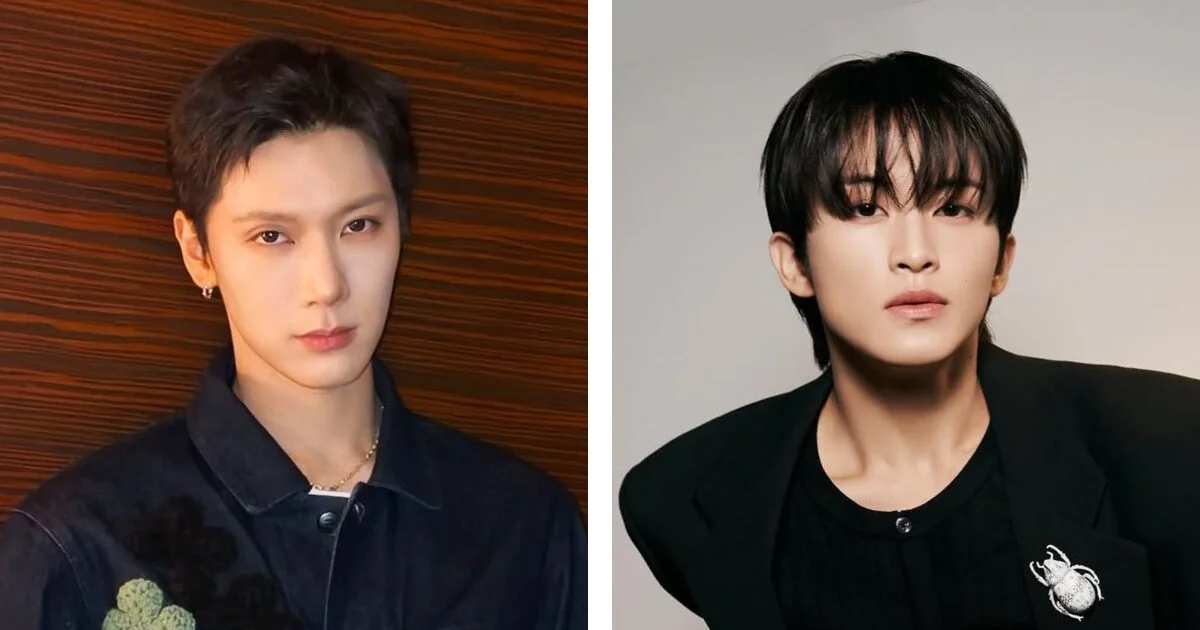
Amidst a series of controversies surrounding former NCT member Mark Lee, a resurfaced 2018 livestream clip featuring him and fellow artists Ten, Johnny, and Jaehyun has ignited fresh debate on social media. The clip, which shows Ten questioning Mark Lee’s use of a distinctive accented English, often referred to as a "blaccent," has been re-examined in light of Mark Lee’s recent public scrutiny, including an incident involving a Confederate flag and subsequent comments perceived as "shameless." This confluence of events has prompted discussions about cultural sensitivity, idol accountability, and the enduring impact of digital footprints in the K-Pop industry.
Mark Lee’s Evolving Career and Mounting Scrutiny
Since his reported departure from NCT, Mark Lee has embarked on a focused journey to establish himself as a solo artist. This transition, while marking a new chapter in his career, has not been without significant challenges. Over the past year, Mark Lee has faced considerable public backlash, notably stemming from two distinct incidents that have drawn widespread criticism from fans and netizens alike.
The most prominent of these controversies involved Mark Lee being photographed wearing attire featuring the Confederate flag. This symbol, deeply rooted in American history, is widely associated with slavery, racism, and white supremacy. Its display by a public figure, particularly one with a global platform in the K-Pop industry, immediately sparked outrage. Critics across various online platforms condemned the attire as insensitive and ignorant of the symbol’s painful historical context, especially given K-Pop’s diverse international fanbase. The incident led to extensive discussions about cultural awareness among idols and the responsibility of their management agencies to educate artists on global socio-political sensitivities. While specific details of his response at the time remain under scrutiny, the initial lack of an immediate, comprehensive apology or explanation only exacerbated the negative sentiment.
Following this initial scandal, Mark Lee garnered further criticism for comments he made, which many netizens described as "shameless." These remarks, though not fully detailed in the immediate reports, were widely interpreted as dismissive of the gravity of the previous controversy or indicative of a lack of genuine remorse. The perception of an inadequate apology or a defensive stance intensified the public’s dissatisfaction, leading to accusations of arrogance and a failure to grasp the severity of his actions. This series of events painted a challenging picture for Mark Lee’s nascent solo career, with many questioning his judgment and sensitivity in navigating a global entertainment landscape. The cumulative effect of these incidents significantly impacted his public image, overshadowing his artistic endeavors and fueling a demand for greater accountability from public figures in the K-Pop sphere.
The 2018 Livestream: A Precursor to Current Debates
Against this backdrop of ongoing controversy, an older clip from a 2018 livestream has resurfaced, offering a new lens through which to view Mark Lee’s past interactions. The livestream featured a segment often referred to by fans as the "foreign swaggers" lineup, including Mark Lee, Ten, Johnny, and Jaehyun, all known for their fluency in English and international backgrounds. In the casual setting of the broadcast, the members were engaging in lighthearted conversation when a particular exchange involving Mark Lee and Ten caught the attention of viewers, both then and now.
During the clip, Mark Lee is observed speaking in an accented English, a style that some perceived as an attempt to appear "cool" or adopt a particular persona. Ten, ever observant and direct, promptly questioned Mark Lee’s speech pattern, asking, "What are you doing?" and further inquiring if that was now the "cool" way to talk, while playfully mimicking Mark Lee’s intonation. Johnny, another member present, commented that this was simply "how Mark speaks," seemingly attempting to diffuse the situation. Mark Lee, in turn, appeared to interpret Ten’s questioning as mere teasing, suggesting he might not have fully grasped the underlying implication of Ten’s observation at the time.
The specific manner of speech employed by Mark Lee in the clip has been identified by many as a "blaccent," a portmanteau of "Black accent." A blaccent refers to the practice of non-Black individuals adopting elements of African American Vernacular English (AAVE) or other Black English dialects. This linguistic appropriation is a contentious issue, rooted in a history where Black linguistic patterns have often been mocked or denigrated when spoken by Black individuals, yet are sometimes adopted and deemed "cool" or "edgy" when used by non-Black individuals. Critics argue that using a blaccent trivializes the cultural significance of AAVE, often perpetuates racial stereotypes, and can be seen as a form of cultural appropriation, particularly when the speaker does not understand or acknowledge the historical and social context of the dialect. This practice can be deeply offensive, as it capitalizes on Black culture without respecting its origins or the people who created it, often reinforcing racialized perceptions of speech and identity. The resurfacing of this 2018 interaction, therefore, has become a focal point for fans to re-evaluate past behaviors in light of current understanding of cultural sensitivity.

Social Media’s Divided Response to the Resurfaced Clip
The re-circulation of the 2018 livestream clip on social media platforms, particularly X (formerly Twitter), has generated a sharply divided response among netizens and K-Pop fandoms. This division highlights the complex dynamics of idol worship, accountability, and the pervasive nature of online discourse.
One segment of the online community has embraced the resurfaced video as "proof" or validation of their long-held suspicions regarding Mark Lee’s character and cultural awareness. Posts from these users often suggest that Ten’s reaction in 2018 was a prescient "clocking" of Mark Lee’s problematic tendencies, indicating that Ten was "aware before us" of a "negative side" or lack of genuine cultural understanding. Comments such as "Ten read him to filth and he was aware before us" and "I’ve hated marks ass since this live CUZ TEN WOKE IT UP" illustrate a narrative where Ten is seen as a discerning figure who subtly called out an issue that has only now become fully apparent to the wider public. This viewpoint often stems from a sense of frustration among fans who feel that problematic behaviors by idols are frequently overlooked or excused until a major scandal forces the issue into the open. For these individuals, the 2018 clip serves as a historical marker, offering retroactive justification for their criticisms and reinforcing a belief that certain aspects of Mark Lee’s personality or cultural insensitivity were always present, albeit less scrutinized at the time. They view the video as a piece of evidence supporting a broader argument for greater accountability from idols.
Conversely, another significant portion of netizens has criticized the act of resurfacing and re-contextualizing the old clip. These critics argue that dragging up past interactions, especially those from several years ago, is a deliberate attempt to "stray off topic" from Mark Lee’s current controversies and "incite more criticism." They contend that such actions represent a form of "digging up some old videos just to say some f*cking nonsense" and describe the behavior as "insufferable." This perspective often emphasizes the dangers of "cancel culture," where past actions are re-evaluated through contemporary lenses, potentially without considering the context of the time or the individual’s growth. Arguments like "oh yall doin that thing again where you stray off topic n analyze old videos to prove why you knew smbd was weird all along" underscore a concern that the focus is shifting from constructive discussion about recent events to an almost predatory search for any past misstep to fuel a broader negative narrative. These users advocate for addressing current issues directly rather than engaging in what they perceive as an unfair or anachronistic judgment of older content, fearing that it creates an environment of constant scrutiny where no public figure is safe from having their entire history weaponized against them. The debate thus reflects broader tensions within online communities regarding accountability, forgiveness, and the appropriate scope of public criticism.
Broader Implications for K-Pop and Idol Culture

The controversy surrounding Mark Lee and the resurfaced clip extends beyond individual actions, touching upon several critical issues facing the global K-Pop industry.
Cultural Appropriation in K-Pop: This incident underscores the persistent and often thorny issue of cultural appropriation within K-Pop. As K-Pop’s global reach expands, so does the scrutiny it receives from diverse international audiences. Instances of idols or groups adopting elements of other cultures—be it hairstyles, fashion, religious symbols, or linguistic patterns like the "blaccent"—without proper understanding, attribution, or respect, frequently lead to accusations of appropriation. While some argue that cultural exchange is natural, the critical distinction lies in power dynamics and historical context. When a dominant culture or a globally influential industry borrows from a marginalized culture without acknowledging its origins or experiencing the struggles associated with it, it can be seen as exploitative and disrespectful. This ongoing debate compels K-Pop agencies and artists to cultivate a deeper understanding of global cultures and to engage with them respectfully, rather than merely using them for aesthetic or stylistic appeal.
Idol Accountability and Fandom Dynamics: The demand for Mark Lee to address his actions and comments reflects a growing expectation for idols to be accountable not just for their performances but also for their social conduct and cultural sensitivity. Modern K-Pop fandoms, especially the international segments, are increasingly vocal and empowered, using social media to mobilize criticism and demand responses from artists and their agencies. This shift signifies a departure from earlier eras where idols were often shielded from direct public scrutiny. Now, fans expect transparency, genuine apologies, and demonstrable efforts towards education and growth. The pressure on agencies to manage these demands while protecting their artists’ careers is immense, requiring sophisticated public relations strategies that prioritize authenticity and engagement over mere damage control.
The Digital Footprint and "Cancel Culture": The resurfacing of a 2018 video highlights the indelible nature of digital content. In the age of pervasive internet presence, virtually every public action or statement by an idol can be recorded, archived, and resurrected years later. This digital permanence means that past mistakes, even minor ones, can be re-evaluated through new social and ethical lenses, leading to what is commonly termed "cancel culture." While "cancellation" can serve as a mechanism for holding powerful individuals accountable, it also raises questions about proportionality, the possibility of growth and redemption, and the fairness of judging past actions by present standards. For idols, this creates an environment of constant vigilance, where every move is potentially subject to intense retrospective scrutiny, impacting their mental health and long-term career viability.
SM Entertainment’s Role and Response: As one of the "Big 3" entertainment agencies, SM Entertainment faces immense pressure to manage these controversies effectively. Typically, agencies employ various strategies, including official statements, apologies (sometimes perceived as generic or forced), temporary artist hiatuses, and internal education programs. The handling of Mark Lee’s situation will likely be a case study in how major agencies navigate contemporary demands for cultural sensitivity and accountability while protecting their artists and brand reputation. The agency’s ability to demonstrate a genuine commitment to addressing these issues, rather than merely weathering the storm, will be crucial for maintaining fan trust and industry standing.
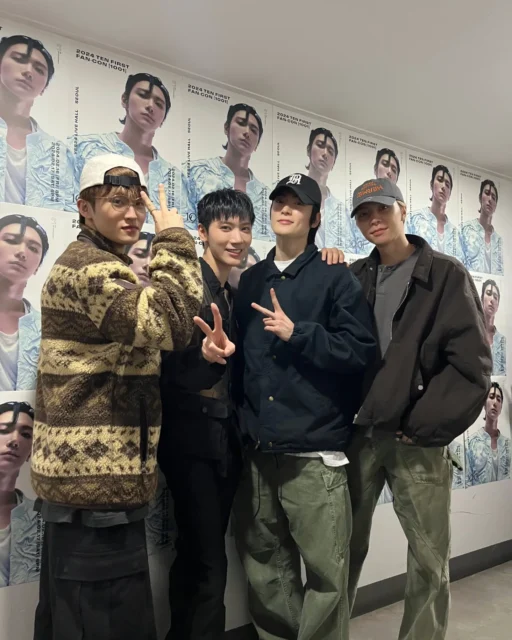
Ten’s Unique Career Trajectory: The article also notes a significant development regarding Ten, stating that he "left SM Entertainment but remained in NCT." This claim, if accurate, represents a highly unusual contractual arrangement within the rigid structure of the K-Pop industry, where artists are typically bound to their agencies for both group and solo activities. Such a scenario could signify evolving contract models in K-Pop, offering artists more autonomy over their management while allowing them to maintain group affiliations. It suggests a potential shift towards hybrid arrangements that could redefine the traditional idol-agency relationship, possibly driven by artists seeking greater control over their careers or agencies adapting to retain valuable talent.
In conclusion, the ongoing controversies surrounding Mark Lee and the subsequent re-examination of his past interactions underscore the complex and evolving landscape of the K-Pop industry. This confluence of events brings to the forefront critical discussions about cultural sensitivity, the demanding nature of idol accountability, and the long-lasting repercussions of one’s digital footprint. As K-Pop continues its global expansion, artists, agencies, and fans alike are continually challenged to navigate these intricate issues with greater awareness, respect, and a commitment to fostering a more inclusive and responsible entertainment environment.