Navigating the Intersection of Black Culture and K-pop Perspectives on Appreciation and the Complexities of Global Appropriation
Article Editorial Team
The global expansion of South Korean popular music, known as K-pop, has transformed a regional genre into a multibillion-dollar international industry. As the Hallyu wave reaches diverse audiences across the Americas, Europe, and Africa, it has increasingly come under scrutiny for its foundational reliance on Black musical traditions. While the influence of hip-hop, R&B, jazz, and gospel is evident in the choreography, vocal arrangements, and aesthetic choices of K-pop idols, the relationship between the industry and its Black fan base remains fraught with complexities. Central to this discourse is the distinction between cultural appreciation—the respectful study and acknowledgment of a culture’s roots—and cultural appropriation, where elements of a marginalized culture are used as a "costume" or a marketing gimmick without regard for their historical or social significance.
The Historical Blueprint of Black Influence in K-pop
To understand the current friction within the fandom, one must analyze the genesis of the modern K-pop idol system. The transition from traditional Korean "trot" music to the contemporary idol format began in the early 1990s with the debut of Seo Taiji and Boys. This group integrated American rap and New Jack Swing into the Korean mainstream, effectively setting the blueprint for the next three decades of music production in Seoul.
Since then, the industry has consistently looked to Black American artists for inspiration. The "training system" employed by major agencies like SM, YG, and JYP often involves hiring Black choreographers, producers, and songwriters to craft the "urban" sound that defines many top-tier groups. However, this aesthetic exchange is not always equitable. As the industry has grown, Black fans have increasingly pointed out instances where the "hip-hop" concept is treated as a disposable trend—a "magic spell for popularity"—rather than a genre with deep political and social roots.

The "Kanye Defense" and the Misuse of Black Icons
A recurring point of contention in the K-pop community is the use of Black celebrities as shields against criticism. A notable example involves Kanye West and his past use of the Confederate flag in fashion. In various roundtable discussions among Black K-pop commentators, including fans like Cjontai and Camiele, it has been noted that non-Black fans often cite West’s actions to defend Korean idols who wear the flag.
The Confederate flag, a symbol deeply associated with slavery and white supremacy in the United States, has appeared in K-pop music videos and fashion spreads, often dismissed by agencies as a "misunderstood" aesthetic choice. The defense of "But Kanye did it" is viewed by many Black fans as a logical fallacy. These commentators argue that one Black individual’s controversial choices do not grant a universal license for others to use painful symbols. This dynamic highlights a broader issue: the tendency of global fans to latch onto a single dissenting voice within the Black community to silence the valid grievances of the majority.

Case Studies in Appropriation: From Blackface to Aesthetic Gimmicks
The chronology of cultural insensitivity in K-pop is documented through several high-profile incidents. In 2014 and 2015, various artists faced backlash for actions ranging from the use of blackface to the casual use of racial slurs in lyrics.
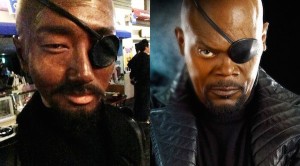
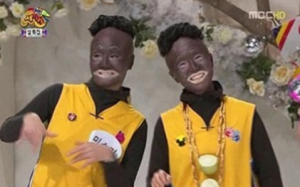
- The Blackface Incident: Super Junior’s Yesung and other idols have, at various points, appeared in blackface for "comedic" skits or as part of a tribute. For Black fans, this invokes the painful history of minstrelsy—a 19th-century theatrical practice used to dehumanize Black people.
- The "N-Word" in Lyrics: Rappers like Zico and San E have faced criticism for using racial slurs. While some fans argue these are "mistakes" born of linguistic ignorance, others point out that in a hyper-connected digital age, the "they didn’t know better" excuse is becoming increasingly obsolete, especially for artists aiming for the U.S. market.
- Aesthetic Gimmickry: The group 4Minute’s "Crazy" and Keith Ape’s "It G Ma" were cited as examples of "appropriation territory." These works utilized "trap" aesthetics—a subgenre of hip-hop originating from the Black experience in the Southern United States—in a way that some felt reduced the culture to a "bad girl" or "tough" caricature.
The Paradox of Cultural Ignorance in a Global Market
The South Korean education system does not typically include the nuances of U.S. racial history or the global impact of the African Diaspora. Consequently, many idols and creative directors may view the Confederate flag or cornrows as mere "Western fashion" rather than symbols of specific historical struggles.

However, as Camiele, a veteran K-pop fan and writer, points out, there is a fundamental contradiction in the industry’s behavior. If Korean record companies "desperately wish to crossover to the States," they have a professional obligation to conduct basic research. The isolationism that once protected the domestic Korean market is no longer a viable defense when an artist’s primary growth strategy involves international touring and digital streaming in Western territories.
Furthermore, the "appropriation vs. appreciation" debate is often framed by the degree of respect shown to the source material. Groups like BTS have been praised for their growth in this area. Early in their career, BTS participated in the reality show American Hustle Life, where they were mentored by hip-hop legends like Coolio and Warren G. Fans noted that the group’s rappers—RM, Suga, and J-Hope—frequently recommend Black artists like D’Angelo and India Arie, signaling a genuine interest in the musicality rather than just the "cool" image.
Data and Demographics: The Power of the Black Fan Base
While specific census data for K-pop fandom by race is difficult to aggregate, social media analytics suggest that Black fans make up a significant and vocal portion of the international Hallyu community. On platforms like Twitter (X) and TikTok, Black "stans" (super-fans) are often the drivers of viral content, translation threads, and digital activism.
The economic impact is also tangible. Black consumers in the U.S. have a buying power of approximately $1.6 trillion, and their influence on global fashion and music trends is undisputed. When K-pop agencies alienate this demographic through insensitive content, they risk more than just social media backlash; they risk losing a key market segment that provides the very "cool factor" the industry seeks to emulate.

Official Responses and the Path to Accountability
The industry’s response to these issues has been inconsistent but shows signs of evolution. For example, Seven Seasons, the agency formerly representing the group Block B, has been noted for responding positively to fans who reached out to educate them on racial matters. In several instances, agencies have issued apologies or edited music videos to remove offensive imagery after being contacted by international fan coalitions.
Despite these small victories, Black fans often report feeling marginalized within the broader fandom. Taylore, a contributor to the Seoulbeats roundtable, highlighted the "lovey-dovey illusion" of fan-produced content—such as fanfiction or "reader-insert" stories—which almost exclusively caters to non-Black physical traits. This lack of representation reinforces the feeling that Black fans are "invisible" until a controversy arises, at which point their outrage is often labeled as "fake" or "bullying" by other fans.

Broader Impact: Toward a Stained-Glass Future
The tension between K-pop and Black culture is a microcosm of a larger global challenge: how to navigate cultural exchange in an era of unprecedented connectivity. For many Black fans, the decision to remain in the fandom despite recurring instances of racism is rooted in a love for the music and a desire for cross-cultural solidarity.
Cjontai, reflecting on her experience, noted that getting into K-pop awakened her to the underrepresentation of Asian artists in the U.S. mainstream. She argues that just as Asian entertainers deserve respect and a platform in the West, the Black roots of the music they perform deserve respect in the East. "Like a stained-glass window," she suggests, "music needs a kaleidoscope of colors for its beauty to shine."
The future of K-pop’s global dominance may depend on its ability to move beyond imitation. If the industry can transition from using Black culture as a "costume" to engaging in a peer-to-peer dialogue with the creators and fans who sustain it, it could set a new standard for international entertainment. Until then, the burden of education continues to fall on the fans, who remain hopeful that their favorite idols will eventually match their musical talent with cultural literacy.
Related News