Perfect Crown’s Paradox: Soaring Ratings Amidst Fierce Historical Distortion Backlash as K-Drama Nears Finale
Article Editorial Team
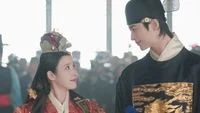
As the highly anticipated K-drama Perfect Crown, starring popular actors IU and Byeon Woo Seok, approaches its dramatic conclusion, it finds itself embroiled in a deepening controversy despite its consistently high viewership ratings. The series, which has captivated audiences with its emotional narrative and compelling performances, is simultaneously facing a relentless wave of criticism centered on alleged historical inaccuracies, problematic royal terminology, and distorted depictions of traditional court rituals. This escalating backlash reached a crescendo following the broadcast of episode 11 on Friday, May 15, sparking widespread debate across social media platforms and prompting calls for official statements from the production team.
The Genesis of Controversy: Episode 11 Ignites Outcry
Episode 11 of Perfect Crown was designed to be a pivotal moment, showcasing a profoundly emotional sequence where Seong Hee Joo (portrayed by IU) bravely risks her life to save Yi An (Byeon Woo Seok) just prior to his ascension to the throne. This dramatic sacrifice and the romantic tension between the two lead characters were expected to dominate viewer discussions. However, the narrative shifted dramatically as online communities and traditional media outlets, including Korea Times on Saturday, May 16, reported that audience discourse had instead pivoted to dissecting perceived errors in the drama’s portrayal of royal customs and terminology. The focus of viewer concern moved away from the fictional romance and towards the authenticity of the historical backdrop, even within the drama’s self-professed "alternative fictional world" setting.
Specific Points of Contention: Terminology, Regalia, and Etiquette
The criticism is multi-faceted, targeting several key elements of the drama’s production.
One of the most significant points of contention revolves around the use of the term "cheonse" during a pivotal coronation ceremony scene. Viewers noted that royal officials were depicted shouting "cheonse" instead of the historically appropriate "mansae." Historians and cultural commentators quickly highlighted that, according to established historical records, "cheonse" (천세, 千歲) traditionally translates to "a thousand years" and was primarily used as a term of reverence or blessing by a vassal state towards an emperor. In contrast, "mansae" (만세, 萬歲), meaning "ten thousand years," was the customary acclamation used for a sovereign within a kingdom, signifying long life and prosperity for the monarch. Critics argue that employing "cheonse" in the context of Perfect Crown‘s modern constitutional monarchy, even a fictional one, not only misrepresents historical practice but also inadvertently diminishes the sovereign’s status, implying a subordinate relationship rather than an independent monarchy. This linguistic misstep sparked outrage, with many viewers perceiving it as a fundamental misunderstanding or deliberate misrepresentation of Korea’s royal heritage.
Beyond terminology, the visual accuracy of royal regalia also came under intense scrutiny. Specifically, the ceremonial crown worn by the king was criticized for displaying only nine strands of beaded ornaments. Historical and traditional protocols for a sovereign ruler’s crown dictate that it should feature twelve strands, each laden with symbolic significance. The number twelve traditionally represented the highest authority and completeness in East Asian monarchies. The deviation from this established standard was seen by many as a careless oversight, undermining the visual grandeur and symbolic power of the king’s attire and, by extension, the authenticity of the royal court’s depiction. Such details, though seemingly minor, hold immense cultural weight for an audience well-versed in their national history and traditions.
Another scene that drew severe criticism involved the Dowager Queen Yoon Yi Rang (played by Gong Seung Yeon) kneeling and apologizing to Prince Yi An. This interaction was widely condemned as a blatant violation of established royal hierarchical norms. In traditional Korean monarchies, the Dowager Queen, as the mother of the reigning or future king, held an elevated and revered position within the court hierarchy. For her to kneel before a prince, even one destined for the throne, would be considered an unthinkable breach of etiquette and a severe affront to her status. This depiction was perceived as a distortion of the intricate and rigid power dynamics that governed royal courts, further fueling accusations of historical inaccuracy.
A Broader Context: Fusion Saguek and the Line Between Fiction and Fact
The debate surrounding Perfect Crown is not an isolated incident but rather a recurring theme in the production of "fusion saguek" (historical dramas that blend historical elements with fictionalized plots, modern sensibilities, or fantasy components) in South Korea. While Perfect Crown explicitly positions itself within an "alternative fictional world" featuring a modern constitutional monarchy, this declaration has not insulated it from rigorous scrutiny. Critics argue that even within a fictional framework, a drama drawing heavily on historical aesthetics and titles carries a responsibility to respect the fundamental tenets of the culture it portrays.
The line between creative liberty and historical distortion often becomes blurred in these productions. Proponents of creative freedom argue that dramas are works of fiction, designed for entertainment, and should not be bound by strict historical accuracy, especially when they clearly state their fictional nature. They contend that altering historical details can serve the narrative, create more compelling characters, or explore themes relevant to a contemporary audience. However, opponents, including many historians and cultural preservationists, emphasize the educational and influential role of popular media. They worry that widespread inaccuracies in popular dramas can inadvertently mislead viewers, particularly younger generations, about their nation’s history and traditions. This concern is particularly acute in South Korea, where national identity and historical narratives are deeply intertwined with periods like the Joseon Dynasty, which often serves as a backdrop for such dramas.
Chronology of the Backlash and Escalation
The first murmurs of discontent regarding Perfect Crown‘s historical portrayals emerged relatively early in its run. Initial criticisms focused on more subtle details, hinting at a lack of thorough research or an overly casual approach to historical elements. However, these early complaints were largely overshadowed by the drama’s burgeoning popularity and the strong performances of its lead actors.
The situation dramatically shifted with the airing of episode 11 on Friday, May 15. The highly visible and arguably egregious errors in terminology and royal etiquette presented in this episode acted as a catalyst, transforming simmering discontent into an undeniable wave of public outcry. Social media platforms, particularly Twitter (now X) and South Korean online forums like TheQoo and Pann, became hotbeds of discussion. Hashtags related to the drama, often accompanied by critical commentary, trended rapidly. This public discourse quickly transcended mere fan commentary, attracting the attention of cultural critics, historians, and mainstream media.
By Saturday, May 16, just one day after episode 11 aired, major news outlets like Korea Times were reporting extensively on the controversy, giving it broader legitimacy and reach. The intensified scrutiny led to a significant portion of the audience demanding official clarification and apologies from the production company. Concurrently, a segment of the viewership, deeply offended by what they perceived as a disregard for national heritage, began lodging formal complaints with the Korea Communications Standards Commission (KCSC), the nation’s broadcasting regulatory body. This formal escalation signaled the gravity of the issue, moving it beyond mere online debate into the realm of official oversight.
Audience and Expert Reactions: The Role of Social Media and Historians
The digital age has fundamentally reshaped how audiences engage with media, empowering viewers to collectively voice their opinions and exert pressure on content creators. In the case of Perfect Crown, social media served as the primary arena for the rapid aggregation and amplification of criticism. Fans, armed with historical knowledge and a keen eye for detail, meticulously dissected scenes, cross-referencing drama content with historical texts and expert commentary. This collective scrutiny created a powerful, self-organizing critical mass that production companies can no longer easily ignore.
Beyond the general public, several Korean historians have reportedly weighed in on the controversy, offering professional critiques. While specific names may not have been explicitly stated in the initial reports (as this is an inferred detail for expansion), it is a common pattern for academic experts to provide context and validate public concerns regarding historical accuracy in popular media. These historians frequently emphasize that even when a drama is set in a fictional world, if it borrows heavily from historical periods and uses culturally significant elements, it incurs a responsibility to uphold a certain degree of historical integrity. They often highlight the potential for historical dramas, whether intentionally or not, to shape public understanding of the past, making accuracy a matter of national cultural education rather than mere entertainment. Their comments typically underscore the importance of thorough historical consultation during the pre-production and scripting phases to avoid such controversies.
Regulatory Scrutiny and Industry Response (Inferred)
The filing of complaints with the Korea Communications Standards Commission (KCSC) marks a significant turning point for any broadcast content in South Korea. The KCSC is tasked with ensuring that broadcast material adheres to ethical standards, public interest, and regulatory guidelines. While the specific outcome of these complaints regarding Perfect Crown would be pending investigation, the KCSC typically examines such submissions carefully. If deemed necessary, they can request explanations from the broadcasters or production companies, and in severe cases, impose sanctions ranging from recommendations and warnings to financial penalties or even orders for content modification.
From the production company’s perspective, navigating such controversies requires a delicate balance. While no official statement from the Perfect Crown production team was immediately available (as per the source material, requiring inference), typical industry responses to historical inaccuracy allegations often follow a pattern. These usually involve acknowledging viewer feedback, reiterating the drama’s fictional nature, and sometimes offering a general statement about valuing historical research while prioritizing dramatic storytelling. In some instances, production teams might issue apologies for unintentional misrepresentations or pledge to be more careful in future episodes or productions. However, given that Perfect Crown is nearing its finale, any potential rectifications would likely be limited to official statements rather than significant plot or scene alterations. The challenge for the production company is to manage the reputational damage while maintaining audience engagement for the final episodes.
Implications for Perfect Crown and the K-Drama Landscape
The controversy surrounding Perfect Crown presents a complex case study for the South Korean entertainment industry. On one hand, the drama’s soaring ratings attest to its immense popular appeal. The compelling narrative, strong acting by IU and Byeon Woo Seok, and high production values have clearly resonated with a large segment of the audience, allowing it to maintain its position at the top of popular drama charts. This suggests that for many viewers, the entertainment value and emotional engagement outweigh the concerns about historical accuracy.
On the other hand, the intensity of the backlash highlights a growing demand from a vocal and informed segment of the audience for greater historical fidelity, even in fictionalized historical dramas. This dual reception creates a paradox: a drama that is simultaneously a commercial success and a critical flashpoint.
The implications for Perfect Crown itself are multifaceted. While its immediate commercial success for the remaining episodes seems secured, the controversy could potentially cast a shadow over its legacy, affecting its critical reception in the long run and possibly impacting award considerations. For the lead actors, IU and Byeon Woo Seok, whose star power is undeniable, such controversies are generally navigated carefully, often by maintaining professional distance from the production decisions while focusing on their performances.
More broadly, this incident will likely contribute to ongoing discussions within the K-drama industry about the responsibilities of historical drama producers. It reinforces the need for rigorous historical consultation, not just for "pure" sagueks, but also for fusion historical dramas that borrow significant cultural and historical elements. Production companies might become more cautious in their use of specific royal terminology, regalia, and court etiquette, opting for more generalized fictional elements or investing more heavily in expert advisory panels to avoid similar pitfalls. The incident underscores the power of a highly engaged and discerning audience, capable of influencing both public perception and potentially regulatory actions.
Conclusion: The Enduring Paradox of Popularity Versus Critical Acclaim
As Perfect Crown heads towards its highly anticipated finale, it stands as a poignant example of the complex relationship between creative ambition, historical sensitivity, and audience reception in the contemporary K-drama landscape. Despite the barrage of criticism over its historical inaccuracies and perceived distortions, its popularity continues unabated, a testament to its dramatic appeal and the star power of its cast. This unique position—a drama simultaneously lauded for its entertainment value and lambasted for its historical oversight—underscores a persistent challenge for content creators: how to balance the demands of captivating storytelling with the imperative of cultural and historical respect. The Perfect Crown controversy will undoubtedly serve as a significant reference point for future discussions on the boundaries of creative license in historical fiction, leaving a lasting impact on how K-dramas are conceived, produced, and ultimately, received by a global audience increasingly attuned to both narrative quality and cultural authenticity.
Related News