South Korea Overexposure Law Sparks International Controversy Amid Misinterpretations of Public Indecency Regulations
Article Editorial Team

The South Korean government, under the administration of President Park Geun-hye, implemented a revised Minor Offenses Act in late March 2013, introducing a specific clause regarding public "overexposure." The legislation, which mandates a fine of 50,000 South Korean Won (approximately $45 to $48 USD) for individuals found guilty of "overexposure in public places," immediately became a focal point of intense domestic debate and international media scrutiny. While the government maintained that the law was a standard update to public indecency regulations, a wave of misinterpretation led to widespread reports that South Korea had effectively banned miniskirts and instituted a restrictive dress code reminiscent of the country’s authoritarian past.
The controversy highlights a complex intersection of legislative intent, historical trauma, and the rapid-fire nature of modern social media. For many South Koreans, the language of the law evoked memories of the 1970s, a period during which the country was governed by President Park Chung-hee—the father of President Park Geun-hye. During that era, strict social controls were enforced, including the physical measurement of skirt lengths and hair by police officers. The 2013 revision, though legally distinct from those historical mandates, triggered a significant cultural backlash that eventually reached a global audience through major Western news outlets.
Legislative Intent and the Scope of the Revision
The revision to the Minor Offenses Act was approved during a cabinet meeting presided over by President Park Geun-hye on March 11, 2013, shortly after her inauguration as the nation’s first female head of state. The primary objective of the update was to consolidate and modernize various petty offense regulations that had been in place for decades. According to official statements from the National Police Agency (NPA), the "overexposure" clause was specifically designed to address public nudity and "flashing" rather than to regulate the fashion choices of ordinary citizens or K-pop performers.
Under the specific terms of the law, individuals who cause "discomfort or embarrassment to others by excessively exposing parts of the body that should be covered" in public spaces are subject to the 50,000 KRW fine. Police officials clarified that the law was an evolution of existing statutes meant to curb indecent exposure, which previously carried more ambiguous penalties. The government argued that the update provided a clearer legal framework for law enforcement to handle public disturbances, such as public urination or extreme cases of public nudity, which remain persistent issues in urban centers like Seoul.

Historical Context: The Yushin Era and Social Control
To understand the intensity of the public reaction, one must look to South Korea’s history of the 1970s under the Yushin Constitution. During the regime of Park Chung-hee, the government implemented the "Minor Offense Law" of 1973, which gave the state broad powers to regulate personal appearance. At the time, "long hair" on men and "short skirts" on women were viewed as symbols of Western-influenced decadence and social disorder.
Police officers during the 1970s were famously equipped with bamboo rulers to measure the distance between a woman’s knee and the hemline of her skirt. If the skirt was more than 20 centimeters (approximately 7.8 inches) above the knee, the wearer could be fined or detained. Similarly, men with hair reaching their collars were often subjected to forced haircuts on the street. Because President Park Geun-hye is the daughter of the leader who oversaw these restrictions, her administration’s introduction of an "overexposure" law was viewed by political opponents and civil rights activists as a symbolic return to "old-fashioned" governance and a potential infringement on personal freedoms.
Chronology of the 2013 Controversy
The timeline of the controversy reveals how a domestic legislative update transformed into an international news story:
- March 11, 2013: The Cabinet of South Korea approves the revision to the Minor Offenses Act during its first meeting under the Park Geun-hye administration.
- March 12–15, 2013: News of the "overexposure" clause spreads through Korean social media. Opposition politicians begin drawing parallels between the new law and the 1970s dictatorship.
- March 16, 2013: Prominent celebrities, including K-pop icon Lee Hyori, post satirical or concerned messages on Twitter. Lee Hyori’s tweet—"Is the overexposure fine for real? I’m dead"—goes viral, garnering thousands of retweets and heightening public anxiety.
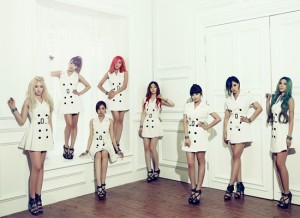
- March 20–22, 2013: Western media outlets, including the UK’s Daily Mail and the US-based CNN, pick up the story. Many headlines explicitly state that South Korea is "banning miniskirts," often featuring photos of K-pop groups like Girls’ Generation to illustrate the potential impact.
- March 22, 2013: The National Police Agency issues a formal clarification, stating that the law does not target miniskirts or K-pop costumes and that the enforcement would remain focused on public nudity.
- March 22, 2013: Government spokesperson Yoon Chang-jung holds a press conference to denounce "groundless rumors" and clarifies that the law was actually initiated by the previous administration (Lee Myung-bak) and merely finalized by the current cabinet.
Supporting Data and Comparative Legal Standards
Data from the South Korean National Police Agency suggests that the "overexposure" law is part of a broader category of petty crimes that are rarely prosecuted unless they involve significant public disturbance. In the year prior to the revision, thousands of citations were issued for minor offenses, but the vast majority were related to public intoxication, noise complaints, and smoking in prohibited areas.
When compared to international legal standards, South Korea’s 50,000 KRW fine is relatively lenient. In many jurisdictions in the United States, "indecent exposure" is classified as a misdemeanor and can result in fines ranging from $500 to $2,000, as well as potential jail time and registration as a sex offender. In the United Kingdom, the Public Order Act 1986 and the Sexual Offences Act 2003 provide frameworks for punishing "intentional exposure," which can carry much more severe penalties than the summary fine introduced in South Korea.
The South Korean law’s primary distinction is its placement within the "Minor Offenses" category, which is intended to be handled quickly by patrol officers through a ticketing system, similar to a traffic violation, rather than through a formal criminal trial.
Official Responses and Political Reactions
The political reaction within South Korea was sharply divided along partisan lines. Members of the Democratic United Party (the primary opposition at the time) used the law to criticize the Park administration’s perceived lack of communication with the public. Representative Ki-sik Kim stated that the government was "focusing on regulating the lifestyles of citizens rather than addressing more pressing economic issues."
Conversely, the ruling Saenuri Party defended the measure as a necessary step for public order. They pointed out that the revision had been under discussion since 2006 and was intended to simplify the legal code. Government officials expressed frustration with the media’s focus on miniskirts, arguing that such reporting ignored the other 27 types of minor offenses addressed in the bill, such as "persistent stalking," "throwing trash," and "falsifying one’s identity."
The National Police Agency’s social media accounts were particularly active during the last week of March 2013, attempting to debunk the "miniskirt ban" myth. One official NPA post clarified: "The purpose of this law is to prevent acts that cause extreme sexual disgust. As long as you are not naked in public, you have nothing to worry about."
Impact on the K-pop Industry and Cultural Perception
The international reporting on the law had a temporary but notable impact on the perception of South Korea’s "Hallyu" or Global Wave. The K-pop industry, a multi-billion dollar export for the country, relies heavily on visual aesthetics, which often include short skirts and stylized costumes. The suggestion that the government might regulate the industry’s wardrobe caused brief concern among entertainment agencies.

However, as the reality of the law became clear—that it would not be enforced against fashion choices—the industry returned to business as usual. Fashion analysts noted that if the government had truly intended to ban miniskirts, it would have faced insurmountable opposition from the domestic textile and retail industries, as well as a massive backlash from the youth demographic that forms the core of the country’s cultural soft power.
Broader Implications and Media Analysis
The 2013 overexposure law controversy serves as a case study in the risks of "echo-chamber" journalism. Western media outlets were criticized for failing to provide the necessary cultural and legal context, opting instead for sensationalist headlines that framed South Korea as a regressive society. This reporting ignored the fact that South Korea has one of the most vibrant and modern fashion scenes in Asia.
Furthermore, the incident highlighted the power of celebrity influence in the digital age. The initial spark for the international hysteria was not the law itself, but the reactions of celebrities like Lee Hyori. In a hyper-connected society like South Korea, a single social media post from a high-profile figure can shape public discourse more effectively than official government communiqués.
Ultimately, the "overexposure law" did not result in a crackdown on miniskirts. Years after its implementation, the fashion landscape in Seoul remains as diverse and daring as ever. The law continues to exist as a minor regulatory tool for police to manage public indecency, while the "miniskirt ban" remains a cautionary tale about the importance of journalistic integrity and the complexities of legislative interpretation in a post-authoritarian society.
Related News