South Korea’s First Female Presidency and the Commercialization of Empowerment in Popular Culture
Article Editorial Team
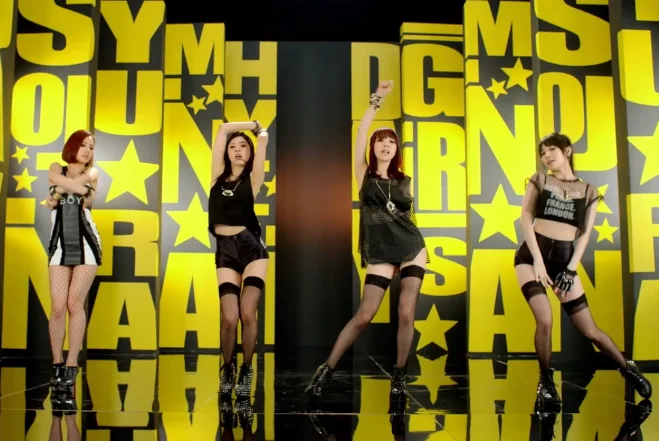
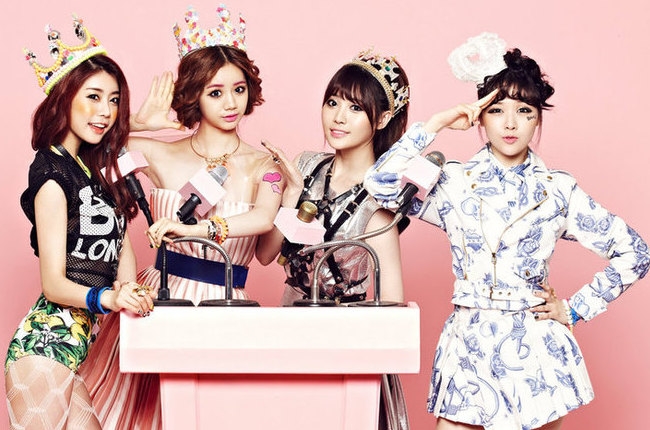
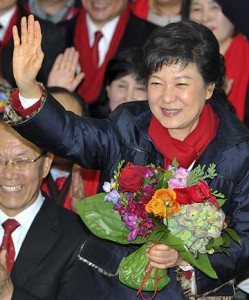
The election of Park Geun-hye as the first female president of South Korea in December 2012 represented a historic shift in the nation’s political landscape, which had long been dominated by patriarchal structures. Representing the conservative New Frontier Party—formerly the Grand National Party and known in Korean as the Saenuri Party—Park secured victory by a narrow margin, a feat that drew global attention to the evolving role of women in East Asian governance. However, the ascension of a female head of state to the Blue House (CheongWaDae) did not merely trigger political debate; it permeated the nation’s cultural fabric, prompting the K-pop industry to attempt to capitalize on this "watershed moment." The most prominent example of this was the June 2013 release of "Female President" by the girl group Girl’s Day, a track that claimed to champion women’s empowerment but ultimately highlighted the persistent gap between symbolic political milestones and the lived socio-economic realities of South Korean women.
The Political Ascent of Park Geun-hye
Park Geun-hye’s journey to the presidency was marked by both historic significance and deep-seated controversy. As the daughter of Park Chung-hee, the military leader who ruled South Korea for nearly two decades, her candidacy was viewed through a dual lens. To her supporters, she represented the stability and economic growth associated with her father’s era. To her detractors, particularly within the progressive Democratic United Party (Minju Party), she was seen as an extension of an autocratic legacy, accused of benefiting from a political lineage rather than merit.
Despite these divisions, her inauguration in February 2013 was framed by many as a potential turning point for gender equality. In a country that consistently ranked at the bottom of the Organisation for Economic Co-operation and Development (OECD) in terms of gender rights and economic parity, the presence of a woman at the highest level of government suggested that institutional barriers might finally be eroding. This political backdrop provided the perfect environment for cultural entities to explore themes of female leadership and autonomy.
Socio-Economic Disparities and the "Glass Ceiling"
While the political sphere celebrated a symbolic victory, the statistical reality for women in South Korea remained grim during the early 2010s. According to data from the OECD, South Korea maintained the highest gender wage gap among member nations, with women earning approximately 36% to 39% less than their male counterparts. Furthermore, the nation’s labor market exhibited a "U-shaped" participation curve: women were highly active in the workforce in their early 20s after graduating from prestigious universities, but their participation plummeted in their 30s due to the pressures of child-rearing and a lack of supportive corporate infrastructure.
The "glass ceiling" was not merely a metaphor but an institutionalized reality. Promotions were often reserved for men, and the tension between maintaining a career and fulfilling traditional familial expectations led many women to leave the workforce entirely. It was within this climate of systemic inequality that Girl’s Day, a group then ascending to the top tier of the K-pop industry, released "Female President," a song that ostensibly sought to translate Park Geun-hye’s political success into a social anthem for the younger generation.
Chronology of the "Female President" Release
The release of "Female President" followed a pivotal period for Girl’s Day. The group, consisting of members Sojin, Yura, Minah, and Hyeri, had recently transitioned from a "cute" aesthetic to a more mature, "sexy" concept with their previous hit, "Expectation," in March 2013.
- December 2012: Park Geun-hye wins the presidential election.
- February 2013: Park is inaugurated as the 11th President of South Korea.
- March 2013: Girl’s Day releases "Expectation," marking a successful rebranding.
- April 2013: Member Hyeri’s relationship with veteran idol Tony Ahn is made public, significantly increasing the group’s media profile.
- June 24, 2013: Girl’s Day releases the repackaged album and the music video for "Female President," explicitly referencing the new political era.
The timing was calculated to leverage both the political climate and the group’s burgeoning popularity. The title alone suggested a bold statement on gender roles, leading many to anticipate a song that might address the challenges faced by women in modern Korean society.
Analysis of "Female President" and the Definition of Empowerment
Upon its release, "Female President" met with significant commercial success but faced critical scrutiny regarding its message. The lyrics, rather than addressing the systemic issues of the wage gap, employment discrimination, or reproductive rights, focused almost exclusively on romantic agency. The central thesis of the song was that because South Korea now had a female president, it was acceptable for a woman to initiate a kiss or confess her feelings to a man first.
Critics argued that this framing trivialized the significance of the presidency. By equating political power with the "bravery" to pursue a boyfriend, the song arguably reinforced the very patriarchal structures it claimed to challenge. The empowerment depicted was reactive, defined entirely by a woman’s relationship to a man. Furthermore, certain lyrical passages undermined the message of strength, with the members describing themselves as "dizzy" or "like a baby" in the presence of their love interests.
Visual Representation and Styling Controversies
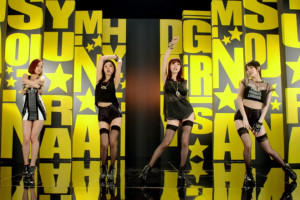
The music video for "Female President" further complicated the group’s message of empowerment. Directed with high production values, it featured a blend of provocative styling and symbolic role-reversal. One of the most discussed elements was the "androgynous" styling of Hyeri, who wore a suit and short hair to play a masculine role opposite Minah. The video culminated in a near-kiss between the two members, a scene that was considered "saucy" and "risque" by the standards of the time.
However, the styling also drew criticism. The use of skin-colored body suits and choreography that emphasized sexual appeal led to debates over whether the video was designed for the "female gaze" of empowerment or the "male gaze" of consumption. While some argued that sexual liberation is a component of feminism, others pointed out that the visual language of the video—including a sequence involving a screen dance reminiscent of Beyoncé’s "Naughty Girl"—was deeply rooted in established K-pop tropes of objectification.
Public and Industry Reactions
The reaction to "Female President" was polarized. Fans of the group praised the members’ confidence and the catchy, high-energy production of the track. Within the K-pop industry, it was seen as a successful marketing move that solidified Girl’s Day’s position as a "Trend Idol." The group received their first-ever music show win with the track, signaling their arrival in the upper echelon of the industry.
Conversely, social commentators and feminist advocates noted the missed opportunity. While the song used the image of the presidency, it avoided the substance of the struggle. Industry analysts observed that the K-pop business model often uses "girl power" as a marketable aesthetic rather than a political stance. By staying within the safe confines of romantic pursuit, the group and their management (Dream Tea Entertainment) avoided the potential backlash that would have come from addressing more divisive issues, such as South Korea’s restrictive abortion laws or the lack of female representation in corporate boardrooms.
Broader Impact and Implications
In retrospect, "Female President" serves as a cultural artifact of the early Park Geun-hye era. It illustrates the way in which significant political milestones are often diluted when processed through the machinery of popular culture. While the election of a female president was indeed a "watershed" in terms of representation, it did not immediately translate into a broader social revolution.
The song’s legacy is one of commercial triumph rather than social change. It helped Girl’s Day achieve a new level of stardom, but it did little to shift the needle on the substantive issues facing women in South Korea. The "impact" was felt in the charts and the group’s endorsement deals, but the entrenched patriarchy of the labor market and the domestic sphere remained largely untouched by the "girl power" anthem.
As South Korea continued to navigate the complexities of the 21st century, the gap between the symbolic power of a female president and the daily struggles of the average woman remained a central theme in the national discourse. "Female President" remains a reminder that while pop culture can reflect political change, it is often more concerned with the aesthetics of empowerment than the arduous work of social progress. The song successfully asked if it was a crime for a woman to kiss a man first, but it left the more difficult questions of equality and justice for others to answer.
Related News