South Korea’s First Female President and the Cultural Reflection in K-pop’s Female President by Girl’s Day
Article Editorial Team
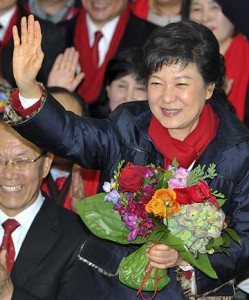
The transition of power in South Korea between 2012 and 2013 marked a significant turning point in the nation’s democratic history. In December 2012, Park Geun-hye, a veteran representative of the conservative New Frontier Party (Saenuri Party), secured victory in a closely contested presidential election. Her inauguration in February 2013 officially established her as the first female head of state in South Korea, a milestone that resonated both domestically and internationally. This political shift prompted a surge of cultural responses, most notably within the K-pop industry, where the girl group Girl’s Day released a single titled Female President. The intersection of this high-level political achievement and its interpretation in popular media offers a complex look at the state of gender dynamics and female empowerment in South Korean society.
The Political Ascent of Park Geun-hye
Park Geun-hye’s journey to the Blue House (Cheong Wa Dae) was steeped in both historical legacy and modern controversy. As the daughter of Park Chung-hee, the military leader who ruled South Korea from 1961 to 1979, her candidacy was viewed through a dual lens. To her supporters, she represented a return to the disciplined economic growth of her father’s era; to her detractors, she was a symbol of a past authoritarian regime.
The 2012 election saw Park Geun-hye of the Saenuri Party face off against Moon Jae-in of the Democratic United Party (Minju Party). Park won with 51.6% of the vote, a narrow but decisive margin. Her victory was hailed by many as a "watershed moment" for women’s rights in a country historically dominated by patriarchal structures. However, the opposition often argued that her rise was less a victory for gender equality and more a result of her political pedigree and the institutional strength of the conservative establishment.
Despite the debates surrounding her background, the symbolic weight of a woman occupying the highest office in the land was undeniable. It suggested a potential shift in the national consciousness regarding the role of women in leadership, governance, and public life.
Socio-Economic Context: Gender Inequality in South Korea
To understand the impact of Park Geun-hye’s presidency and the subsequent cultural commentary, one must examine the socio-economic environment for women in South Korea during this period. Statistically, South Korea has frequently ranked at the bottom of the Organization for Economic Co-operation and Development (OECD) regarding gender equality metrics.
In 2012 and 2013, the gender wage gap in South Korea was approximately 39%, the highest among OECD nations. Furthermore, the "Glass Ceiling Index" published by The Economist consistently placed South Korea last, citing low levels of female representation in senior corporate roles and the National Assembly. Women also faced significant challenges regarding the "M-curve" in employment—a trend where women exit the workforce in their late 20s or 30s due to marriage and childbirth, often struggling to re-enter at the same professional level.
Legal and social barriers also remained prevalent. Issues such as restrictive reproductive rights and institutionalized sexism in hiring and promotion processes were major points of contention for activists. It was against this backdrop of systemic inequality that the "Female President" narrative began to circulate in the media.
Cultural Intersection: Girl’s Day and the Release of Female President
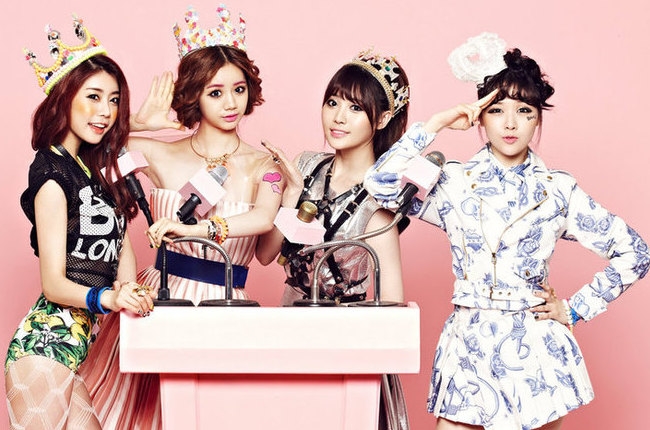
In June 2013, several months into Park Geun-hye’s term, the K-pop group Girl’s Day released the lead single for their repackaged first album, titled "Female President." The group, consisting of members Sojin, Yura, Minah, and Hyeri, had recently transitioned from a "cute" concept to a more mature and "sexy" image, a common trajectory for girl groups seeking to solidify their market share.
The song was marketed as a "girl power" anthem, capitalizing on the national conversation surrounding the presidency. The timing was strategic, aiming to align the group’s brand with the themes of leadership and breaking barriers. However, the lyrical content and the music video’s execution sparked a debate among critics and fans regarding the depth of the empowerment being portrayed.
Chronology of the Song’s Release and Reception
- December 19, 2012: Park Geun-hye wins the 18th presidential election.
- February 25, 2013: Park Geun-hye is inaugurated as President.
- June 20, 2013: Dream Tea Entertainment releases the first teaser for Girl’s Day’s "Female President," featuring military-inspired aesthetics and a "sexy" concept.
- June 24, 2013: The full music video and digital single are released.
- July 7, 2013: Girl’s Day wins their first-ever music show trophy on SBS Inkigayo with "Female President," though the broadcast was cancelled due to a plane crash news report.
Thematic Analysis: Empowerment vs. Traditional Tropes
The central critique of "Female President" lies in the discrepancy between its title and its message. While the title references a monumental political shift, the lyrics focus almost exclusively on interpersonal romantic relationships. The song’s primary hook asks why women cannot be the ones to initiate a kiss or express love first, using the existence of a female president as a rhetorical justification for this behavior.
From a journalistic and sociological perspective, this framing is significant. Critics argued that the song reduced the concept of female empowerment to the "freedom" to pursue men more aggressively. This stands in stark contrast to the actual challenges faced by South Korean women, such as the wage gap or workplace discrimination. The song implies that because a woman is in the Blue House, social barriers have vanished, leaving "kissing first" as the final frontier of equality.
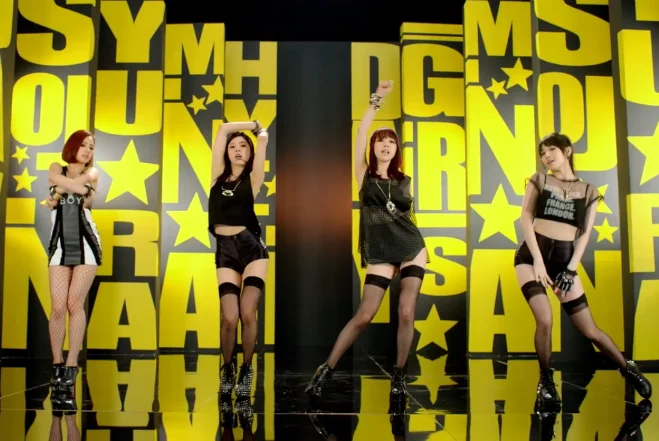
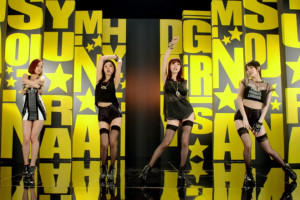
Furthermore, the music video utilized traditional "sexy" tropes common in the K-pop industry at the time. Despite the "power" theme, the choreography and styling—including high-slit dresses and body-hugging outfits—were clearly designed for the male gaze. A notable scene in the video featured member Minah and an androgynously styled Hyeri in a near-kiss, which was interpreted by some as a provocative attempt to generate "buzz" rather than a genuine exploration of gender roles or queer identity.
Public and Industry Reactions
The reception of "Female President" was polarized. On one hand, the song was a commercial success, propelling Girl’s Day into the top tier of girl groups. The "salute" dance became a viral trend, and the group received praise for their high-energy performances. For many fans, the song was simply an upbeat pop track with a catchy hook, and the political tie-in was viewed as clever marketing.
On the other hand, cultural commentators and feminist scholars pointed out the shallowness of the "empowerment." They noted that the song’s lyrics still portrayed women as being "dizzy" or "weak" in the presence of men, contradicting the assertive message of the title. The argument was that the song utilized the image of a female president to sell a product without engaging with the reality of what that presidency meant for the average woman’s life.
Industry experts noted that this was a classic example of "concept-driven" K-pop. Agencies often latch onto current events or social trends to provide a "hook" for a comeback. In the case of Girl’s Day, the "Female President" concept provided a unique angle that distinguished them from competitors like A Pink, Dal Shabet, or Rainbow, who were exploring different niches of the "cute" or "sexy" spectrum.
Broader Implications and Long-term Impact
The era of Park Geun-hye’s presidency and the cultural artifacts it inspired, such as Girl’s Day’s single, serve as a case study in how pop culture processes political change. While the election of a female president was a historic first, it did not immediately translate into systemic social reform. In fact, South Korea’s gender equality rankings remained largely stagnant throughout Park’s tenure.
The "Female President" single illustrates the limitations of K-pop as a medium for social commentary during the early 2010s. While it flirted with themes of authority and breaking norms, it remained tethered to the commercial necessity of appealing to a broad audience through traditional gender performances.
Ultimately, the impact of the song on South Korean society was minimal in terms of driving actual policy change or shifting deep-seated patriarchal views. It did, however, highlight the growing appetite for "girl crush" and "empowerment" themes in music—a trend that would continue to evolve in the following years with groups like Mamamoo, Blackpink, and (G)I-DLE, who would eventually push the boundaries of these concepts further.
In retrospect, the 2012-2013 period was a time of paradox for South Korean women. They saw one of their own reach the pinnacle of political power, yet the cultural representation of that power in mainstream media remained focused on romantic initiative and aesthetic appeal. The "Female President" era remains a significant, if complicated, chapter in the ongoing dialogue regarding gender, power, and pop culture in East Asia.
Related News