


The announcement on May 15, 2014, that Kris Wu (Wu Yifan), the leader of the Mandarin-language sub-unit EXO-M, had filed a lawsuit against SM Entertainment to terminate his exclusive contract sent shockwaves through the global music industry. Filed at the Seoul Central District Court, the lawsuit did more than just threaten the stability of K-pop’s most successful rising group; it exposed the deep-seated tensions between South Korea’s largest talent agency and its international artists. While the legal arguments centered on "slave contracts," health neglect, and financial transparency, the ensuing conflict revealed a complex web of cultural expectations, emotional bonds, and the unique Korean sociological concepts of "jeong" and "haan."
The Legal Catalyst: Allegations of Exploitation
The legal basis for the lawsuit filed by Kris Wu’s legal representative, the law firm Hankyul, mirrored previous high-profile disputes involving SM Entertainment. The core of the complaint alleged that the agency treated the artist as a commodity rather than a human being, ignoring his individual career goals and physical well-being. According to legal filings, the contract was deemed invalid because it granted the agency excessive control over the artist’s life and professional choices, a recurring theme in the South Korean "idol" system.
Specific grievances included the grueling schedule imposed during EXO’s "Overdose" promotions and the alleged disregard for Kris’s health. Reports surfaced that the artist had been diagnosed with suspected myocarditis—an inflammation of the heart muscle—yet was pressured to maintain a rigorous performance schedule. Furthermore, the lawsuit pointed toward an unfair distribution of profits, claiming that despite EXO’s massive commercial success, the financial compensation did not reflect the group’s revenue generation.
Chronology of a Crisis: From Filing to the "Lost Planet"
The timing of the lawsuit was particularly volatile, occurring just one week before EXO’s first solo concert, "EXO From. EXOPLANET #1 – THE LOST PLANET." The timeline of events illustrates the rapid escalation of the conflict:
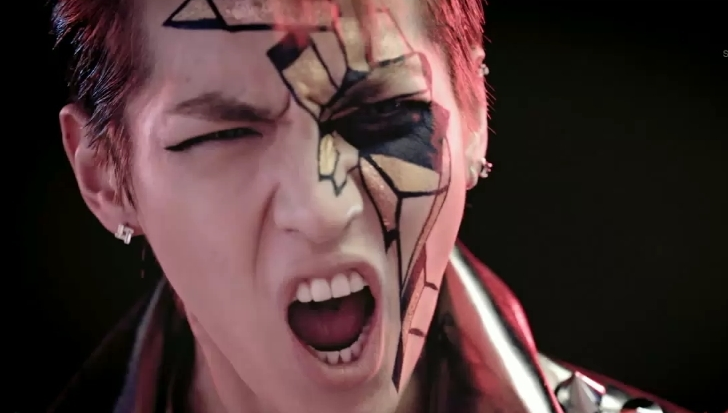
- May 15, 2014: News breaks that Kris has filed a lawsuit for contract termination. SM Entertainment issues a brief statement expressing shock and promising to ensure EXO’s scheduled activities continue.
- May 16–20, 2014: The remaining eleven members of EXO begin unfollowing Kris on social media platforms like Instagram. Public statements from members begin to emerge, ranging from confusion to overt disappointment.
- May 21, 2014: SM Entertainment confirms that Kris will not participate in the upcoming concert. The agency begins offering refunds to fans specifically disgruntled by his absence and removes Kris-related merchandise from the venue.
- May 23, 2014: At a press conference held before the first concert, group leader Suho describes the situation as "painful and confusing," but emphasizes the group’s commitment to their fans.
- May 23–25, 2014: EXO performs as an 11-member group, re-choreographing their entire setlist in less than seven days to account for the loss of their sub-unit leader.
The Emotional Framework: Jeong and the Weight of Betrayal
To understand why the reaction from the remaining EXO members and the Korean public was so visceral, one must examine the Korean concept of jeong (정). Often translated as "affection," jeong is a multifaceted cultural pillar representing the collective emotional bond, loyalty, and kinship that develops over time within a group. In the context of a K-pop group, jeong is the invisible glue that transforms a business arrangement into a perceived family unit.
When Kris filed his lawsuit unexpectedly, it was not viewed by his peers or the agency as a mere labor dispute. Instead, it was interpreted as a violation of jeong. The collective nature of Korean society dictates that the group’s success and harmony take precedence over individual grievances. By leaving on the eve of the group’s most significant career milestone—their first solo concert—Kris was seen as "betraying" the shared struggle and the emotional investment of his "brothers."
The violation of jeong inevitably leads to haan (한), a uniquely Korean sentiment of deep-seated resentment, grief, and unresolved injustice. The aggressive responses from members like Tao, who took to Weibo to express his heartbreak and frustration, can be seen as manifestations of haan. Tao’s posts described the departure as a "betrayal" of the group’s shared dreams, highlighting the "bitter and profound agony" that arises when a loyalty-based relationship is severed without collective consensus.
Official Responses and Peer Reactions
The reaction from within the SM Entertainment ecosystem was swift and largely unified. The agency’s strategy involved leveraging the voices of the remaining members to maintain public favor. During an interview, EXO-M member Xiumin noted that the members were "embarrassed" by the controversy occurring at such a critical time. Chen and Luhan (who would later file his own lawsuit) also expressed disappointment, focusing on the difficulty of re-preparing the concert on such short notice.
Outside of EXO, senior artists within the company weighed in. Super Junior’s Heechul, known for his blunt commentary on the program Ssulzun, compared Kris’s situation to that of former Super Junior member Hangeng. Heechul noted that while Hangeng faced genuine systemic barriers as one of the first Chinese idols in Korea—such as limited broadcast appearances due to visa regulations—Kris’s situation was different. He pointed out that the industry had evolved to be much more accommodating to foreign idols, implying that Kris’s grievances were less justifiable in the eyes of his seniors.

This unified front served a dual purpose: it reinforced the agency’s narrative that the company was the victim of an individual’s "discourteous" behavior, and it utilized the public’s emotional connection to the remaining members to isolate the departing artist.
Comparative Context: The Ghost of Hangeng and JYJ
The Kris Wu lawsuit did not occur in a vacuum; it was the latest in a series of legal challenges that have reshaped the K-pop landscape. In 2009, Hangeng of Super Junior filed a similar lawsuit against SM Entertainment, citing a 13-year contract and restricted autonomy. Hangeng’s departure was a landmark case that eventually led to his successful career in China, but it left a lasting scar on the Super Junior fandom.
Similarly, the 2009 split of TVXQ (DBSK), which saw members Junsu, Yoochun, and Jaejoong form JYJ, resulted in a years-long legal and media war. In that instance, SM artists like Shindong and Sungmin publicly criticized the departing members, echoing the same sentiments of "broken loyalty" seen in the Kris case. These historical precedents suggest that SM Entertainment has a long-standing "playbook" for handling departures: frame the exit as an emotional betrayal to the group and the fans, thereby maintaining the brand loyalty of the remaining entity.
Economic and Industry Implications
The financial impact of the lawsuit was immediate. Following the news, SM Entertainment’s stock prices plummeted, wiping out significant market value in a single day. The incident raised questions among investors about the "China risk"—the potential for Chinese idols to use K-pop as a "springboard" to gain international fame before returning to the lucrative Chinese market where they can earn significantly higher solo incomes without sharing profits with a Korean agency.
Furthermore, the lawsuit prompted a re-evaluation of how agencies manage international talent. While the "Fair Trade Commission" in South Korea had already introduced "standardized contracts" (limiting terms to seven years) following the JYJ case, the Kris Wu controversy proved that legal reforms alone could not bridge the cultural and emotional gaps inherent in the idol system.

Analysis of a Fragmented Legacy
The Kris Wu vs. SM Entertainment lawsuit remains a pivotal moment in the history of the "Hallyu" (Korean Wave). It demonstrated that the K-pop industry is built on a fragile balance between professional contracts and deep-seated cultural values. To the Western observer, Kris’s move was a logical step toward personal and financial autonomy. To the Korean industry and a large portion of the domestic fanbase, it was a rupture of a sacred social bond.
In the years following the 2014 lawsuit, the "We Are One" slogan of EXO became a rallying cry for the remaining members, but the "apocalypse" of the group’s original 12-member lineup changed the trajectory of the group forever. The conflict underscores a fundamental tension in globalized entertainment: as K-pop expands beyond Korea’s borders, its traditional collectivist values—symbolized by jeong—must increasingly contend with the individualistic legal and professional standards of the global market. The fallout from the Kris Wu lawsuit was not just a legal victory or defeat for either side; it was a profound cultural collision that redefined the expectations placed upon the modern idol.


Leave a Reply