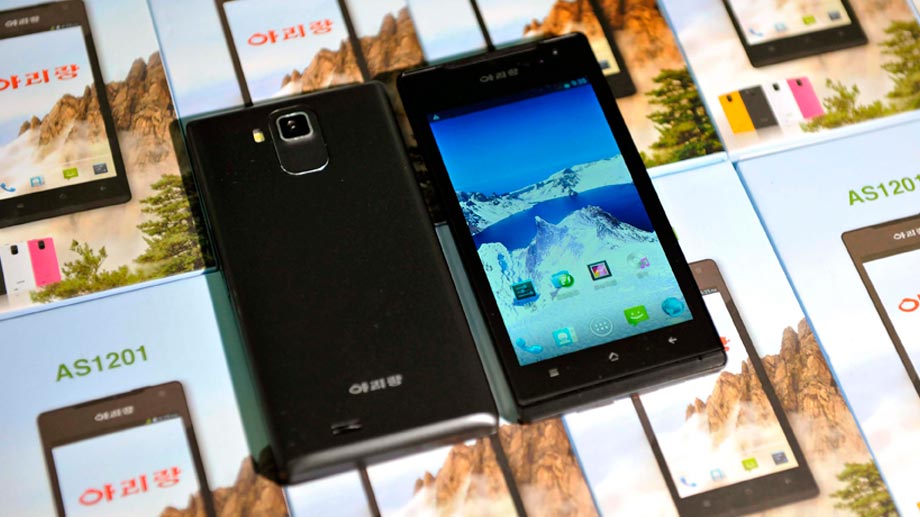
The announcement of the Arirang smartphone by North Korean state media marks a pivotal moment in the reclusive nation’s attempt to project a facade of technological self-sufficiency amidst a backdrop of severe international sanctions and escalating military tensions on the Korean peninsula. Named after the iconic traditional folk song that serves as the unofficial anthem for both North and South Korea, the device—officially designated as the AS1201—represents more than just a piece of consumer electronics. It is a strategic cultural artifact designed to tether modern telecommunications to a deep-seated sense of Korean nationalism. While external analysts suggest the hardware is likely a rebranded Chinese-manufactured handset, the symbolic weight of the name "Arirang" offers a profound window into the shared heritage and divergent political paths of the two Koreas.
The Technological Facade: The Launch of the Arirang AS1201
In August 2013, North Korean leader Kim Jong-un conducted a highly publicized "field guidance" visit to the May 11 Factory, a facility purportedly dedicated to the mass production of the Arirang smartphone. State-run news agency KCNA reported that the leader praised the "indigenous" technology, emphasizing the importance of manufacturing goods with North Korean labels to instill national pride. Kim Jong-un specifically highlighted the phone’s touch-screen capabilities and its "high pixels," noting that the device would provide convenience to its users while ensuring the security of the state’s internal network.
However, international technology experts and intelligence analysts have expressed significant skepticism regarding the origin of the device. Teardown assessments and visual inspections of the factory footage suggest that the May 11 Factory may function primarily as a packaging and distribution center rather than a fabrication plant. The Arirang AS1201 bears a striking resemblance to the Uniscope U70, a budget Android smartphone produced in China. This discrepancy underscores the North’s reliance on its neighbor for hardware while maintaining a domestic narrative of "Juche," or self-reliance. Despite these technical caveats, the introduction of the Arirang smartphone is a calculated move to modernize the image of the Kim Jong-un administration, positioning it as a regime that embraces the digital age, albeit under strict surveillance and control.
A Chronology of Conflict: The Historical Context of the Peninsula
To understand why the name "Arirang" was chosen for a 21st-century smartphone, one must examine the tumultuous history of the Korean peninsula, which has been defined by foreign intervention and internal division for over a century.
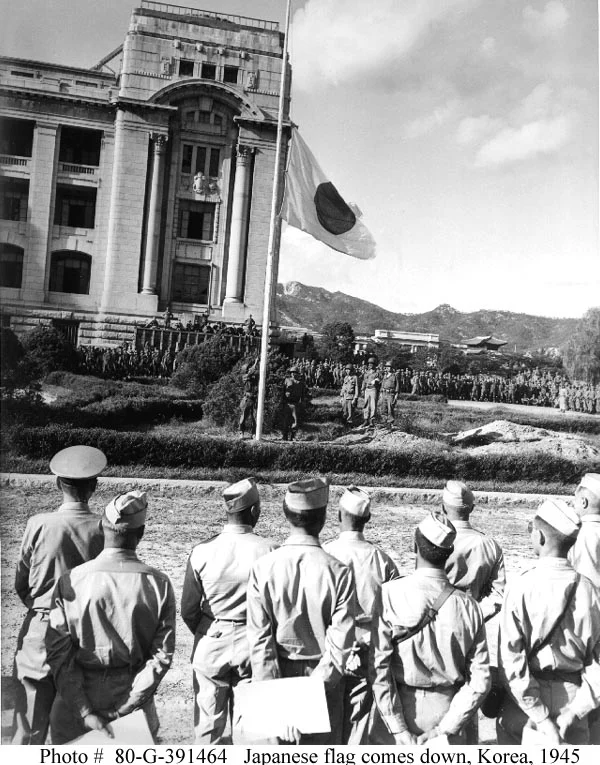
- The Japanese Occupation (1910–1945): Following the Japan-Korea Treaty of 1910, the peninsula was annexed by the Empire of Japan. This era was marked by the systematic suppression of Korean culture, the forced labor of millions, and the imposition of the Japanese language. It was during this period of collective suffering that "Arirang" transitioned from a regional folk song into a powerful anthem of resistance and national identity.
- Liberation and Division (1945–1948): Following Japan’s surrender at the end of World War II, the peninsula was divided along the 38th parallel into Soviet and American occupation zones. This temporary administrative split solidified into the permanent establishment of the Democratic People’s Republic of Korea (North) and the Republic of Korea (South) in 1948.
- The Korean War (1950–1953): The devastating conflict between the North and South resulted in millions of casualties and left the peninsula in ruins. The war ended in an armistice rather than a peace treaty, meaning that, technically, the two nations remain in a state of war today.
- The Cold War and Beyond: Throughout the latter half of the 20th century, the peninsula became a focal point of global geopolitical tension. The South underwent rapid industrialization (the "Miracle on the Han River"), while the North adopted a policy of isolationism punctuated by periodic military provocations and nuclear development.
In this context, the Arirang smartphone is a modern instrument used to reclaim a narrative of Korean superiority and unity, even as the physical border remains one of the most militarized zones on earth.
The "Arirang" Phenomenon: More Than a Folk Song
"Arirang" is not a single song but a collection of over 3,600 variations of 60 different versions. Its lyrics typically revolve around a protagonist crossing "Arirang Pass," often interpreted as a metaphor for overcoming hardship or the sorrow of parting with a lover. In 2012, UNESCO added "Arirang" to its Representative List of the Intangible Cultural Heritage of Humanity, acknowledging its role as a "formidable symbol of unity" for the Korean people.
The song’s simplicity is its greatest strength. Musically, it utilizes a pentatonic scale, making it easy to learn and sing. Historically, its popularity surged in 1926 following the release of the silent film Arirang by Na Woon-gyu, which used the song to symbolize the Korean struggle against Japanese colonial rule. Because the lyrics were seemingly innocuous—focusing on a mountain pass and a lost lover—they bypassed Japanese censors while still resonating as a subversive cry for freedom among the Korean populace.
By naming its first smartphone after this song, the North Korean government is attempting to co-opt a symbol that is universally recognized by all Koreans. It is an effort to suggest that the North is the true guardian of Korean tradition, even as it develops modern technology. This cultural branding is a strategic counter-move to the "Hallyu" or Korean Wave originating from the South, which has seen South Korean pop music and dramas permeate global markets—and, increasingly, the black markets of the North.
Cultural Appropriation and the Japanese Connection
The history of "Arirang" contains a fascinating irony: while it served as a song of resistance against Japan, it also became a massive pop culture hit within Japan during the 1930s. Japanese audiences in the pre-World War II era were captivated by the song’s melancholic melody, which they associated with a sense of "pan-East Asian" identity. To the Japanese of that era, Korean culture represented a more rustic, simplistic, and emotionally raw version of their own rapidly industrializing society.

This cultural appropriation highlighted a shared aesthetic that transcended political hostility. Even as the Japanese military occupied Korea, Japanese civilians were consuming Korean music. This historical precedent mirrors the contemporary relationship between Japan and the two Koreas. Despite ongoing diplomatic disputes—such as the sovereignty of the Liancourt Rocks (Dokdo/Takeshima) and the legacy of "comfort women"—Japanese consumers remain among the largest importers of South Korean cultural products. The enduring popularity of "Arirang" in both historical and modern contexts suggests that cultural resonance often operates independently of political and military friction.
Comparative Tech Rivalries: Samsung, Sony, and the Arirang
The launch of the Arirang smartphone also places North Korea, however tenuously, into the fierce economic theater of East Asian electronics. For decades, the region has been the global hub for technological innovation, led by South Korea’s Samsung and LG, and Japan’s Sony and Panasonic.
Samsung, in particular, has become a symbol of South Korean soft power. Its Galaxy line of smartphones dominates global market shares, serving as a testament to the South’s economic success. For North Korea, the existence of Samsung is a constant reminder of the prosperity gap between the two regimes. The Arirang phone is thus a reactive product. By providing its citizens with a domestic alternative, the North Korean state seeks to curb the desire for smuggled South Korean devices, which are highly coveted despite the risks associated with possessing them.
Data from the International Telecommunication Union (ITU) and various NGOs indicate that while mobile phone subscriptions in North Korea have grown—reaching over 2 million by 2013—the network remains a "walled garden." Users can make domestic calls and send texts, but access to the global internet is strictly prohibited for the general population. The Arirang smartphone is programmed with state-approved apps and surveillance features, ensuring that while the medium is modern, the message remains controlled by the Workers’ Party of Korea.
Soft Power and the Future of the Peninsula
The tension between North and South Korea is often framed in terms of nuclear yields and troop movements, but the cultural front is equally significant. The South’s Hallyu movement has proven to be a potent tool of "soft power," influencing the perceptions of North Korean defectors and even residents within the North. Reports from organizations like Liberty in North Korea (LiNK) suggest that illegal viewings of South Korean dramas have led many North Koreans to question the state’s propaganda regarding the South’s "poverty and suffering."
In response, the North has attempted to create its own version of modern pop culture. The Moranbong Band, an all-female group hand-picked by Kim Jong-un, performs a synthesized version of pop music that mimics Western and South Korean styles while maintaining strictly patriotic lyrics. The Arirang smartphone is the hardware equivalent of the Moranbong Band—a modern shell designed to contain and promote state-sanctioned ideology.
Analysis of Implications: A Shared Aesthetic in a Divided Land
The choice of the name "Arirang" for a North Korean smartphone reveals a fundamental truth about the Korean peninsula: despite nearly 70 years of division, the underlying socio-cultural fabric remains remarkably intact. The song serves as a bridge across the Demilitarized Zone (DMZ), a piece of "intangible heritage" that neither side can fully claim as its own.
From a geopolitical perspective, the Arirang smartphone is a sign of a regime that recognizes the necessity of digital integration for governance and economic management but is terrified of the liberalizing effects of information technology. By wrapping this technology in the shroud of a beloved folk song, the state hopes to sanitize the device of its "subversive" potential, making it an instrument of nationalism rather than a window to the outside world.
Ultimately, the Arirang smartphone launch illustrates the paradox of the modern Korean experience. It is a region where the most advanced semiconductors in the world are designed just miles away from a territory where a 1,000-year-old folk song is used to brand a rebranded Chinese handset. Yet, the fact that both North and South Korea, and even Japan, can find common ground in the melody of "Arirang" suggests that cultural identity is more resilient than political borders. Whether through a traditional song or a modern smartphone, the "Arirang" legacy continues to evolve, reflecting the enduring hope and persistent sorrow of a people still waiting for their "Arirang Pass" to lead toward a unified future.