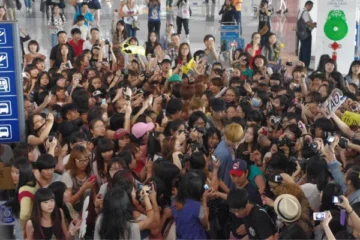
The Evolution and Persistence of the International K-pop Fandom Analyzing the Cultural and Logistical Hurdles of a Global Phenomenon
Article Editorial Team

The global expansion of South Korean popular music, widely known as K-pop, has transformed from a regional subculture into a multi-billion-dollar international industry. At the heart of this movement is the international fan diaspora, or "i-fans," a diverse community bound by digital connectivity and a shared affinity for Korean idols. Despite the genre’s meteoric rise on charts like the Billboard 200 and the proliferation of streaming numbers in the billions, the experience of the international enthusiast remains defined by a unique set of challenges. These fans navigate linguistic barriers, geographical isolation, and social stigmas that their domestic counterparts in South Korea rarely encounter. As the "Hallyu" or Korean Wave enters its fifth generation, understanding the plight of the international consumer is essential to grasping the mechanics of modern global entertainment.
The Linguistic Divide: The Persistence of Lost Translations
For the international K-pop fan, the primary obstacle remains the language barrier. While the music itself is often praised for its "universal" appeal—blending catchy hooks with high-production choreography—the supplementary content that drives fan engagement is heavily reliant on the Korean language. Interviews, variety show appearances, and "behind-the-scenes" vlogs are the lifelines of the idol-fan relationship, yet they are frequently released without English subtitles.

Historically, this gap was filled by "fan-subbers"—volunteers who spent hours translating and timing subtitles for the community. However, this reliance on unofficial channels creates a precarious environment. Fans often find themselves navigating copyright strikes, broken links, and low-quality mirrors on third-party hosting sites. Even in the current era of official platforms like Weverse and YouTube, smaller groups or "niche" content often remain untranslated for days or weeks. This delay creates a tiered hierarchy of information where non-Korean speakers are perpetually "behind," forced to rely on the visual aesthetics of their favorite performers while waiting for the context provided by translation. The phenomenon of "smiling and nodding" while an idol speaks on a live stream has become a hallmark of the international experience—a testament to a fandom that transcends language through sheer visual and emotional investment.
The Chronology of Global Integration: From Niche to Mainstream
The journey of the international K-pop fan has evolved significantly over the last two decades. In the early 2000s, during the Hallyu 1.0 era, international fans were largely concentrated in East and Southeast Asia. Accessing content in the West required specialized knowledge of internet forums and peer-to-peer sharing networks.
The turning point occurred around 2009–2012, marked by the release of iconic tracks such as Super Junior’s "Sorry, Sorry" and BIGBANG’s "Fantastic Baby." These songs served as "gateway" tracks for a new generation of global fans. The 2012 viral success of Psy’s "Gangnam Style" further dismantled the walls of the Western music market, though it also introduced a new struggle: the "novelty" label. Fans who joined during this era often found themselves defending the genre against accusations that it was a passing fad or a manufactured gimmick.

By the late 2010s, the rise of BTS and Blackpink solidified K-pop’s presence in the global mainstream. According to data from the International Federation of the Phonographic Industry (IFPI), South Korea has consistently ranked as one of the top ten music markets globally, driven largely by export growth. Yet, even with this institutional success, the individual fan’s experience remains a struggle for cultural legitimacy within their local social circles.
Social Identity and the Burden of the "Uninitiated"
A recurring theme in the life of an international fan is the necessity of constant explanation. Unlike fans of Western pop stars, K-pop enthusiasts frequently find their interests questioned by peers and family members. This friction is often rooted in the distinct aesthetic standards of the Korean entertainment industry.
A prominent example is the "pretty boy" or "flower boy" (kkonminam) aesthetic. International fans often face bewilderment when showing images of male idols, such as Ren (formerly of NU’EST) or Jeonghan (Seventeen), whose long hair and delicate features challenge traditional Western notions of masculinity. The resulting "interrogations"—wherein fans must verify the gender or age of an idol to skeptical onlookers—create a defensive posture within the community.

Furthermore, the act of "initiating" others into the fandom is fraught with social risk. When an i-fan shares a music video like "Fantastic Baby," they are often met with confusion rather than admiration. The high-saturation visuals, avant-garde fashion, and synchronized "inhuman" dancing can be overwhelming for those accustomed to the more minimalist or "gritty" aesthetics of Western indie or hip-hop. This disconnect often leads to a sense of isolation, where the fan’s digital life is vibrant and communal, but their physical life requires a "closeted" approach to their hobbies to avoid social friction.
The Terminological Labyrinth: A New Lexicon
The K-pop fandom has developed its own specialized vocabulary, much of which is derived from Korean terms or specific industry concepts. For the uninitiated, a conversation between K-pop fans can sound like a foreign language. Terms such as "bias" (one’s favorite member), "comeback" (the release of a new album), "aegyo" (displays of cuteness), and "fansign" (an event for autographs) are fundamental to the experience.
The complexity deepens with the industry’s penchant for creative acronyms. International fans often find themselves in the absurd position of explaining that the group name "Teen Top" stands for "Teenager EmoBoys Emoticon Next Generation Talent Object Praise." Such linguistic eccentricities, while charming to the seasoned fan, add a layer of "cringe" that fans must navigate when justifying their interests to outsiders.

Additionally, the distinction between a "fansite" (a dedicated photographer) and a "sasaeng" (an obsessive, invasive stalker) is a critical nuance that i-fans must frequently clarify. The dark side of the industry—the sasaeng culture—is often the only aspect of K-pop that makes mainstream Western headlines, forcing fans to distance themselves from the extremist elements of the community while still defending the broader culture.
The "Land of Oz" Effect: Geographical and Economic Disparities
Perhaps the most painful reality for the international fan is the "geographical lottery." Despite the label of "World Tour," many K-pop groups limit their international stops to a handful of major hubs: Tokyo, Los Angeles, New York, and occasionally London or Paris. For fans in South America, Africa, the Middle East, or rural parts of North America and Europe, the chance of seeing their "biases" in person is virtually zero.
This has led to the "Land of Oz" metaphor, where South Korea and its concert venues are seen as an unreachable emerald city. Most i-fans experience their fandom through a screen, watching "shaky fancams" or paid digital concerts (like those on the Beyond LIVE platform). While technology has bridged the gap, it has also highlighted the economic disparity within the fandom. The cost of international shipping for a single album or a "lightstick" (a synchronized glowing wand used at concerts) can often exceed the price of the item itself, making K-pop an expensive hobby for those outside of East Asia.

Analysis of Implications: Cultural Disassociation and Soft Power
The deep immersion of international fans into Korean culture has led to a phenomenon of "cultural disassociation." Many fans report that after years of consuming K-pop, the pop music of their own country begins to sound "foreign." This shift is a testament to the "Soft Power" strategy of the South Korean government, which has used the "Hallyu" wave as a diplomatic tool to improve the country’s global image.
However, this disassociation can also lead to a sense of "homelessness" within one’s own culture. Fans may find themselves more attuned to the lunar calendar, Korean holidays, or the mandatory military service schedules of Seoul than to the local news in their own backyard. This psychological shift is a double-edged sword; while it fosters global citizenship and cross-cultural empathy, it also subjects the fan to "cruel repression" or judgment from a society that views their interests as an obsession with the "other."
Conclusion: The Resilience of the Global Community
The international K-pop fan is a study in resilience. They are a community that thrives on "digital crumbs," finding joy in 1080p videos and translated Twitter threads. Despite the lack of local concerts, the linguistic hurdles, and the social stigmas, the "i-fan" remains a vital pillar of the K-pop industry. They are the ones who drive global trends on social media, fund massive birthday advertisements in Times Square, and ensure that K-pop remains a permanent fixture on the global stage.

As the industry moves forward, there is a growing call for more inclusive practices—better official translations, more diverse touring routes, and a greater acknowledgment of the international audience’s contributions. Until then, the international fan will continue to navigate their unique struggles, united by a common love for a music that, despite the distance, feels like home. The struggle, as many fans would argue, is a small price to pay for the beacon of joy that K-pop provides in an increasingly fragmented world.
Related News