The Evolution and Societal Impact of Plastic Surgery Culture in South Korea: From Celebrity Advocacy to National Beauty Standards
Article Editorial Team

The landscape of the South Korean entertainment industry, often referred to as Hallyu, is inextricably linked with the evolution of aesthetic standards and the burgeoning plastic surgery industry. In a society where digital presence and physical appearance carry significant weight, the discourse surrounding surgical enhancement has shifted from a taboo subject to a matter of public debate and personal empowerment. Search engine metrics across platforms such as Google, Naver, and Daum consistently show that queries regarding celebrity "before and after" transformations remain among the most frequent, reflecting a deep-seated public preoccupation with the physical evolution of public figures. This phenomenon is not merely a byproduct of curiosity but is symptomatic of a broader cultural shift where the boundaries between natural beauty and medical enhancement have become increasingly blurred.
The Celebrity Discourse: G.NA and the Defense of Personal Satisfaction
The conversation regarding the ethics and utility of plastic surgery recently gained renewed momentum following a televised exchange between solo artist G.NA and comedian Lee Yoon-suk. During a variety program discussion, Lee expressed a traditionalist disapproval of cosmetic procedures, specifically regarding his own wife. He characterized surgical enhancement as a "violation of the marriage oath," arguing against the notion that such procedures are primarily performed for self-improvement or emotional well-being.
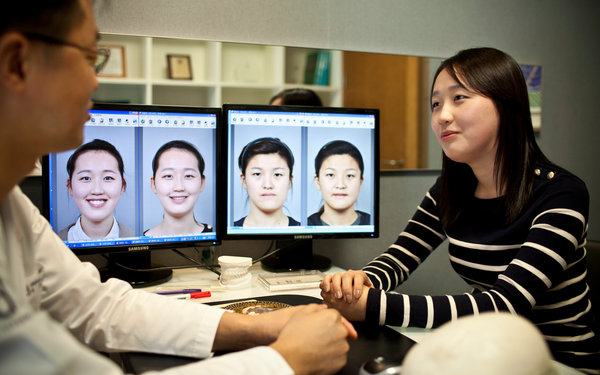
In response, G.NA offered a defense of the practice, emphasizing the psychological benefits of "personal satisfaction and happiness." She illustrated her point by citing a familial example: her grandfather, who reportedly experienced a significant boost in morale and self-esteem after undergoing a hair transplant procedure. G.NA’s argument posited that if a medical intervention can alleviate deep-seated insecurities and improve an individual’s quality of life, it should be viewed as a valid tool for self-actualization.
While the debate ended on a somewhat frustrated note for the singer, her stance highlighted a growing sentiment among the younger generation of South Koreans: that the body is a site of personal agency. However, G.NA’s advocacy also underscores a complex reality for celebrities. In an industry where "visuals" are as critical as vocal or acting talent, many stars find themselves in a position where they must either defend their choices or navigate the scrutiny that comes with obvious physical changes. This is particularly evident in the cases of idols like Park Bom or Hyorin, whose shifting appearances have sparked years of online speculation and, in some instances, forced admissions of specific procedures, such as blepharoplasty (double eyelid surgery).
The 2013 Miss Daegu Controversy: A Study in Aesthetic Uniformity
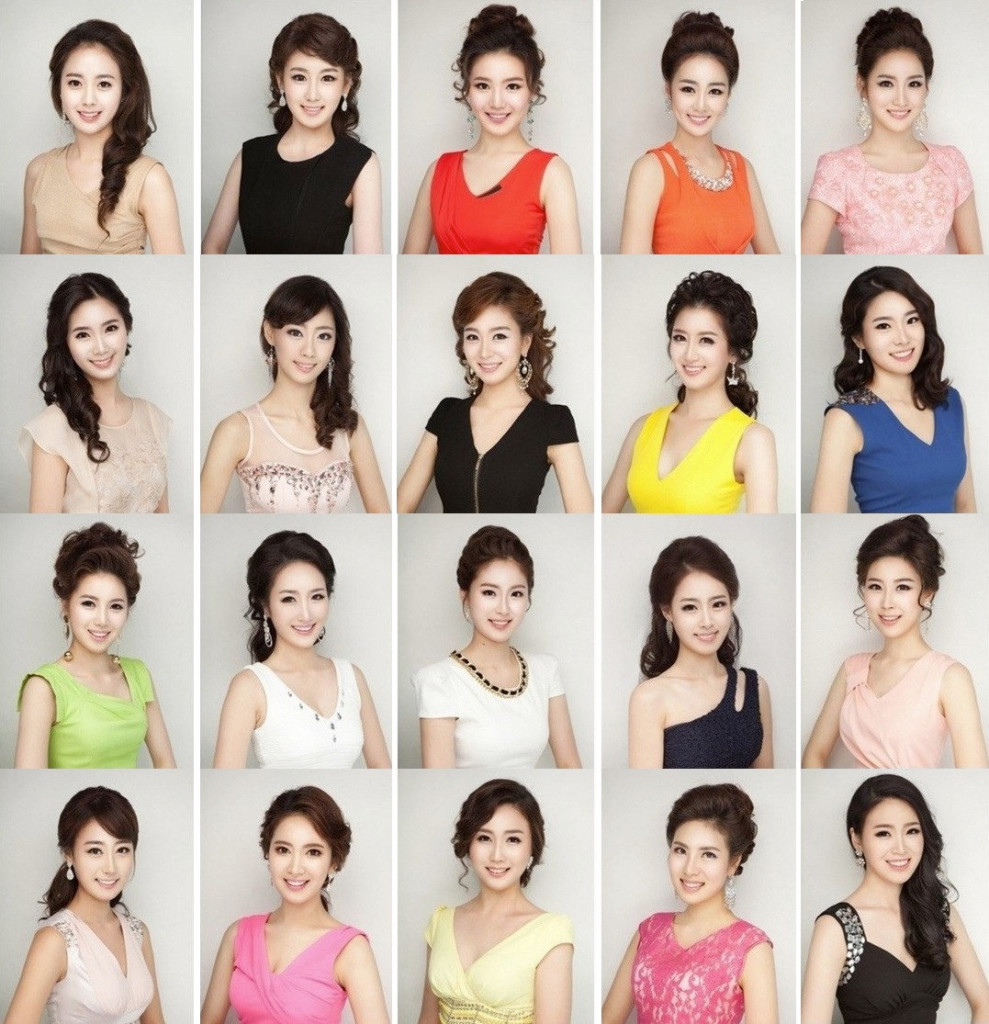
The debate over individualized choice versus societal pressure reached a critical juncture with the release of the official portraits for the 2013 Miss Daegu pageant, a regional preliminary for the Miss Korea competition. When the photographs of the twenty candidates were published online, they triggered an international media firestorm. Observers noted a striking degree of facial similarity among the contestants, leading to allegations that the "manufactured" look had effectively erased individual distinctiveness in favor of a singular, standardized ideal.

The candidates all exhibited what has been colloquially termed the "Gangnam Face": large, almond-shaped eyes with pronounced double eyelids, a high and narrow nasal bridge, milky-white skin, and a slim, V-shaped jawline. While the pageant organizers and some supporters argued that the similarities were exacerbated by heavy makeup and uniform digital editing, the incident became a symbol of the "plastic surgery clone" phenomenon. It raised a fundamental question: if the pinnacle of national beauty is achieved through near-identical surgical interventions, what does that imply for the value of natural diversity?
Kwak Ka-hyun, who represented the region, became a focal point of this discussion. The controversy highlighted a paradox in South Korean society—while surgical enhancement is often defended as a personal choice for self-esteem, the result is frequently a convergence toward a very narrow and specific aesthetic template.
Statistical Overview: South Korea as a Global Hub for Aesthetic Surgery
The prevalence of plastic surgery in South Korea is supported by significant statistical data. According to reports from the International Society of Aesthetic Plastic Surgery (ISAPS), South Korea has consistently ranked as having the highest rate of plastic surgery procedures per capita globally. In the early 2010s, it was estimated that approximately one in five women in Seoul had undergone some form of cosmetic intervention.

The infrastructure supporting this demand is concentrated in Seoul’s Gangnam District, specifically the Apgujeong and Sinsa neighborhoods, often referred to as the "Beauty Belt." This area houses over 400 specialized clinics, ranging from small private practices to multi-story aesthetic hospitals. The industry has also become a significant driver of medical tourism. Data from the Korea Health Industry Development Institute (KHIDI) indicated a steady year-on-year increase in international patients traveling to South Korea for cosmetic procedures, primarily from China, Japan, and Southeast Asia, drawn by the perceived expertise of Korean surgeons and the global influence of the "K-beauty" aesthetic.
The Economic and Social Drivers: "Spec" Culture and Lookism
To understand why plastic surgery has become so normalized in South Korea, one must look beyond the entertainment industry to the broader socio-economic landscape. South Korea is a highly competitive society where the concept of "spec" (short for specifications) dictates an individual’s employability and social standing. Traditionally, "spec" referred to academic degrees, GPA, and language proficiency scores. However, in recent decades, physical appearance has become an informal but potent "spec."
"Lookism"—prejudice or discrimination based on physical appearance—is a documented phenomenon in the South Korean labor market. It is common for job applications to require a photograph, and many recruiters openly admit that a candidate’s appearance can influence hiring decisions, particularly in service and corporate sectors. Consequently, many young South Koreans view plastic surgery not as a luxury or a sign of vanity, but as a pragmatic investment in their career prospects. In this context, the "personal choice" G.NA spoke of is often a choice made under the duress of economic necessity.
Comparative Analysis: Diversity in Media Representation
The South Korean media landscape lacks the diversity of beauty standards found in some Western markets. While Western media is frequently criticized for its own narrow beauty ideals, there has been a visible, if imperfect, movement toward inclusivity. Public figures like Tina Fey or Lena Dunham have built careers on subverting traditional glamour, often using humor to critique the "laundry list" of physical attributes women are expected to possess.
In contrast, South Korean media tends to relegate those who do not fit the "ideal" to specific, often self-deprecating roles. Comedians like Kim Shin-young or Jung Ju-ri frequently center their acts on their perceived lack of beauty compared to idol stars. This binary—where one is either a "visual" or a "gag person"—leaves little room for the celebration of unconventional or natural beauty. The media’s role in glorifying a specific, surgically-enhanced look creates a feedback loop: celebrities undergo surgery to meet the ideal, the public emulates the celebrities, and the clinics thrive by reproducing the same features.
Official Responses and the Move Toward Transparency
In recent years, there has been a slight shift in how the industry and the government address these issues. Some celebrities have begun to speak more candidly about the pain and side effects associated with surgery, moving away from the "perfection" narrative. Furthermore, the South Korean government has introduced regulations to curb aggressive plastic surgery advertising in public spaces like subway stations, citing concerns over the negative impact on the self-image of teenagers.

The Miss Korea pageant has also attempted to pivot. In subsequent years, organizers have emphasized "natural charm" and intelligence, though the core aesthetic of the contestants remains largely aligned with traditional standards. There is a burgeoning "Escape the Corset" movement among a segment of the female population, which rejects strict beauty standards and the pressure to undergo surgery, though it remains a counter-culture rather than the mainstream norm.
Implications for the Future of South Korean Society
The normalization of plastic surgery in South Korea represents a complex intersection of medical advancement, economic pressure, and cultural identity. While surgical procedures can indeed provide a "self-esteem boost" for individuals, the systemic pressure to conform to a singular aesthetic template poses long-term challenges for societal mental health and the preservation of individuality.
As South Korea continues to export its cultural products globally, the "K-beauty" ideal will continue to influence international standards. However, the internal debate within the country—sparked by celebrity comments and pageant controversies—suggests a growing awareness of the costs of this manufactured perfection. The challenge for the future lies in whether South Korean society can expand its definition of beauty to include those who choose not to go under the knife, thereby transforming "personal satisfaction" from a defense of surgery into a celebration of diversity.
Related News