The Evolution of Korean Ethno-Nationalism and the Construction of the Danil Minjok Identity
Article Editorial Team

The concept of Korean nationalism represents a potent and complex socio-political force that continues to shape the domestic policies and international relations of both the Republic of Korea (South Korea) and the Democratic People’s Republic of Korea (North Korea). Unlike the civic nationalism prevalent in many Western democracies, which is defined by shared political values and residency within a territory, Korean nationalism is rooted deeply in the concept of danil minjok—the belief in a singular, ethnically homogenous "race-nation" that has occupied the Korean peninsula for millennia. While this ideology served as a vital tool for survival during the existential threats of the 20th century, its persistence in a globalized era presents significant challenges to social cohesion and regional diplomacy.
The Mythological Roots of the Korean Race
The bedrock of Korean ethno-nationalism is the foundation myth of Tan’gun Wanggeom, the legendary figure credited with establishing Gojoseon, the first Korean kingdom, in 2333 BC. According to the Samguk yusa (Memorabilia of the Three Kingdoms), a 13th-century collection of legends and historical accounts, the story begins with Hwan-ung, the son of the Lord of Heaven, who descended to Mount Paektu to bring order to the world.
The myth recounts a tiger and a bear who prayed to Hwan-ung to become human. Given a trial of endurance—to remain in a dark cave for 100 days eating only mugwort and garlic—the tiger failed, but the bear succeeded, transforming into a woman named Ung-nyeo. She subsequently married Hwan-ung and gave birth to Tan’gun. This narrative serves a dual purpose: it establishes a divine lineage for the Korean people and reinforces the idea of a biological unity that predates modern political structures.
While modern historians and the general public in South Korea largely view the Tan’gun narrative as a founding myth rather than literal history, its symbolic power remains immense. In North Korea, the myth has been politicized further; in 1993, the state claimed to have discovered the physical tomb of Tan’gun near Pyongyang. This move was widely viewed by international archaeologists as a fabrication intended to bolster the Kim regime’s legitimacy by positioning it as the true successor to the original Korean bloodline.
The 19th-Century Shift: From Confucianism to Nationalism
Historically, the inhabitants of the Korean peninsula did not always view themselves through the lens of modern nationalism. For centuries, the Joseon Dynasty (1392–1910) operated under a Neo-Confucian framework where loyalty was directed toward the monarch and the social hierarchy. Identity was defined more by class, kinship, and participation in a broader Sinitic (Chinese-influenced) cultural sphere than by ethnic distinction.
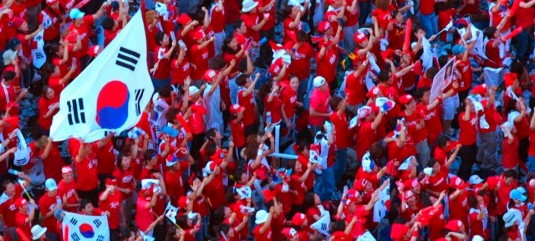
The transformation into a nationalist society occurred in the late 19th century, driven by the decline of the Joseon state and the encroaching imperialism of Russia, China, and Japan. Intellectuals of the "Enlightenment Generation" realized that the traditional world order was collapsing. To survive, they argued that Korea needed to transform from a "dynastic state" into a "nation-state."
Key publications like the Tongnip Sinmun (The Independent) and Hwansŏng Sinmun (Capital Gazette) began to promote the concept of minjok (ethnic nation). This period saw the "rediscovery" of Tan’gun as a unifying figure and the elevation of hangul, the phonetic script created by King Sejong the Great in the 15th century, as a symbol of national independence. By centering identity on a shared bloodline and language, these reformers sought to create a populace capable of resisting foreign encroachment.
Colonialism and the Hardening of Ethnic Identity
The most significant catalyst for the solidification of Korean ethno-nationalism was the Japanese colonial period (1910–1945). Following the 1905 protectorate treaty and the 1910 annexation, Japan implemented policies aimed at the cultural assimilation of Koreans. In the latter stages of the occupation, Koreans were forced to adopt Japanese surnames (sōshi-kaimei) and were forbidden from using the Korean language in schools and public life.
In response, Korean independence activists and historians, most notably Shin Chae-ho, developed a narrative of "pure blood" and "national essence" (guksu). Shin argued that history was a struggle between the aha (the self/nation) and the bi-aha (the non-self/others). By defining the Korean nation as a biological entity that had resisted foreign "contaminants" for 5,000 years, resistance leaders provided a psychological defense against Japanese efforts to erase Korean identity.
This historical trauma created a lasting "siege mentality." Even after liberation in 1945, the newly formed governments in both the North and South utilized this hardened nationalism to mobilize their respective populations.
National Mobilization and Economic Growth
In South Korea, ethno-nationalism was not merely a cultural sentiment but a tool for rapid modernization. Under the leadership of President Park Chung-hee in the 1960s and 1970s, the state promoted a "national identity" focused on collective sacrifice for the "Miracle on the Han River."

A definitive moment of this collective nationalism occurred during the 1997 Asian Financial Crisis. In an unprecedented display of national solidarity known as the "Gold Collecting Campaign," millions of South Korean citizens donated or sold their personal gold jewelry—wedding rings, heirlooms, and medals—to the state to help pay off the $58 billion debt to the International Monetary Fund (IMF). An estimated $2.2 billion in gold was collected, demonstrating how the sense of a "shared family" bloodline could be translated into economic action.
Contemporary Data and the "Damunhwa" Challenge
In the 21st century, the danil minjok ideology has come into direct conflict with demographic realities. South Korea is currently facing one of the lowest birth rates in the world (0.72 as of 2023), leading to an increased reliance on foreign labor and international marriages.
Supporting data from the Ministry of Justice and Statistics Korea indicates a rapid shift:
- Foreign Residents: As of 2024, the number of foreign residents in South Korea has surpassed 2.5 million, accounting for nearly 5% of the total population.
- International Marriages: In some rural provinces, international marriages account for nearly 20% of all new unions, primarily involving Korean men and women from Southeast Asian nations.
- Multicultural Students: The number of students from "multicultural" (damunhwa) families in K-12 schools has increased more than fivefold over the last decade, surpassing 180,000.
These shifts have prompted a societal debate over the definition of "Koreanness." While the government has introduced the Damunhwa (multicultural) policy framework to assist with integration, critics argue that these policies often focus on "assimilating" foreigners into Korean culture rather than fostering a truly pluralistic society.
International Repercussions and Historical Disputes
Korean nationalism also fuels significant friction with neighboring powers. One of the most prominent examples is the dispute with China over the ancient kingdom of Koguryo (Goguryeo). When the Chinese government’s "Northeast Project" attempted to categorize Koguryo as a regional ethnic group within Chinese history in the early 2000s, it sparked a diplomatic firestorm in Seoul. For Koreans, Koguryo is a foundational part of their ethnic history; any attempt to "sinicize" it was viewed as an attack on the Korean bloodline.
Similarly, the ongoing dispute with Japan over the Dokdo islands (known as Takeshima in Japan) is often framed in South Korea as a test of national integrity. These territorial and historical grievances are frequently utilized by politicians on both sides of the spectrum to garner domestic support, sometimes leading to "societal butthurtism"—a term used by some analysts to describe the heightened sensitivity to perceived international slights.

Official Responses and the Path Toward Civic Nationalism
The international community has occasionally expressed concern regarding the exclusionary nature of Korean ethno-nationalism. In 2007, the United Nations Committee on the Elimination of Racial Discrimination (CERD) urged South Korea to overcome the "pure blood" narrative, noting that the emphasis on ethnic homogeneity could lead to discrimination against migrants and biracial citizens.
In response, South Korean educational curriculum reforms have slowly begun to de-emphasize the "one-blood" narrative. There is a growing movement among the younger generation—who are more exposed to global culture and values—to transition toward a "civic nationalism." This version of identity is based on the democratic constitution and shared social responsibilities rather than biological ancestry.
Implications for the Future
The future of Korean nationalism remains at a crossroads. In the North, the ideology remains a rigid tool of state control, used to justify isolationism and dynastic succession. In the South, the tension between the traditional danil minjok ideal and the necessity of a globalized, multi-ethnic society continues to evolve.
While the ethno-nationalist narrative provided the resilience needed to overcome colonization and war, its rigid boundaries now pose a risk to South Korea’s future as a global hub. The transition to a more inclusive national identity will likely be the defining social challenge for the peninsula in the coming decades. Whether Korea can maintain its unique cultural heritage while embracing a more diverse citizenry will determine its ability to lead on the world stage in the 21st century.
Related News