
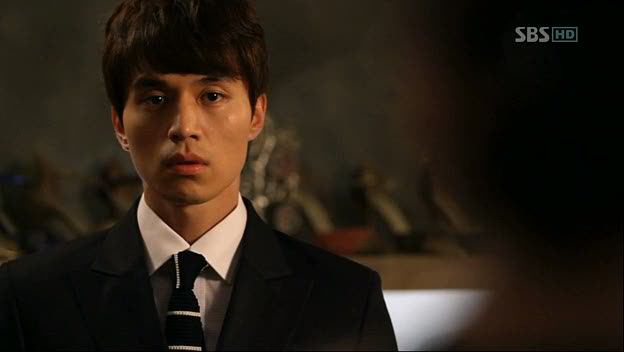
In the landscape of South Korean television dramas, the "chaebol heir" is an inescapable archetype: a strikingly handsome, often arrogant young man who navigates corporate boardrooms with a sense of entitlement that mirrors his immense wealth. This character, frequently depicted in a state of perpetual conflict with a stern CEO father, serves as a romanticized gateway for international audiences to enter the world of South Korea’s elite. From "Secret Garden" and "Scent of a Woman" to the gritty depictions in "What Happened in Bali," the chaebol—a term derived from the Korean words for "wealth" (chae) and "clan" (beol)—is synonymous with luxury, power, and high-stakes business maneuvering. However, behind the glossy veneer of Hallyu entertainment lies a complex, often controversial economic structure that has defined South Korea’s trajectory from a war-torn nation to a global industrial powerhouse.
The reality of the chaebol is far more consequential than the plotlines of prime-time dramas suggest. These are massive, family-owned conglomerates that exert a dominant influence over nearly every facet of South Korean life. While figures like Super Junior’s Choi Siwon, whose father headed the Boryung Medical Group, provide a real-world link between the entertainment industry and corporate royalty, the broader impact of these entities is measured in GDP percentages and geopolitical leverage. To understand the modern South Korean state, one must analyze the history, the economic data, and the sociopolitical friction generated by these industrial titans.
The Historical Genesis: From Ruin to Reconstruction
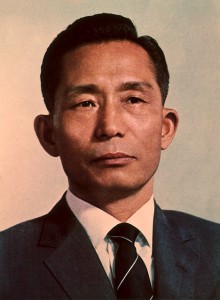
The emergence of the chaebol was not an accident of the free market but a deliberate product of state-led industrial policy. Following the 1953 armistice that halted the Korean War, the South Korean peninsula was among the poorest regions in the world, its infrastructure decimated and its economy reliant on foreign aid. The shift toward the current conglomerate-led model began in earnest following the military coup of 1961, which brought General Park Chung-hee to power.
A Chronology of Economic Transformation
- The 1950s (Post-War Recovery): Early iterations of companies like Samsung and Hyundai began as small trading or construction firms, often benefiting from the sale of formerly Japanese-owned assets and government contracts for reconstruction.
- The 1960s (The First Five-Year Plans): The Park Chung-hee administration identified specific entrepreneurs to spearhead national development. The government provided these selected firms with low-interest loans, preferential access to foreign exchange, and protection from international competition. In exchange, these companies were required to meet strict export quotas.
- The 1970s (Heavy and Chemical Industrialization): The state pushed chaebols into capital-intensive industries such as shipbuilding, steel, and electronics. This era saw the rapid expansion of Hyundai’s construction and automotive wings and the solidification of Samsung as an electronics giant.
- The 1980s and 1990s (Global Expansion): Chaebols began to transition from domestic monopolies to global competitors. However, this growth was often fueled by excessive debt and "cross-shareholding," where subsidiaries within the same group owned shares in each other to maintain family control.
- 1997 (The Asian Financial Crisis): The structural weaknesses of the chaebol model were exposed. Several major groups, most notably Daewoo, collapsed under the weight of massive debt. This forced a period of restructuring and "economic democratization" reforms mandated by the International Monetary Fund (IMF).
The Architecture of Dominance: Diversification and Scale
Unlike Western conglomerates that often focus on a core competency, South Korean chaebols are characterized by extreme horizontal and vertical integration. A single brand name often encompasses a dizzying array of unrelated industries.
Hyundai, for example, is globally recognized for its automobiles, yet its domestic presence includes Hyundai Engineering & Construction, a chain of high-end department stores, and Hyundai Oilbank, a major network of gas stations. Similarly, Lotte Group operates in the chemical sector while simultaneously dominating the retail landscape with Lotte Department Stores, Lotte Mart supermarkets, and Lotteria, the nation’s leading fast-food chain.
This omnipresence ensures that a South Korean citizen can live in a Samsung-built apartment, use an LG smartphone, drive a Hyundai car, and shop at a Lotte mall, effectively spending their entire life within the ecosystem of a few select families. This level of concentration is unique among developed economies. Data from the mid-2010s indicated that the top ten chaebols accounted for approximately 80% of South Korea’s GDP, with Samsung alone representing nearly 20% of the nation’s total exports.
Supporting Data: The Concentration of Power
The scale of these entities is often compared to the economies of entire nations. According to data from the Fair Trade Commission (FTC) of South Korea, the assets of the top five conglomerates—Samsung, Hyundai Motor, SK, LG, and Lotte—have historically grown at a rate that far outpaces the growth of small and medium-sized enterprises (SMEs).

- Samsung Group: Frequently cited as the "Republic of Samsung," its annual revenue has at times exceeded $200 billion, rivaling the GDP of countries like Vietnam or Portugal.
- SK Group: A leader in telecommunications and semiconductors (via SK Hynix), SK’s growth was bolstered by strategic marriages and government concessions, such as the acquisition of Korea Mobile Telecommunications Services in the 1990s.
- Employment vs. Revenue: A persistent point of contention in South Korean economics is that while chaebols generate the vast majority of the country’s revenue, they provide only a small fraction of its employment. Approximately 80% of the South Korean workforce is employed by SMEs, which often struggle to compete for talent and resources against the resource-rich conglomerates.
The Political Nexus and Public Controversy
The relationship between the "Blue House" (the South Korean presidential residence) and the chaebols has been a defining feature of the country’s political economy. This "Korea Inc." model allowed for rapid mobilization of resources, but it also fostered a culture of corruption and "crony capitalism."
Historically, chaebols have used their immense financial resources to lobby for favorable regulations, tax breaks, and pardons for executives convicted of white-collar crimes. The case of Lee Myung-bak, a former CEO of Hyundai Engineering and Construction who eventually became the President of South Korea, exemplifies the blurred lines between corporate and political leadership.
Furthermore, the practice of "third-generation succession"—transferring control of a multi-billion dollar empire to the children or grandchildren of the founder—has drawn significant public ire. Critics argue that these heirs, often depicted as the "smug rich boys" of K-dramas, lack the merit or experience to lead such vital national institutions. Professor Robert Kelly of Pusan National University has noted that the chaebol are "politics-corrupting, consumer-punishing, reverse-engineering oligopolists" who would likely have faced antitrust dissolution in Western jurisdictions.
Official Responses and the Drive for Reform
In recent years, the South Korean government has faced increasing pressure to curb the power of the chaebols. The 2016-2017 political scandal that led to the impeachment of President Park Geun-hye—the daughter of the man who helped create the chaebol system—was centered on illicit ties between the presidency and Samsung leadership.

In response, subsequent administrations have championed "Economic Democratization." These reforms aim to:
- Limit Cross-Shareholding: Reducing the ability of family members to control entire groups with only a small percentage of total shares.
- Empower Shareholders: Increasing the rights of minority shareholders to check the power of founding families.
- Support SMEs: Creating a "level playing field" by penalizing unfair business practices and "inside trading" within conglomerate subsidiaries.
Despite these efforts, the "Korea Discount"—a term used by investors to describe the undervaluation of South Korean stocks due to poor corporate governance—remains a persistent issue.
Broader Impact and Implications for the Future
The chaebol remain a double-edged sword for South Korea. On one hand, they are the engines of innovation and the primary reason South Korea is a leader in semiconductors, displays, and green energy technology. They provide the "national brands" that give South Korea its soft power and global prestige.
On the other hand, the dominance of these giants is seen as a barrier to a more creative and entrepreneurial economy. The "chaebol-centric" model is often blamed for the country’s rigid social hierarchy and the intense pressure on young people to secure jobs at "Top Tier" firms, leading to high levels of stress and a declining birth rate.
As South Korea navigates the 21st century, the role of the chaebol is being re-evaluated. The romanticized version seen in K-dramas—where a wealthy heir finds redemption through love—is increasingly at odds with a public that demands transparency, fairness, and professional management. Whether these corporate dynasties can evolve into modern, transparent entities or whether they will continue to operate as semi-feudal estates remains the central question of the South Korean economy. For the global observer, the chaebol is not just a television trope, but a case study in the power and peril of state-sponsored industrial success.