The enduring power of Dolly Parton’s songwriting prowess continues to resonate across generations and genres, most recently highlighted by the monumental success of two of her most beloved compositions: "I Will Always Love You" and "Jolene." While Parton herself carved out a legendary career as a singer, actress, philanthropist, and humanitarian, her most profound and lasting legacy may well be her unparalleled talent as a lyricist and composer. Her ability to distill universal emotions into profound reflections, witty observations, and heart-wrenching narratives has created a catalog that not only formed the bedrock of her own career but also propelled fellow superstars to historic milestones, as evidenced by two distinct, chart-topping renditions of her work.
"I Will Always Love You": A Powerhouse Ballad’s Journey to Global Stardom
The most prominent testament to Parton’s songwriting genius arrived in 1992 when the late Whitney Houston delivered a rendition of "I Will Always Love You" that would redefine the song and shatter numerous records. Featured on the soundtrack of Houston’s directorial debut and starring role in the film The Bodyguard, the song became an integral part of a pivotal cinematic moment. The scene, where Houston’s character and Kevin Costner’s character share an intimate and emotionally charged kiss, followed by the song’s transition into the closing credits, cemented its place in pop culture history.
The path to this iconic recording, however, was not a straightforward one. Initially, Houston was slated to cover Jimmy Ruffin’s "What Becomes of the Brokenhearted." However, this plan encountered insurmountable obstacles. Maureen Crowe, the music supervisor for The Bodyguard, explained in a 2022 interview with the New York Post that slowing down Ruffin’s original track rendered it "like a dirge." Furthermore, a significant complication arose when singer Paul Young released his own cover of "What Becomes of the Brokenhearted" for the 1991 film Fried Green Tomatoes, which achieved a respectable No. 22 peak on the Billboard Hot 100. Crowe noted, "We couldn’t use that song because it would just seem like we ripped it off."
It was at this juncture that Dolly Parton’s "I Will Always Love You" was proposed as an alternative. This suggestion garnered enthusiastic approval from Houston, Costner, and Clive Davis, the head of Arista Records. While Parton’s original composition provided the emotional core, Houston’s version underwent significant artistic transformations. The arrangement featured a striking a cappella opening, a deliberately slower tempo, and the inclusion of a third verse that had been omitted in some prior renditions. Despite these modifications, the fundamental essence of profound, tear-jerking heartbreak remained intact. In contrast to the fictional narrative of The Bodyguard, Parton’s inspiration for the song was deeply personal, stemming from her decision to depart The Porter Wagoner Show after a long and fruitful collaboration, which included numerous duets with Wagoner throughout the 1960s and 1970s.
A Record-Shattering Phenomenon
The impact of both versions of "I Will Always Love You" on the charts was nothing short of extraordinary. Parton’s original composition first topped the Billboard Hot Country Songs chart in 1974. A subsequent re-recorded version achieved the same feat in 1982, demonstrating the song’s enduring appeal within its original genre. However, it was Houston’s rendition that propelled the song to unprecedented global fame. It became a cultural phenomenon, holding the No. 1 position on the Billboard Hot 100 for a then-record-breaking 14 consecutive weeks. The song’s immense success was further recognized with two Grammy Awards: Record of the Year and Best Pop Vocal Performance, Female.
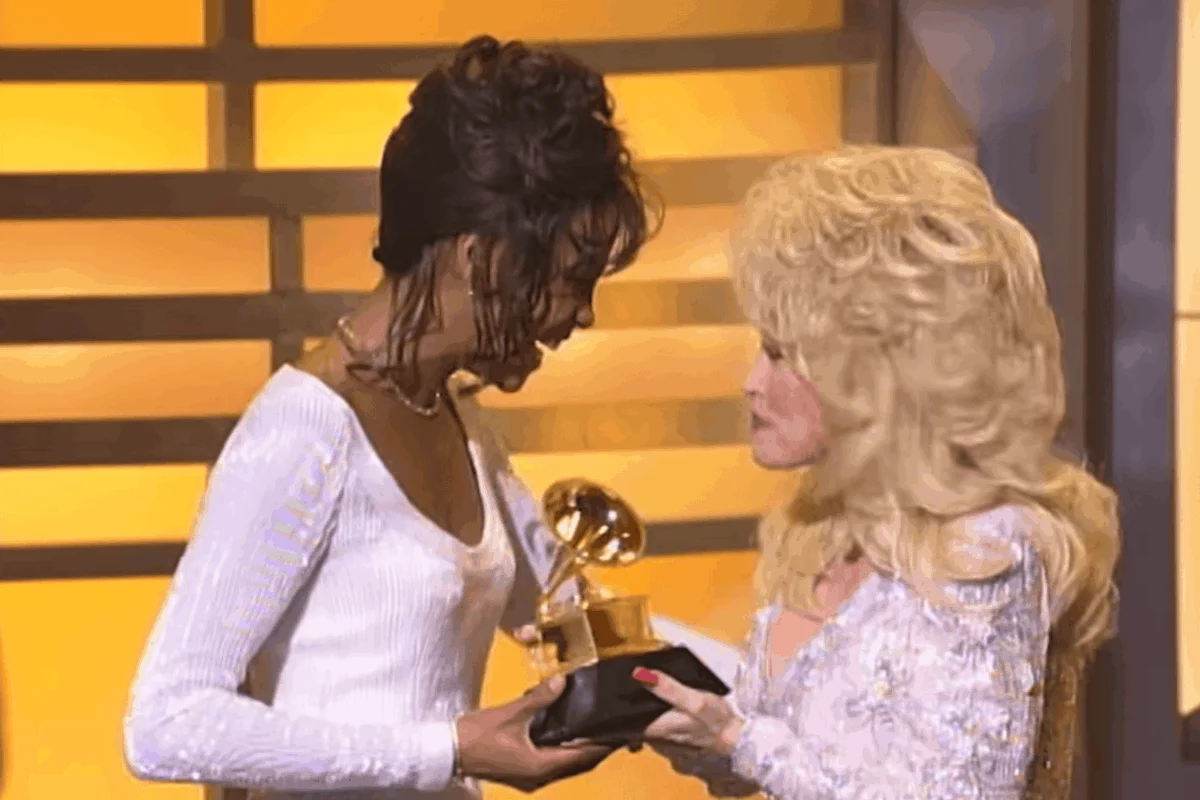
A poignant moment occurred at the 1994 Grammy Awards when Dolly Parton herself co-presented one of the awards. Houston, in her acceptance speech, expressed her deep gratitude to Parton, stating, "Dolly, of course, coming from you, this is truly an honor. Thank you for writing a beautiful song. Thank you so much for writing beautiful songs." This exchange underscored the profound respect and admiration between the two artists and highlighted the symbiotic relationship between songwriting and performance in creating lasting musical legacies.
"Jolene": A Fifty-Year Echo and a Bold New Chapter
Just over fifty years after its initial success, another iconic Dolly Parton composition, "Jolene," experienced a significant resurgence and chart impact through the innovative interpretation by Beyoncé on her 2024 album, Cowboy Carter. This album marked Beyoncé’s explicit exploration of country music and its adjacent sonic landscapes. Her rendition of "Jolene" offered a striking departure from the original’s pleading narrative, transforming it into a forceful warning. Where Parton’s original pleaded, "I’m begging of you, please don’t take my man," Beyoncé’s version declared, "I’m warning you, don’t come for my man."
This reimagined "Jolene" was characterized by a heavier drum-driven arrangement and a cautionary tone, quickly becoming one of the most anticipated tracks from Cowboy Carter. Upon the album’s debut on the Billboard charts, Beyoncé’s "Jolene" entered the Hot 100 at No. 7. This placement made it the third highest-charting song from the album that week, trailing only the lead single "Texas Hold ‘Em" and the duet "II Most Wanted" with Miley Cyrus, who happens to be Parton’s goddaughter.
The unexpected but masterful twist in Beyoncé’s rendition initially caught Parton by surprise, but she expressed her admiration for the new take. In a 2024 interview with E! News, Parton commented, "When they said she was going to do ‘Jolene,’ I expected it to be the regular one, but it wasn’t. I loved what she did to it. As a songwriter, you love the fact that people do your song, no matter how they do them. She wasn’t about to beg some woman like I did." This sentiment from Parton highlights the inherent beauty of songwriting – the capacity for a song to be reinterpreted and given new life by different artists, reflecting their own perspectives and experiences.
Bridging Genres and Generations
Beyoncé’s "Jolene" not only brought new life to a classic but also achieved significant chart success within the country music sphere. In April 2024, the song reached No. 3 on the Hot Country Songs chart, marking its highest position since Parton’s original topped the chart at No. 1 in February 1974. This achievement, occurring just over fifty years apart, underscored the timeless appeal of Parton’s songwriting and its ability to transcend generational divides.
The collaboration between Parton and Beyoncé extended beyond "Jolene." Parton lent her voice to the track "Tyrant" on Cowboy Carter, providing a spoken-word introduction. This collaboration proved mutually beneficial, not only allowing Parton to contribute to a highly anticipated album but also marking a significant career milestone for her. Through "Tyrant," Parton achieved her first entry on the Billboard Hot R&B/Hip-Hop Songs chart, where it peaked at No. 18. This cross-genre success demonstrated the expansive reach of both artists and the power of their collaboration to break down traditional genre barriers.
Following Dolly Parton’s passing, Beyoncé offered a heartfelt tribute, acknowledging Parton’s profound impact. "Dolly, you were the barometer. The North Star. Bold and brilliant. Talented and tenacious," Beyoncé wrote. "I’m honored that I had the privilege to work with you. I will treasure that forever. Thank you for your profound impact on the world. You are truly one of one. Rest peacefully." This message encapsulates the deep respect and admiration felt by artists who have been touched by Parton’s artistry, further solidifying her legacy as a monumental figure in music history.
The Enduring Significance of Dolly Parton’s Songwriting
Dolly Parton’s career is a testament to the enduring power of original songwriting. Her ability to craft narratives that are both deeply personal and universally relatable has allowed her songs to be embraced by artists across the musical spectrum. The phenomenal success of "I Will Always Love You" by Whitney Houston and the groundbreaking interpretation of "Jolene" by Beyoncé are not merely isolated incidents but rather powerful examples of how a master songwriter’s work can be revitalized, recontextualized, and continue to achieve new heights of critical and commercial success.
The implications of these reinterpretations are far-reaching. For Parton, they represent a validation of her lifelong dedication to her craft and a demonstration of the longevity and adaptability of her compositions. For the artists who interpret her work, it offers an opportunity to connect with a rich musical heritage and to imbue classic songs with their own artistic vision. For the music industry, it highlights the crucial role of strong songwriting in driving cultural impact and chart success. As the music landscape continues to evolve, the foundational strength of Dolly Parton’s songwriting ensures that her voice, and the voices she has inspired, will continue to echo for generations to come. Her ability to weave tales of love, loss, resilience, and warning into melodies that capture the human experience guarantees her place not just in the annals of country music, but in the global pantheon of musical legends.