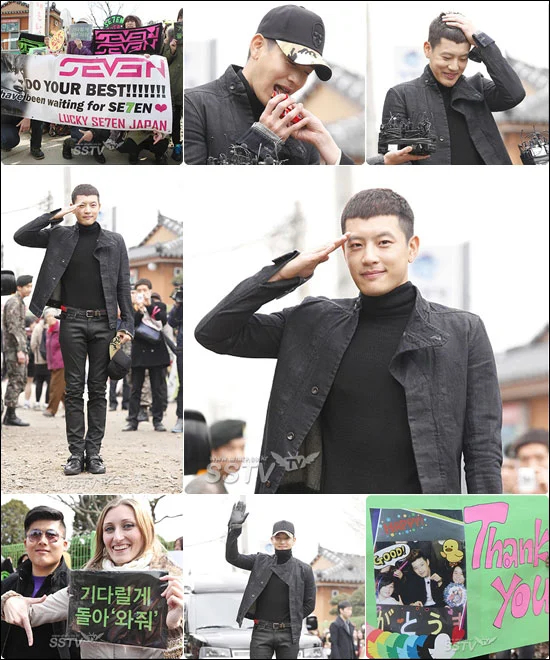
The integrity of the South Korean military’s conscription system faced an unprecedented crisis following a series of high-profile scandals involving celebrity recruits, culminating in a June 2013 investigative report that exposed systemic abuses of power and preferential treatment. In South Korea, military service is not merely a legal obligation but a fundamental rite of passage and a cornerstone of social equity. Under the Military Service Act, all able-bodied men are required to serve approximately 21 months in the armed forces, a necessity born from the unresolved conflict with North Korea and the 1953 armistice that left the two nations in a technical state of war. When popular entertainers Se7en (Choi Dong-wook) and Sangchu (Lee Sang-chul) were caught violating strict military protocols, the incident did more than damage their individual reputations; it ignited a national debate regarding the necessity of the Defense Media Agency and the perceived "celebrity soldier" caste.
The Geopolitical and Social Context of Conscription
To understand the gravity of the 2013 scandal, one must first grasp the role of the military in South Korean society. Since the end of the Korean War, the nation has maintained a mandatory conscription system to ensure a standing force capable of deterring aggression from the North. For the average South Korean youth, enlistment usually occurs during their early twenties, necessitating a hiatus from university or the start of a professional career.
The service is famously grueling. Soldiers are often stationed in remote, mountainous regions, particularly along the Demilitarized Zone (DMZ), where they endure harsh winters and rigorous physical training. Access to the outside world is strictly controlled; during the period of this scandal, cell phone use was prohibited, and internet access was a rare luxury. Furloughs and leaves are earned through merit and are infrequent. Consequently, any perception that certain individuals—particularly those of high social or financial status—are avoiding these hardships is met with intense public vitriol. National figures who have attempted to evade service, such as singer Steve Yoo in 2002, have faced permanent exile and professional ruin.
Related Articles
The Rise and Purpose of the Defense Media Agency
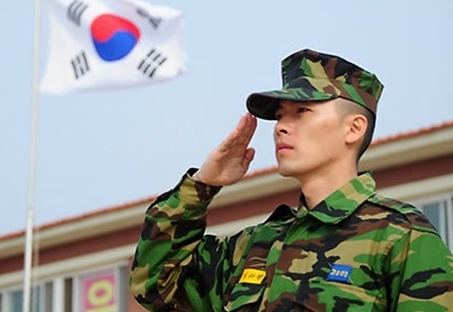
The Defense Media Agency (DMA) was established to manage public relations for the Ministry of National Defense (MND). A key component of this was the "Public Relations Recruit" unit, often referred to as celebrity soldiers. The unit was designed to utilize the talents of conscripted actors, singers, and entertainers to boost troop morale through performances, host military radio programs, and appear in promotional films.
From the military’s perspective, these recruits were valuable assets for psychological warfare and domestic recruitment efforts. However, the unit occupied a precarious position. While they were technically soldiers, their daily routines often resembled their civilian lives—attending recording sessions, rehearsals, and public events. This proximity to the entertainment industry created a "gray zone" where the boundary between military discipline and celebrity lifestyle became dangerously blurred.
Chronology of the 2013 Scandal
The scandal reached a breaking point on June 25, 2013, when the SBS investigative program On Site 21 aired a segment featuring undercover footage of celebrity recruits. The report followed several soldiers after they performed at a military-sanctioned concert in Chuncheon to commemorate the 63rd anniversary of the Korean War.
According to the timeline established by the report, after the concert concluded, several celebrity recruits, including Se7en and Sangchu, did not return to their designated quarters. Instead, they checked into a local motel and transitioned into civilian clothing. The investigative team observed the following violations:

- Breaking Curfew: The soldiers remained outside of their military-assigned locations well past midnight.
- Alcohol Consumption: Several recruits were filmed consuming beer and spirits at a local restaurant, a direct violation of military law for active-duty personnel on assignment.
- Unauthorized Communication: Recruits were seen using personal cell phones, which were strictly forbidden at the time to prevent the leak of military intelligence.
- Solicitation of Prostitution: At approximately 3:00 AM, Se7en and Sangchu were filmed entering a "massage parlor" known for providing adult services. They remained inside for several hours, exiting around 4:00 AM.
When SBS reporters confronted the two stars upon their exit from the establishment, the situation escalated. Rather than offering a statement, the recruits reportedly attempted to seize the reporters’ cameras and engaged in a physical altercation to prevent the footage from being aired. The sight of uniformed soldiers—or those who should have been in uniform—clashing with the press while leaving a house of ill repute sent shockwaves through the Ministry of Defense.
Data and the Disparity of Service
The SBS report went beyond the June 25 incident, providing data that highlighted the systemic leniency afforded to celebrity recruits. The investigation revealed that between 2012 and 2013, celebrity soldiers received significantly more vacation days than regular conscripts. On average, a regular soldier received approximately 43 days of leave over a 21-month period. In contrast, data requested by members of the National Assembly showed that some celebrity recruits were granted over 150 days of leave, nearly four times the standard amount.
Furthermore, the "On Site 21" report showcased the living conditions at the DMA headquarters in Seoul. Unlike the cramped barracks of the frontline infantry, celebrity recruits had access to:
- A private gymnasium.
- Personal gaming consoles (PlayStations).
- High-speed internet and televisions.
- The ability to wear civilian clothes within the facility.
An anonymous recruit, identified as "A," defended the unit by claiming their schedule was "taxing," noting they sometimes performed 20 times a month. This defense, however, backfired. To a public whose sons were patrolling the border in sub-zero temperatures for no pay beyond a meager stipend, the "hardship" of singing on stage was viewed as an insult to the uniform.

Official Responses and the "Knee Therapy" Controversy
The Ministry of National Defense’s initial reaction was criticized as an attempt to shield the stars. Officials initially suggested that the recruits visited the massage parlor for "medical purposes," specifically "knee therapy," claiming that the soldiers were seeking treatment for injuries sustained during performances. This explanation was widely mocked by the public and the media, drawing comparisons to other high-profile cover-ups in the entertainment industry.
Sangchu later attempted to take full responsibility, stating that as the senior soldier (sunbae), he had led the younger Se7en to the location. However, the damage was done. The MND was forced to launch a comprehensive audit of the entire PR unit. This investigation was further complicated by the recent history of the unit; only months prior, the global star Rain (Jung Ji-hoon) had been disciplined for "improper attire" and meeting his girlfriend, actress Kim Tae-hee, while on official duty. The recurring nature of these incidents suggested that the problem was not a few "bad apples" but a fundamental lack of oversight within the DMA.
Broader Impact and the Abolition of the PR Unit
The fallout from the Se7en and Sangchu scandal was swift and decisive. Public sentiment, already simmering due to economic disparities and the perceived unfairness of the draft, boiled over. Petitions to the Blue House demanded the dissolution of the celebrity soldier unit.
On July 18, 2013, the Ministry of National Defense officially announced the abolition of the PR unit after 16 years of existence. The Ministry admitted that the unit had "failed to live up to its purpose" and had "damaged the morale of the troops and the trust of the public." The remaining 15 celebrity recruits were reassigned to standard field units, many of them sent to infantry divisions near the front lines to serve out the remainder of their terms under the same conditions as ordinary soldiers.

Se7en and Sangchu were sentenced to several weeks in military prison (the "guardhouse") for their violations. For Se7en, the scandal had personal repercussions as well, contributing to the eventual end of his long-term relationship with actress Park Han-byul and a significant hiatus in his career.
Analysis of Implications
The dissolution of the celebrity soldier unit marked a turning point in how South Korea manages high-profile conscripts. It reinforced the "fairness doctrine" that governs the military. In a society where the military is one of the few institutions where all men are theoretically equal, the existence of a "celebrity tier" was a structural contradiction that the state could no longer justify.
Since 2013, celebrities have been integrated into regular units. While some stars still participate in military musicals or promotional content, they do so as members of their respective divisions rather than as part of a separate, privileged entity. This shift has arguably improved the public image of stars who serve honorably. Actors like Gong Yoo, Hyun Bin, and members of BTS in later years have seen their popularity maintained or even enhanced by serving in "tough" units like the Marines or the Special Forces, proving that the best public relations for a celebrity is not a special unit, but a sincere commitment to the same duties as their fellow citizens.
The 2013 scandal serves as a case study in the power of investigative journalism and the sensitivity of social equity in South Korea. It demonstrated that in the eyes of the public, the "gifts" of a Hallyu star do not exempt them from the responsibilities of a citizen. As the Ministry of Defense concluded in its final report on the matter, the prestige of the South Korean military relies not on the fame of its soldiers, but on the uniformity of their sacrifice.