The Global Diaspora of K-pop Fandom and the Persistent Challenges Facing International Supporters
Article Editorial Team

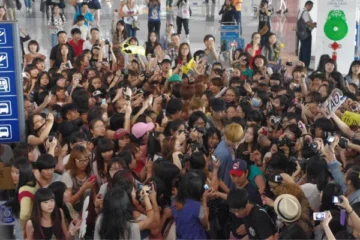
The rapid expansion of the Korean Wave, or Hallyu, has transformed K-pop from a domestic cultural product into a multi-billion dollar global industry. According to data from the Korea Foundation, the number of Hallyu fans worldwide surpassed 178 million in 2022, marking a significant increase from previous decades. This international fan diaspora—often referred to as "i-fans"—represents a diverse community spanning continents, from the metropolitan centers of Southeast Asia to the suburbs of North America and Europe. Despite their significant economic and cultural contributions to the industry, these supporters navigate a unique set of obstacles that differentiate their experience from domestic Korean fans. These challenges range from linguistic barriers and digital gatekeeping to geographical exclusion and social stigma within their own local cultures.
The Digital Divide: The Crisis of Translation and Content Accessibility
For the international K-pop supporter, the primary medium of engagement is the internet. However, the reliance on digital platforms introduces a persistent struggle with language barriers. While major entertainment agencies like HYBE, SM Entertainment, and JYP Entertainment have increasingly integrated English, Japanese, and Chinese subtitles into their primary content, a vast majority of secondary content—such as variety show appearances, radio interviews, and behind-the-scenes footage—remains untranslated at the time of release.

This delay creates a tiered system of fandom where international supporters must often wait days, weeks, or even months for volunteer fan-translators to provide subtitles. This reliance on community-driven labor is fraught with risks, including copyright strikes that lead to the sudden deletion of subbed videos. When official channels fail to provide accessibility, fans are often driven to third-party websites that may host pirated or low-quality content. The resulting experience is one of fragmented consumption, where fans may find themselves watching hours of footage without understanding the dialogue, relying solely on visual cues and the charisma of the performers to maintain engagement.
Navigating Cross-Cultural Aesthetics and Gender Norms
A significant point of friction for international fans involves the explanation of K-pop’s unique aesthetic standards to those outside the community. South Korean idols often embrace a "flower boy" (kkonminam) aesthetic, which emphasizes soft features, makeup, and stylized hair. This presentation frequently clashes with traditional Western or conservative definitions of masculinity.
The case of Ren, a former member of the group NU’EST, serves as a quintessential example. Known for his androgynous appearance during the group’s early years, Ren frequently became a point of confusion for uninitiated observers. International fans often report instances of social friction when displaying images of their favorite artists. The necessity of explaining that a "pretty" individual is, in fact, a male idol often leads to intrusive questioning or mockery from peers. This cultural disconnect highlights a broader issue: the international fan often acts as an unofficial cultural ambassador, tasked with defending or explaining East Asian beauty standards to a skeptical or uninformed local audience.

The Logistics of Geographical Exclusion: The "World Tour" Phenomenon
One of the most profound grievances among the international diaspora is the perceived lack of physical accessibility to live performances. While the industry frequently advertises "World Tours," these itineraries are often concentrated in specific regions—primarily East Asia and North America. Large swathes of the globe, including South America, Africa, the Middle East, and parts of Europe, are frequently bypassed by major tours.
The economic rationale for these omissions involves the high cost of international logistics, visa requirements, and the perceived lack of profitable infrastructure in certain territories. However, for the fan residing in a "skipped" country, the reality is a sense of permanent exclusion. This has led to a digital-only participation model where fans must experience concerts through "fancams"—shaky, unauthorized recordings uploaded by those lucky enough to attend. The psychological impact of this exclusion is significant, as it reinforces the "international" status of the fan as someone who consumes the culture from a distance but is rarely invited to participate in its most prestigious live events.
The Linguistic Evolution: Terminology and the "Engrish" Paradox
The K-pop subculture has developed its own specialized lexicon, much of which is derived from Korean social structures. Terms such as "bias" (one’s favorite member), "comeback" (the release of a new album), "aegyo" (acting cute), and "sasaeng" (obsessive stalker-fans) are foundational to the community. For the international fan, incorporating these terms into daily speech can lead to social alienation. Explaining the nuances of a "fansite" versus a "sasaeng" requires a level of cultural context that is often difficult to convey in a casual conversation.

Furthermore, the use of the English language within K-pop lyrics presents a unique linguistic paradox. To appeal to global audiences, songwriters frequently insert English phrases into tracks. However, these phrases are sometimes used in ways that are grammatically unconventional or contextually surreal to native speakers. Examples from major groups—such as SHINee’s "Sherlock" or B1A4’s "OK"—feature lines that have become iconic within the fandom specifically for their awkward phrasing. While domestic audiences may view these as stylish additions, international fans must navigate the "cringe factor" when playing these songs for non-fans, further complicating their efforts to "initiate" others into the genre.
Socio-Cultural Disassociation and Public Repression
As international fans immerse themselves in Korean media, they often experience a phenomenon of cultural disassociation. Industry observers have noted that heavy consumers of K-pop may find their own local music scenes increasingly foreign. This shift is not merely a matter of taste but an emotional realignment; the highly polished, synchronized, and narrative-driven nature of K-pop can make local, less-produced entertainment feel lackluster by comparison.
Moreover, the public expression of K-pop fandom is often met with social repression. In many cultures, the intense enthusiasm associated with "fangirling" or "fanboying" is viewed as immature or obsessive. International fans frequently report a need to hide their interests in professional or public settings to avoid being labeled as "obsessed" or "weird." This self-censorship is a response to a society that often fails to recognize K-pop as a legitimate art form, instead categorizing it as a niche interest for teenagers.

Economic Impact and Industry Recognition
Despite these struggles, the data indicates that international fans are the backbone of the modern K-pop industry’s growth. In 2023, South Korea’s customs office reported that K-pop album exports reached a record high of $290 million. The United States has emerged as the second-largest market for these exports, following Japan. This economic power has forced Korean entertainment agencies to take the international diaspora more seriously.
The emergence of platforms like Weverse and Bubble represents an official attempt to bridge the gap between idols and their global supporters. These apps provide direct communication channels and integrated translation tools, though the quality of machine translation remains a point of contention. Additionally, the rise of "K-Con" events in cities like Los Angeles, Abu Dhabi, and Paris indicates a growing recognition that the international market requires dedicated physical spaces.
Analysis of Implications: The Future of Global Fandom
The persistence of the international fan’s struggle highlights a lag between cultural demand and institutional support. While the music travels instantly via streaming services like Spotify and YouTube, the infrastructure for physical tours, accurate localization, and cultural integration moves much slower.

The future of the K-pop industry will likely depend on how well these agencies can mitigate the frustrations of the "i-fan." As artificial intelligence improves, the "lost in translation" era may eventually come to an end. However, the geographical and social barriers are more deeply rooted. Until K-pop is viewed globally with the same legitimacy as Western pop music, international fans will continue to exist in a state of "noble struggle"—balancing their passion for a foreign culture with the realities of their local environment.
In conclusion, the international K-pop fan is a vital, albeit often overlooked, component of the Hallyu phenomenon. Their ability to maintain enthusiasm in the face of linguistic barriers, geographical distance, and social stigma is a testament to the power of the music’s global appeal. As the industry continues to evolve, the "i-fan" remains the primary engine of its expansion, turning a regional South Korean genre into a truly universal language.
Related News