The Intersection of South Korean Political Milestones and Pop Culture Trends Analyzing the Sociopolitical Significance of Girls Days Female President
Article Editorial Team
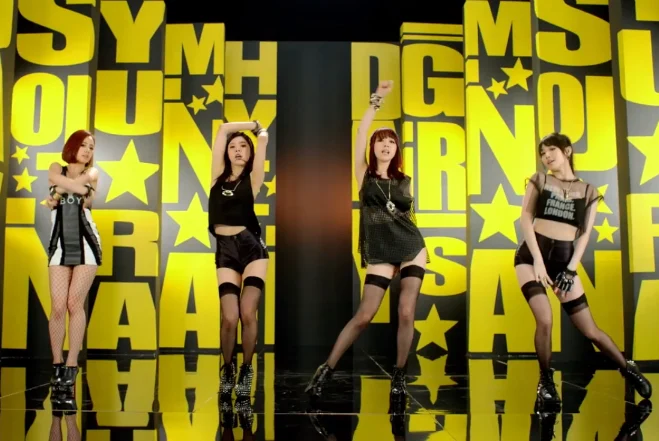
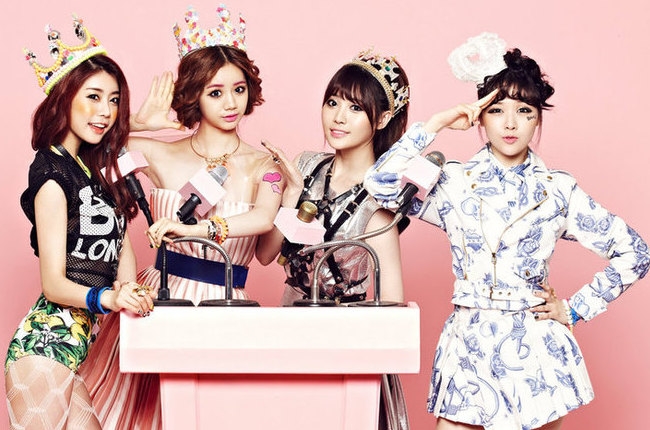
The year 2013 marked a transformative era for the Republic of Korea, characterized by a unique convergence of historic political shifts and a rapidly evolving popular culture landscape. In December 2012, Park Geun-hye, representing the conservative Saenuri Party (New Frontier Party), secured the presidency by a narrow margin, becoming the first woman to hold the highest office in South Korean history. This milestone was viewed by many as a potential catalyst for social change in a nation frequently criticized for its entrenched patriarchal structures. Against this political backdrop, the K-pop quartet Girl’s Day released their single "Female President" in June 2013. While the song’s title appeared to capitalize on the national zeitgeist, its content and presentation sparked a rigorous debate regarding the commodification of feminist rhetoric and the reality of gender equality in South Korea.
The Political Context of the Park Geun-hye Administration
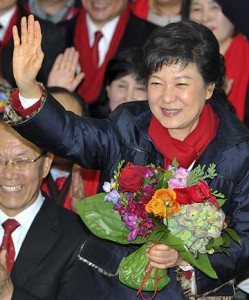
The election of Park Geun-hye was a multifaceted event in South Korean history. As the daughter of former President Park Chung-hee—a military leader whose legacy remains a subject of intense polarization between those who credit him with Korea’s economic "Miracle on the Han River" and those who condemn his autocratic rule—Park Geun-hye’s ascent was laden with historical weight. Her victory over the opposition Democratic United Party candidate, Moon Jae-in, was significant not only for its ideological implications but for its symbolic shattering of the "glass ceiling" in the Blue House (Cheong Wa Dae).
Proponents of the administration suggested that a female president would naturally lead to a "watershed moment" for women’s rights. However, critics argued that Park’s political identity was rooted in her father’s legacy rather than a feminist agenda. Throughout her campaign and early presidency, Park focused on "creative economy" and national security, often downplaying gender-specific policies. This discrepancy between the symbolism of her position and the lack of substantive progress in gender parity created a complex social environment where the term "female president" became a cultural buzzword, detached from actual legislative shifts.
Socio-Economic Disparities and Gender Inequality in 2013
To understand the critique of Girl’s Day’s "Female President," one must examine the socio-economic reality for women in South Korea during this period. Despite the nation’s rapid industrialization and high levels of education among women, South Korea consistently ranked at the bottom of international gender equality indices.
According to data from the Organisation for Economic Co-operation and Development (OECD), South Korea maintained the highest gender wage gap among member nations in 2013, with women earning approximately 36.6% less than their male counterparts. Furthermore, The Economist’s "Glass Ceiling Index," which evaluates the best and worst countries for working women, placed South Korea last among OECD nations. The structural barriers were not limited to wages; they extended to recruitment, promotions, and the "maternal wall," where women were often forced to choose between career advancement and child-rearing due to a lack of institutional support and rigid corporate cultures.
In this climate, the participation rate of women in the labor force remained significantly lower than that of men, particularly for those in their 30s and 40s. While South Korean women invested heavily in higher education, the return on this investment was frequently stifled by a labor market that favored male longevity and traditional family structures. Legal restrictions, such as the then-strict prohibition on abortion (except in cases of medical necessity or criminal acts), further highlighted the limited autonomy women held over their own lives, regardless of the gender of the sitting president.
Girl’s Day and the Evolution of "Female President"
Girl’s Day, a group under Dream T Entertainment consisting of members Sojin, Yura, Minah, and Hyeri, entered 2013 at a pivotal moment in their career. Having transitioned from a "cute" concept to a more mature and provocative "sexy" image with their previous hit "Expectation," the group aimed to solidify their status in the competitive K-pop market. "Female President" was released on June 24, 2013, as part of a repackaged version of their first full-length album.
The song’s lyrics, written by Long Candy and produced by Nam Ki-sang, utilize the existence of a female president as a rhetorical device to encourage women to take initiative in romantic pursuits. The chorus asks: "The president of our country is now a woman / Why so serious? What’s the problem? / Why can’t a woman do it first?" On the surface, the song framed itself as a "girl power" anthem, suggesting that if a woman could lead the nation, a woman could certainly initiate a kiss or a confession of love.
Chronology of Release and Reception
The rollout of "Female President" followed a strategic timeline designed to maximize public attention:
- December 19, 2012: Park Geun-hye is elected as the 18th President of South Korea.
- February 25, 2013: Park Geun-hye is officially inaugurated.
- March 2013: Girl’s Day releases "Expectation," marking their successful pivot to a "sexy" concept.
- June 20, 2013: Teaser images and videos for "Female President" are released, featuring controversial styling, including a skin-colored bodysuit that created an illusion of nudity.
- June 24, 2013: The official music video and single are released.
- July 7, 2013: Girl’s Day receives their first-ever music show win on SBS’s Inkigayo for "Female President," though the broadcast was canceled due to a news report on a plane crash, leading to a delayed celebration.
Despite the song’s commercial success, it faced immediate criticism from social commentators and feminist scholars. The primary critique was that the song reduced the monumental political achievement of a female presidency to a trivial justification for "dating tips." Critics argued that the "empowerment" portrayed in the video was performative, designed to appeal to the male gaze rather than to challenge patriarchal norms.
Visual and Lyrical Analysis: Empowerment vs. Objectification
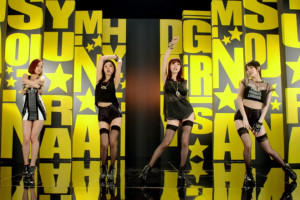
The music video for "Female President" serves as a case study in the contradictions of the "sexy concept" era of K-pop. While the lyrics advocate for female agency, the visual language remains firmly rooted in traditional tropes of sexualization. The video features the members in revealing outfits, engaging in choreography that emphasizes physical allure.
One of the most discussed elements of the video was the portrayal of a romantic interaction between members Minah and Hyeri, where Hyeri is dressed in masculine attire (a suit and short hair) and Minah portrays a more traditional feminine role. The video culminates in a near-kiss, which many analysts viewed as "queer-baiting"—using the suggestion of same-sex intimacy to generate shock value and attract male viewers rather than making a genuine statement on LGBTQ+ rights or non-traditional gender roles.
Furthermore, the lyrics contain contradictory messages. While the chorus encourages boldness, other verses describe the female protagonist as feeling "dizzy" or "like a baby" in the presence of her love interest. This linguistic regression suggests that the woman’s self-worth is still intrinsically tied to her relationship with a man, undermining the very premise of the "Female President" metaphor.
Official Responses and Cultural Impact
The management of Girl’s Day and the members themselves maintained that the song was intended to be a fun, confident anthem for their fans. In various interviews during their promotion, the members expressed pride in the concept, stating that they wanted to show a "cool" and "confident" side of women. However, the disconnect between the group’s stated intent and the socio-political reality of South Korea was difficult for many to ignore.
The song did not lead to a broader discussion about policy or gender reform within the K-pop industry or the government. Instead, it highlighted the "idol industry’s" tendency to adopt political terminology for marketing purposes without engaging with the underlying issues. The "Female President" era for Girl’s Day was ultimately defined more by the "diaper fashion" controversy (referring to the short, ruffled shorts worn during performances) than by any lasting contribution to feminist discourse.
Broader Implications and Historical Reflection
In retrospect, "Female President" serves as a cultural artifact that captures the tension of the early 2010s in South Korea. It represents a period where the symbols of progress were visible, yet the structural reality remained stagnant. The election of Park Geun-hye did not usher in a golden age for South Korean women; in fact, her presidency ended in 2017 with impeachment and imprisonment following a massive corruption scandal, further complicating the legacy of the nation’s first female leader.
The song also reflects the limitations of the "Girl Crush" and "Girl Power" concepts in K-pop during that era. While these concepts sought to project strength, they were often confined by the requirements of the "sexy concept" which was the dominant market trend for girl groups at the time. The attempt to link pop music to political milestones like the presidency of Park Geun-hye revealed a superficial understanding of empowerment—one that prioritized individual romantic "boldness" over collective social or economic advancement.
Ultimately, the impact of "Female President" on South Korean society was negligible in terms of policy or social reform. It remains a notable example of how pop culture can mirror political events while simultaneously stripping them of their weight. For the women of South Korea, the challenges of the gender wage gap, workplace discrimination, and reproductive rights continued long after the song left the music charts, proving that a female president—and a song about one—was not enough to dismantle centuries of patriarchal tradition.
Related News