The Rising Threat of Sasaeng Culture in the K-pop Industry Analyzing the Impact on EXO and the Broader Entertainment Landscape
Article Editorial Team

The South Korean entertainment industry, particularly the global phenomenon known as K-pop, has long grappled with a dark undercurrent of obsessive fan behavior. While the relationship between idols and their supporters is often characterized by mutual appreciation and commercial success, a specific subset of the fandom—known as sasaengs—has become a significant threat to the safety, privacy, and mental well-being of performers. Derived from the Korean words "sa" (private) and "saeng" (life), sasaeng fans are individuals who engage in extreme stalking and invasive behaviors that transcend the boundaries of conventional fandom. This phenomenon has reached a critical point with the rise of the boy group EXO, whose members have recently gone public with their distress regarding persistent harassment, echoing the historical struggles of legendary groups like TVXQ and Shinhwa.
Defining Sasaeng Culture and the Mechanics of Stalking
Sasaeng behavior is distinct from "hardcore" fandom in its criminal and invasive nature. These individuals do not merely attend concerts or buy albums; they dedicate their lives to following idols 24 hours a day, seven days a week. The methods employed by sasaengs are sophisticated and often involve illegal activities. A primary tool in their arsenal is the "sasaeng taxi," a specialized transportation service where drivers are paid exorbitant fees—sometimes upwards of $500 a day—to pursue idol vans at high speeds through urban centers. These high-speed chases frequently result in traffic accidents, endangering the idols, the fans, and the general public.
Beyond physical stalking, sasaengs utilize technological breaches to monitor their targets. This includes hacking into private KakaoTalk or cellular accounts to obtain call logs and text messages. In more extreme cases, personal information such as Social Security numbers and flight manifests are sold on the black market. The invasion of the domestic sphere is perhaps the most traumatizing aspect of this culture. There have been numerous documented reports of sasaengs breaking into idol dormitories to steal personal items, such as clothing and undergarments, or to take photographs of members while they are sleeping.
The Case of EXO: A Modern Crisis in Privacy
Since their debut in 2012 under SM Entertainment, EXO has experienced a meteoric rise to fame, but this success has been shadowed by unprecedented levels of fan interference. Recent reports have highlighted a series of disturbing incidents that have forced the group to address the issue publicly. During a candid interview with Sports Seoul, the members expressed a profound sense of burden and psychological stress caused by the constant intrusion into their private lives.
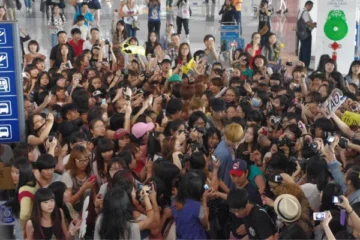
One of the most publicized incidents involved the member Tao, who was surreptitiously recorded while singing in a hotel shower. The audio was later leaked online, sparking a debate about the lack of legal protection for idols in private spaces. Furthermore, the group’s presence at international airports has frequently devolved into chaotic scenes. These "airport stampedes" have resulted in members being shoved, falling, and even being physically grabbed by fans who attempt to link arms with them as they navigate through terminals. The group has described these encounters not as moments of fan connection, but as frightening "elephant stampedes" that pose a genuine risk of physical injury.

The intensity of the sasaeng following surrounding EXO can be attributed to several factors. As a product of SM Entertainment—the company responsible for K-pop giants like TVXQ and Super Junior—EXO inherited a massive, pre-existing fan infrastructure. Additionally, the group’s early marketing involved an elaborate "supernatural" backstory, which, while successful in building an immersive brand, may have inadvertently fueled the obsessive tendencies of younger, more impressionable fans who struggle to distinguish between the stage persona and the private individual.
A Chronology of Obsession: From Shinhwa to TVXQ
The sasaeng phenomenon is not a new development in the K-pop industry; it is a systemic issue that has evolved over decades. To understand the current plight of EXO, one must look at the precedents set by earlier "idols."
In the late 1990s and early 2000s, Shinhwa was one of the first groups to face extreme stalking. Member Kim Dong-wan became a pioneer in setting boundaries when he famously told fans, "Shinhwa isn’t responsible for your lives," during a promotional event. While this statement initially caused a backlash and a loss of some fans, it established a necessary precedent for idol autonomy.

However, the situation escalated significantly with the debut of TVXQ in 2003. Often cited as having the most "famous" sasaeng following in history, the members of TVXQ endured years of psychological warfare. Incidents included fans breaking into their dorms to kiss them while they slept and the installation of GPS trackers on their personal vehicles. The most severe incident occurred in 2006, when member U-Know Yunho was hospitalized after consuming a drink laced with superglue given to him by an anti-fan, highlighting how the line between "obsessive fan" and "malicious attacker" can often blur.
Socio-Psychological Factors and Industry Responses
The persistence of sasaeng culture is rooted in a complex web of social and commercial factors. The K-pop industry is built on the "idol" model, which markets performers as accessible, idealized companions. This "parasocial relationship" encourages fans to invest emotionally and financially in the lives of the artists. When this investment is taken to an extreme, it manifests as a desire for total possession and 24/7 access.
Data suggests that the majority of sasaengs are teenage girls or women in their early twenties. This demographic often seeks escape from the high-pressure environment of the South Korean education system or workplace, finding a sense of community and purpose in the "mission" of stalking an idol. The anonymity provided by internet forums allows these individuals to share stolen information, creating a competitive environment where the "best" sasaeng is the one who gets the closest to the artist.

Official responses from talent agencies have historically been criticized as inadequate. For many years, companies were reluctant to take legal action against sasaengs for fear of alienating the broader fanbase or damaging the group’s public image. However, the severity of recent incidents has prompted a shift in strategy. Agencies are increasingly "lawyering up," employing private security teams, and coordinating with police to prosecute those who trespass or engage in cyber-crimes.
Analyzing Strategies for Mitigation
As the industry matures, several strategies have emerged to combat sasaeng behavior, though none are a definitive "silver bullet."
- Legal Recourse and Law Enforcement: The most effective deterrent is the threat of criminal prosecution. By treating sasaeng behavior as stalking and harassment rather than "misguided love," agencies can utilize existing laws to protect their artists.
- Setting Clear Boundaries: Following the example of Shinhwa’s Dongwan, idols are being encouraged to speak out. Directly addressing the discomfort caused by sasaengs can strip away the romanticized notions of the behavior.
- Demographic Diversification: Groups that target a broader, older audience—often referred to as "noona" (older sister) fans—tend to experience fewer sasaeng incidents. Mature fans generally have professional and personal responsibilities that preclude full-time stalking.
- Reducing "Shipping" Culture: The industry’s tendency to encourage "shipping" (the fan-driven pairing of members in romantic or intense platonic relationships) can exacerbate delusions among fans. Reducing staged "fanservice" that plays into these fantasies may help maintain a healthier distance between the performer and the audience.
Broader Impact and Future Implications
The continued existence of sasaeng culture has profound implications for the future of the Korean Wave (Hallyu). At a human level, it leads to burnout, anxiety, and depression among artists, many of whom are still in their formative teenage years. When talented performers leave the industry due to a lack of privacy, the quality of the music and the stability of the market suffer.

Furthermore, the international reputation of K-pop is at stake. As the genre expands into Western markets, the behavior of domestic sasaengs is often viewed with horror by global audiences, potentially branding the entire fandom as toxic. To sustain its growth, the K-pop industry must prioritize the safety of its performers over short-term profits derived from obsessive consumerism.
In conclusion, the challenges faced by EXO are a symptom of a deeper, long-standing malaise within the idol-fan dynamic. While the list of "solutions"—ranging from legal action to the promotion of mature fandom—offers a roadmap, the eradication of sasaeng culture requires a fundamental shift in how idols are marketed and how society views the boundaries of celebrity. K-pop should remain a source of joy and entertainment; it should not be a catalyst for criminal behavior or the destruction of an individual’s right to a private life. As EXO continues their career, the hope is that both the industry and the fans will learn from these "unfortunate baggages" of fame to create a safer environment for all.
Related News