The Struggle of the International K-pop Fan: Navigating Cultural Barriers and Digital Borders in a Global Phenomenon
Article Editorial Team

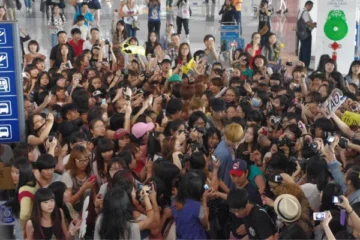
The global expansion of South Korean popular music, widely known as K-pop, has fostered a sprawling international diaspora of enthusiasts connected through digital infrastructure and a shared aesthetic language. While the "Hallyu" or Korean Wave has successfully permeated markets from the sweltering urban centers of Southeast Asia to the suburban landscapes of North America and Europe, the experience of the international fan, or "i-fan," remains characterized by a unique set of logistical, linguistic, and social obstacles. Despite the increasing commercialization of the genre and its integration into the global music industry, these fans operate within a framework of systemic challenges that differentiate their consumption patterns from those of domestic South Korean audiences. To understand the current state of the global music market, it is essential to examine the multifaceted difficulties faced by this community, ranging from the digital divide in content accessibility to the sociological implications of cross-cultural fandom.
The Digital Divide and the Translation Crisis
For the international K-pop fan, the primary barrier to entry and sustained engagement is the language gap. Unlike domestic fans who can consume variety shows, radio broadcasts, and social media updates in real-time, international audiences are often dependent on a decentralized network of volunteer translators. Historically, the pursuit of subtitled content has led fans to navigate obscure corners of the internet, often encountering copyright strikes, broken links, and low-resolution uploads.

While platforms like Weverse, Viki, and YouTube have made strides in providing official subtitles, a significant portion of niche content remains untranslated. This creates a tiered experience within the fandom where "i-fans" must wait hours, days, or even weeks to understand the nuances of an interview or a live stream. In many instances, fans resort to "smiling and nodding," relying on the visual charisma of the performers rather than the verbal content. This linguistic disconnect highlights a broader issue in the globalization of media: the speed of content creation frequently outpaces the infrastructure for professional translation, leaving a massive global audience in a state of perpetual information lag.
Socio-Cultural Misunderstandings and Aesthetic Friction
The aesthetic presentation of K-pop idols—often characterized by elaborate makeup, experimental fashion, and a rejection of traditional Western concepts of hyper-masculinity—frequently leads to social friction for international fans. The phenomenon of the "flower boy" (kkonminam) is well-established in East Asian media, yet it remains a point of confusion for those uninitiated in Korean cultural norms.
International fans frequently report instances of social scrutiny when sharing their interests. A common anecdote involves the "Ren" phenomenon—referring to the former NU’EST member known for his ethereal, androgynous appearance. Fans displaying such images as phone wallpapers often face intrusive questioning from peers who struggle to categorize the performers within a binary gender framework. This leads to a defensive posture among fans, who find themselves tasked with explaining complex cultural nuances of beauty and performance to a skeptical or dismissive audience. This "missionary" aspect of the fandom—the constant need to justify or explain one’s taste—adds a layer of emotional labor to the fan experience that is rarely present in mainstream Western music fandoms.

The Missionary Burden and the "Gateway" Effect
The desire to share K-pop with one’s immediate social circle often results in what fans describe as a "lackluster response." When introducing iconic music videos such as BIGBANG’s "Fantastic Baby" or Super Junior’s "Sorry Sorry," international fans encounter a significant cultural barrier. For the uninitiated, the high-saturation visuals, maximalist production, and highly synchronized choreography can be overwhelming.
The "first-timer" reaction is often characterized by confusion rather than appreciation. The inhuman levels of synchronization, which are a hallmark of the K-pop training system, can appear "scary" or "artificial" to those accustomed to the more individualistic performance styles of Western pop stars. Consequently, the international fan often faces a sense of isolation, realizing that their passion for the genre is not easily translatable to their local environment. This creates a specialized "subculture" identity, where the fan finds more community with a stranger ten thousand miles away on Twitter or Discord than with their own neighbors.
Linguistic Evolution and the K-pop Glossary
The international K-pop community has developed a distinct lexicon that often bleeds into their everyday speech, causing further social alienation. Terms such as "bias" (favorite member), "aegyo" (displayed cuteness), "fansite" (dedicated photographer-run blogs), and "sasaeng" (obsessive stalkers) form a specialized vocabulary.

The misuse or over-explanation of these terms often results in "glazed-over eyes" from non-fans. The complexity of the K-pop industry—which includes concepts like "airport fashion" as a calculated marketing tool and the distinction between "idols" and "artists"—requires a glossary that many outsiders are unwilling to learn. When international fans accidentally use this terminology in the wrong context, it reinforces the perception of the fandom as an insular and impenetrable "cult-like" entity.
The Geographic "World Tour" Paradox
Perhaps the most significant grievance for the international fan is the geographic disparity in live performances. Despite the "world tour" branding used by major agencies like SM, HYBE, YG, and JYP Entertainment, the itineraries often favor a select few global hubs—typically Seoul, Tokyo, Los Angeles, and New York. Fans in South America, Southeast Asia, Europe, and Africa frequently find their home countries omitted from tour schedules.
For many "i-fans," the closest they will ever get to a live performance is a "shaky fancam" viewed on a laptop screen. This limitation has redefined the term "international fan" to mean a fan whose participation is strictly digital. While domestic fans can attend weekly music shows (like M Countdown or Inkigayo) and fan-sign events, the international fan is relegated to the "online world." Their "fan accounts" are not stories of physical encounters, but rather observations of digital pixels. This geographic isolation creates a sense of "long-distance relationship" between the idol and the fan, sustained entirely by data streams and social media engagement.

The Complexity of Naming and "Engrish" Lyrics
The branding of K-pop groups often presents a phonetic and logical challenge for English speakers. Group names like SHINee or T-ara require specific pronunciation guides, while acronyms can be baffling. The group "Teen Top," for instance, famously stands for "Teenager EmoBoys Emoticon Next Generation Talent Object Praise"—a backronym that illustrates the creative, if linguistically strained, approach to branding in the industry.
Furthermore, the inclusion of English lyrics, often referred to as "Engrish," provides a unique point of contention. Lines such as "You zoom zoom my heart like a rocket" or references to "cola" being "elastic" are frequently used in K-pop tracks to provide a global hook. While these phrases are catchy, they often lack grammatical coherence to native speakers. International fans find themselves in the awkward position of singing along to phrases that "don’t quite roll off the tongue," further highlighting the hybrid, often surreal nature of the genre as it attempts to bridge cultural divides.
Cultural Disassociation and the Shift in Identity
A profound psychological effect noted among long-term international K-pop fans is a gradual disassociation from their own local cultures. As fans immerse themselves in Korean variety shows, dramas, and music, their "internal soundtrack" shifts. It is common for fans to experience a moment of confusion when hearing a song in their native language in a grocery store, momentarily perceiving it as "foreign" because their baseline for "normal" music has shifted toward the K-pop structure.

This drift from local culture is a testament to the "soft power" of South Korea. By embracing K-pop, fans are not just consuming music; they are adopting a different cultural lens. While this fosters international understanding, it can also lead to a sense of "homelessness" in a cultural sense, where the fan feels more at home in the digital streets of Seoul than in their actual hometown.
Societal Repression and the Path Forward
The final struggle of the international fan is the social stigma associated with "fangirling" or "fanboying" in public. In many cultures, the overt expression of enthusiasm for a foreign-language pop group is met with "cold glares" or labels of immaturity. Fans are often forced to repress their excitement in public spaces to pass as "socially acceptable" adults.
However, despite these ten primary struggles—ranging from the translation gap to social repression—the international fan community remains one of the most resilient and influential forces in the modern music industry. They are the primary drivers of YouTube views, the reason for the genre’s chart-topping success on Billboard, and the catalysts for cultural diplomacy.

The "struggle" of the i-fan is, in many ways, the story of the 21st-century global citizen: navigating a world where technology allows us to love something on the other side of the planet, even if the physical and social structures of our immediate reality haven’t quite caught up. As the K-pop industry continues to evolve, addressing these "i-fan" struggles through better translation, more inclusive touring, and deeper cultural exchange will be the key to maintaining its status as a truly global phenomenon. For now, the international fan remains a vital, if often misunderstood, pillar of the Hallyu wave, proving that music can indeed transcend borders, even if the journey is fraught with "zoom zoom" rockets and "elastic" colas.
Related News