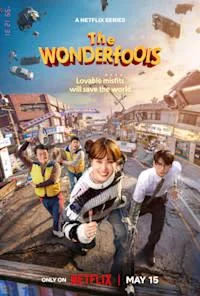
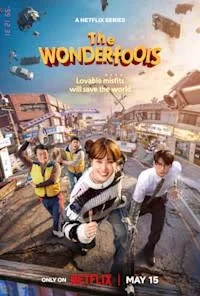
Netflix has ignited anticipation for its upcoming K-drama, The WONDERfools, by releasing the main trailer and a striking poster for the series. Set against the backdrop of 1999, the comedy-adventure promises a unique blend of supernatural abilities, unexpected heroism, and a deep dive into the lives of ordinary individuals thrust into extraordinary circumstances. The narrative centers on a group of neighborhood misfits who awaken to newfound superpowers, finding themselves unexpectedly tasked with the monumental mission of saving their city. This ambitious project is slated for a global premiere on May 15, exclusively on Netflix, aiming to capture the attention of international audiences with its distinctive premise and star-studded cast.
The newly released trailer offers a tantalizing glimpse into the chaotic yet captivating world of The WONDERfools. It opens with a dramatic and disorienting scene featuring Chae-ni, portrayed by the acclaimed Park Eun-bin, who appears with blood streaming from her nose, her voice laced with uncertainty as she questions the possibility of her imminent demise. This jarring introduction serves as a powerful hook, immediately drawing viewers into the mystery surrounding the characters’ sudden transformations. Moments later, Chae-ni’s inexplicable teleportation abilities manifest, showcasing her jarring shifts across disparate locations—from the desolate stillness of an abandoned greenhouse to the unexpected solitude of a boat. The trailer even hints at temporal displacement, with Chae-ni seemingly slipping into the Joseon era through an ordinary wardrobe, suggesting a complex narrative that transcends the confines of its primary setting.
This extraordinary phenomenon is not isolated to Chae-ni. The trailer swiftly introduces other members of the burgeoning superhero collective, each grappling with their own burgeoning and often bewildering powers. Ro-bin, brought to life by Im Seong-jae, inadvertently demonstrates his newfound strength when a casually thrown can punches a literal hole through a wall, underscoring the raw and untamed nature of their abilities. Gyeong-hun, portrayed by Choi Dae-hoon, experiences a different kind of disruption, finding himself physically immobilized, unable to move despite his best efforts. The palpable confusion etched on their faces vividly illustrates how their once predictable, everyday lives are abruptly and irrevocably upended by these extraordinary developments.
Related Articles
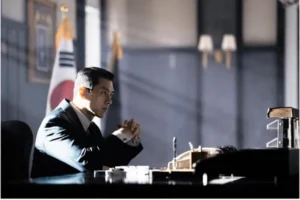
The narrative further unfolds as this disparate trio encounters Un-jeong, a character embodied by the popular Cha Eun-woo. Un-jeong exhibits the power of telekinesis, a display that immediately captivates the other characters. Mistaking him for a seasoned mentor or perhaps a guiding force in their bewildering new reality, they begin to follow him. This dynamic sets the stage for an inherently awkward yet undeniably comedic interplay, as these newfound "superheroes" attempt to navigate their powers and their burgeoning alliance under Un-jeong’s reluctant tutelage. The juxtaposition of their bewildered earnestness and Un-jeong’s potential reserve promises a rich vein of humor and character development.
As the characters begin to tentatively explore their powers and their new alliances, a palpable sense of dread and urgency infiltrates the narrative. Reports begin to surface of individuals mysteriously disappearing from their homes and workplaces, echoing unsettling incidents that occurred two decades prior, in the late 1990s. This parallel narrative thread immediately raises questions about the cyclical nature of these events and the potential connection between past and present. The introduction of Dr. Ha Won-do, a figure shrouded in an aura of scientific intrigue, and a clandestine group known as the "Wunderkinder," further deepens the mystery. Their presence suggests a deliberate origin for these powers and hints at a formidable threat that looms over the fictional city of Haeseong-si, the primary setting for the series. The name "Wunderkinder," meaning "wonder children" in German, itself implies a precognitive or perhaps even engineered origin for the extraordinary abilities displayed.
The main poster for The WONDERfools visually encapsulates the high-stakes, high-octane nature of the series. It depicts a city in disarray, ravaged by what appears to be a catastrophic event. Amidst collapsing structures and a storm of flying debris, the four lead characters are showcased actively utilizing their unique abilities. This chaotic tableau serves as a powerful visual metaphor for the impending conflict, hinting at a monumental and perhaps perilous battle to protect their community from an unseen enemy or a devastating force. The poster art skillfully balances the elements of disaster and heroism, promising a visual spectacle that is both thrilling and emotionally resonant.
A Look Back: The Lingering Shadows of 1999
The choice of 1999 as the narrative setting for The WONDERfools is not merely aesthetic; it imbues the story with a distinct cultural and technological context that informs the characters’ experiences and the unfolding mystery. The late 1990s was a period of burgeoning digital advancement, with the internet slowly becoming more accessible, yet still far from the ubiquitous presence it is today. Mobile phones were becoming more common but lacked the sophisticated capabilities of modern smartphones. This era represents a fascinating intersection of analog and digital, a time when the world was on the cusp of a technological revolution, but many aspects of daily life still retained a more traditional feel.
For characters suddenly imbued with supernatural powers, this setting offers unique challenges and opportunities. How would someone in 1999 document or share evidence of teleportation? What would be the societal reaction to individuals with extraordinary abilities in an era before widespread social media and instant global communication? The anxieties and hopes associated with the approaching millennium, the Y2K bug, and the dawn of a new century can also be subtly woven into the narrative, adding layers of thematic depth. The "incidents from two decades earlier" mentioned in the article likely refer to events that occurred in the late 1970s or early 1980s, a period even further removed from the present, allowing for a greater sense of historical mystery and forgotten secrets. The potential for these past events to be linked to the current crisis suggests a long-standing conspiracy or a recurring phenomenon that has finally resurfaced.
The Ensemble Cast: Bringing the Misfits to Life
The casting of The WONDERfools features a blend of established talent and rising stars, each poised to bring their unique charisma to their respective roles. Park Eun-bin, celebrated for her versatile performances in dramas such as Extraordinary Attorney Woo and The King’s Affection, is expected to deliver a compelling portrayal of Chae-ni, navigating the emotional and physical turmoil of her newfound abilities. Im Seong-jae, known for his supporting roles in critically acclaimed series, takes on a more prominent role as Ro-bin, promising to inject humor and relatability into the character’s journey. Choi Dae-hoon, a seasoned actor with a diverse filmography, is set to bring gravitas and perhaps a touch of underlying vulnerability to Gyeong-hun.
The inclusion of Cha Eun-woo, a globally recognized idol and actor with a growing repertoire of leading roles, as Un-jeong, adds significant star power to the production. His portrayal of a character who may possess a deeper understanding of the unfolding events is a key element of the series’ intrigue. The synergy between these actors, particularly in the comedic and dramatic exchanges that are sure to arise from their shared predicament, will be a crucial factor in the show’s success. The dynamic between Chae-ni’s initial panic, Ro-bin’s accidental displays of power, Gyeong-hun’s immobilizing predicament, and Un-jeong’s telekinetic prowess offers a rich canvas for character interaction and plot development.
The Stakes: Saving Haeseong-si
The overarching mission of The WONDERfools is the salvation of Haeseong-si, a fictional city that serves as the microcosm for the larger threats at play. The trailer and poster strongly suggest that the city is under imminent danger, with the disappearances and the chaotic imagery pointing towards a widespread crisis. The "Wunderkinder," as a group, could represent either the source of the problem or a forgotten legacy of individuals who once possessed similar powers. Their connection to Dr. Ha Won-do, a figure likely involved in scientific research or perhaps even experimentation, further fuels speculation about the origins of these extraordinary abilities.
The narrative appears to be building towards a confrontation where these unlikely heroes, armed with their nascent and unpredictable powers, must band together to thwart a malevolent force or a catastrophic event. The humor inherent in their clumsy attempts to master their abilities will likely be juxtaposed with genuine peril, creating a tone that is both entertaining and suspenseful. The success of Haeseong-si’s salvation will depend not only on the characters’ powers but also on their ability to overcome their individual insecurities and form a cohesive unit.
Official Statements and Anticipated Reception
While specific official statements from Netflix or the production team regarding the trailer and poster release have not been detailed in the initial report, the act of releasing these promotional materials signifies a strong endorsement and a clear intention to generate significant buzz. The timing of the release, approximately two weeks before the premiere, is a standard and effective marketing strategy designed to maximize audience engagement and anticipation.
Industry analysts and K-drama enthusiasts are likely anticipating The WONDERfools with a mixture of excitement and curiosity. The series taps into the popular genre of superhero narratives, a trend that has seen immense global success in recent years. However, its specific blend of 1990s nostalgia, Korean cultural nuances, and a focus on ordinary people becoming extraordinary offers a fresh perspective. The success of previous Netflix K-drama originals, such as Squid Game, All of Us Are Dead, and The Glory, has established a strong global audience for Korean content, and The WONDERfools is poised to capitalize on this existing momentum. The series’ ability to balance humor, fantasy, and action will be key to its widespread appeal.
Broader Impact and Implications
The global premiere of The WONDERfools on Netflix is more than just the release of a new K-drama; it represents another significant step in the ongoing globalization of Korean entertainment. By investing in diverse genres and innovative storytelling, Netflix continues to solidify its position as a major platform for distributing Korean content to a worldwide audience. The series’ unique premise, blending retro charm with supernatural thrills, has the potential to attract viewers who may not typically gravitate towards K-dramas, thus expanding the genre’s reach.
Furthermore, the thematic exploration of ordinary individuals discovering extraordinary potential resonates universally. The narrative of misfits finding their purpose and banding together to overcome adversity is a timeless story that can transcend cultural boundaries. The success of The WONDERfools could pave the way for more productions that experiment with historical settings and unique genre fusions within the K-drama landscape. As audiences increasingly seek out diverse and compelling narratives, series like The WONDERfools are crucial in showcasing the creativity and storytelling prowess that the Korean entertainment industry has to offer on a global stage. The careful crafting of the trailer and poster suggests a deep understanding of what captivates an international audience, hinting at a well-produced and engaging viewing experience.