The discourse surrounding aesthetic enhancement in South Korea has reached a critical juncture, as the line between personal choice and societal mandate continues to blur within the nation’s entertainment industry. While the global community often views South Korea through the lens of its rapid technological advancement and cultural exports, the domestic conversation is frequently dominated by the ethics and prevalence of plastic surgery. This debate was recently reinvigorated by a televised exchange involving solo vocalist G.NA and comedian Lee Yoon-suk, alongside a viral controversy involving the 2013 Miss Daegu beauty pageant. These events highlight a complex cultural landscape where the pursuit of a singular "ideal" face has moved from the fringes of celebrity maintenance to a standardized expectation for the general public.
The G.NA Debate: Individual Agency and Psychological Well-being
The tension regarding surgical intervention was notably displayed during a recent variety program featuring solo artist G.NA and comedian Lee Yoon-suk. The discussion began when Lee voiced a firm opposition to his wife undergoing plastic surgery, characterizing such a move as a "violation of their marriage oath." Lee’s perspective represents a traditionalist view that prioritizes naturalism and the sanctity of the original physical form, arguing that external changes do not necessarily equate to internal happiness.
In response, G.NA offered a defense rooted in the concepts of personal satisfaction and self-esteem. She posited that cosmetic procedures are often less about adhering to external pressure and more about achieving "personal happiness." To illustrate her point, she shared an anecdote regarding her grandfather, whose quality of life and confidence significantly improved following a hair transplant procedure. G.NA’s argument aligns with modern psychological theories suggesting that for many individuals, correcting perceived physical flaws can serve as a vital catalyst for improved mental health and social confidence.
However, the debate also underscored the gendered frustrations inherent in these discussions. When Lee countered that a husband’s love should render such procedures unnecessary, G.NA’s inability to further articulate her rebuttal—beyond expressing frustration with male perspectives—highlighted the difficulty of defending individual choice in an environment where that "choice" is heavily influenced by a rigid beauty standard. G.NA herself has often been the subject of public scrutiny regarding her appearance, making her a poignant, if controversial, advocate for the industry.
The Miss Daegu Controversy: The Rise of the "Surgical Clone"
The theoretical benefits of plastic surgery mentioned by G.NA are frequently overshadowed by the reality of extreme homogeneity, as evidenced by the 2013 Miss Daegu pageant. When the photographs of the twenty candidates were released, they sparked an international sensation, not for their beauty, but for their near-identical features. The contestants displayed a striking uniformity: large eyes with prominent double eyelids, high and narrow nose bridges, luminous pale skin, and the "V-line" jaw—a heart-shaped facial structure that has become the gold standard of Korean aesthetics.
Critics and netizens worldwide pointed to the images as a visual manifestation of a "cookie-cutter" approach to beauty. While each candidate was a separate individual, the cumulative effect of their surgical histories resulted in a loss of distinctiveness. This phenomenon is often attributed to the standardized techniques employed by surgeons in Seoul’s "beauty belt," specifically the Apgujeong and Sinsa-dong districts. In these areas, hundreds of clinics offer specialized packages designed to replicate the features of popular idols, leading to a saturation of the "Gangnam Face"—a term used to describe women who have clearly undergone the same suite of procedures.
The Miss Daegu incident serves as a case study for how the industry has moved beyond enhancement and into the realm of replication. When a beauty pageant, intended to celebrate the diverse charms of a region, produces twenty candidates who appear to be variations of the same model, it raises fundamental questions about the definition of beauty in modern South Korea.

Statistical Context: The Plastic Surgery Capital of the World
The prevalence of plastic surgery in South Korea is supported by staggering data. According to the International Society of Aesthetic Plastic Surgery (ISAPS), South Korea has consistently ranked as the country with the highest rate of cosmetic procedures per capita. Reports indicate that in Seoul, as many as one in five women has undergone some form of surgical intervention.
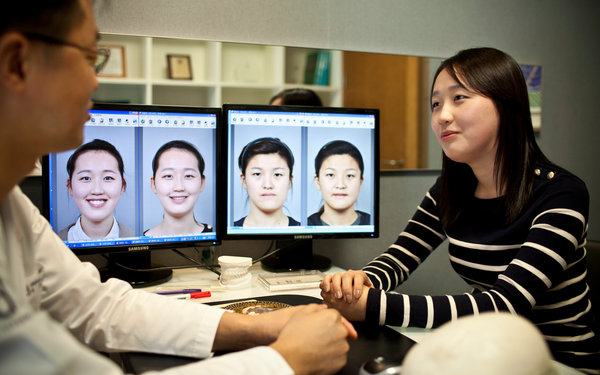
The infrastructure supporting this industry is immense. The Gangnam district alone houses over 400 specialized clinics. The commercialization of these procedures is unavoidable; advertisements featuring "before and after" transformations are ubiquitous in subway stations, on the sides of buses, and throughout digital media. This constant exposure has normalized procedures like blepharoplasty (double eyelid surgery) and rhinoplasty to the point where they are frequently gifted to high school graduates by their parents as they prepare for university and the job market.
The economic implications are equally significant. South Korea has become a global hub for medical tourism, with patients from China, Japan, and the West traveling to Seoul to seek out the expertise of Korean surgeons. This has turned the human face into a significant driver of the national economy, further incentivizing the maintenance of high beauty standards.
Media Complicity and the Lack of Diverse Representation
A primary driver of this trend is the South Korean media, which often promotes a singular, narrow definition of attractiveness. Unlike Western media markets, which—despite their own flaws—have seen the rise of figures like Tina Fey, Lena Dunham, or Mindy Kaling who challenge traditional beauty norms, the South Korean landscape remains largely monolithic.

In the K-pop and K-drama industries, "visuals" (members chosen specifically for their looks) are prioritized. When celebrities are revealed to be "natural beauties" (mo-tae-mi-nyeo), it becomes a major news headline, precisely because it is such a rare occurrence. Conversely, those who do not meet these standards are often relegated to "gag" roles. Comediennes such as Kim Shin-young and Jung Ju-ri frequently find that their professional success is tied to their willingness to be the butt of jokes regarding their appearance.
The disparity is stark: while an idol singer might spend a career being glamorized through high-fashion shoots and flattering cinematography, a performer who does not fit the "V-line" ideal may find themselves featured in music videos or variety skits designed specifically to highlight their "unattractiveness." This binary—the "perfect" idol versus the "ugly" comedian—leaves no room for a middle ground or a celebration of diverse physical traits.
The Shift from Personal Choice to Societal Mandate
The most troubling aspect of the plastic surgery phenomenon is the transition from individual agency to systemic pressure. While G.NA argues for "personal satisfaction," the reality for many South Koreans is that surgery is viewed as a necessary investment for professional and social survival.
In a hyper-competitive job market, "lookism" (discrimination based on appearance) is a documented reality. Most South Korean resumes require a photograph, and it is widely understood that an attractive candidate has a significant advantage over an equally qualified peer. Consequently, the decision to undergo surgery is often less about vanity and more about pragmatism. When society rewards a specific facial structure with better employment opportunities and social status, the "personal choice" to get surgery becomes a forced response to a rigid social hierarchy.
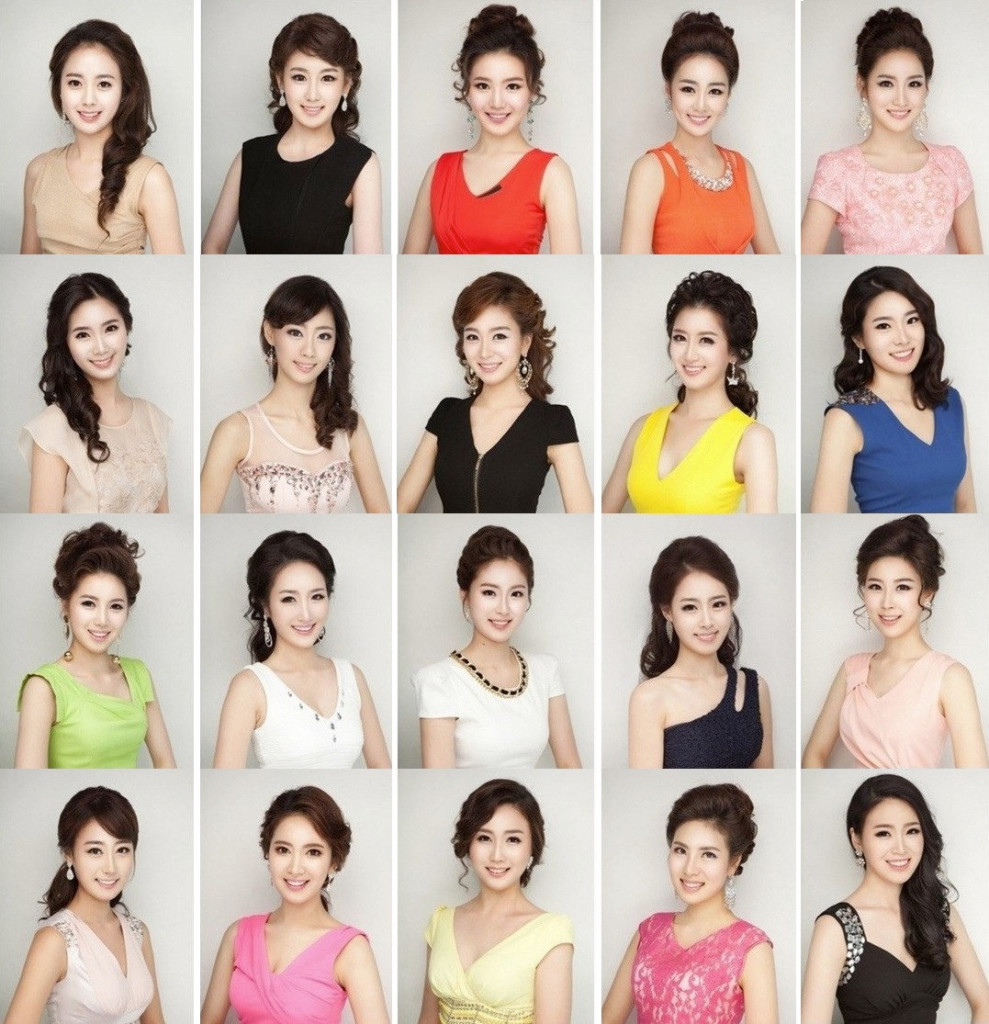
This creates a self-perpetuating cycle. As more people undergo surgery to fit the ideal, the ideal becomes the baseline. Features that were once considered unique or characterful are now viewed as "deficiencies" that need to be corrected. This societal pressure is what creates the "clones" seen in the Miss Daegu pageant; they are not simply victims of vanity, but individuals navigating a system that demands a specific aesthetic for success.
Conclusion: Seeking a Path Toward Aesthetic Pluralism
The current state of plastic surgery in South Korea is a reflection of a society in the midst of a complex cultural negotiation. On one hand, there is the undeniable skill of the surgeons and the genuine boost in confidence experienced by many patients. On the other, there is a growing concern regarding the loss of individuality and the psychological toll of a society that demands physical perfection.
The solution likely lies in the hands of the media and cultural influencers. There have been small signs of progress, such as the veteran girl group Brown Eyed Girls openly discussing their surgeries with a sense of humor and honesty, rather than shame or denial. However, for a true shift to occur, the industry must move beyond the "idol vs. gagwoman" dichotomy and begin to celebrate a broader spectrum of beauty.
Until the voices advocating for self-acceptance and diverse representation become as loud as the advertisements in the Gangnam subways, the pressure to conform will remain. The debate sparked by G.NA and the visual uniformity of the Miss Daegu contestants are reminders that while the scalpel can change a face, it cannot address the underlying societal structures that demand such changes in the first place. The challenge for South Korea moving forward will be to balance its prowess in aesthetic medicine with a renewed respect for the natural diversity of the human form.