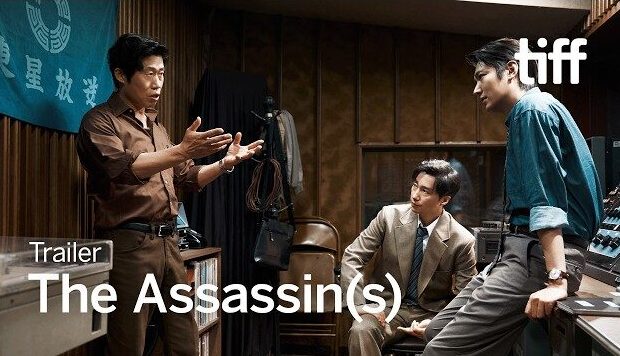
The South Korean cinematic landscape has been thrust into a state of profound turbulence following the release of the political thriller The Assassin(s). While the film has achieved remarkable commercial success, surpassing 1.82 million viewers in less than two weeks, it has simultaneously become the epicenter of a fierce national controversy regarding historical accuracy and the boundaries of artistic license. At the heart of the dispute is the film’s reimagining of one of the most traumatic events in modern Korean history: the 1974 assassination of First Lady Yuk Young Soo, the wife of then-President Park Chung Hee. As the film continues to dominate the box office, it has sparked a wave of vitriol directed not only at the production itself but also at high-profile celebrities who have publicly supported or even attended screenings of the movie.
The 1974 Assassination: Historical Context and Official Record
To understand the gravity of the controversy surrounding The Assassin(s), one must look back to the events of August 15, 1974. On that day, South Korea was celebrating National Liberation Day at the National Theater in Seoul. During a speech by President Park Chung Hee, an assassin named Mun Se Gwang, a Japanese-born ethnic Korean with alleged ties to pro-North Korean organizations in Japan, opened fire. While President Park survived the attempt by ducking behind his rostrum, First Lady Yuk Young Soo was struck in the head by a bullet. She passed away later that evening, an event that plunged the nation into mourning.
The official government investigation concluded that Mun Se Gwang had acted under orders from North Korea. Mun was subsequently convicted and executed in December 1974. For decades, this narrative has been the established historical fact taught in schools and recognized by the state. However, The Assassin(s) challenges this long-standing account by suggesting that the assassination was not the work of a lone operative from a hostile neighbor, but rather a sophisticated internal conspiracy orchestrated at the highest levels of the South Korean government.
Challenging the Narrative: The Film’s Controversial Plot
The Assassin(s) moves beyond the official report to explore a "what if" scenario that has deeply offended conservative sectors of society. The film’s plot posits that the Korean Central Intelligence Agency (KCIA), the predecessor to the current National Intelligence Service (NIS), may have been involved in the shooting. More provocatively, the narrative floats the suspicion that President Park Chung Hee himself might have been complicit in engineering the attack as a "false flag" operation. The film suggests this was a desperate measure to consolidate power and suppress growing domestic opposition to his authoritarian Yushin regime, which had been facing mounting criticism over human rights abuses and the suspension of democratic processes.

Critics of the film argue that these plot points constitute a gross distortion of history, tarnishing the legacy of a leader who is still revered by many for his role in South Korea’s rapid economic development, often referred to as the "Miracle on the Han River." Conversely, supporters of the film argue that cinema has a right to explore alternative histories and that the murky nature of political power during the 1970s warrants a more critical examination of the era’s events.
Box Office Success and Commercial Milestones
Despite, or perhaps because of, the surrounding firestorm, The Assassin(s) has proven to be a juggernaut at the box office. Released on September 23, the film reached the 1.82 million viewer mark in record time, eclipsing the previous benchmark set by the high-profile release Tazza: The Song of Beelzebub. Industry analysts suggest that the film is on a clear trajectory to exceed 2 million viewers within its second week of release.
The film’s distributor, Hive Media Corp., has noted that the audience demographics are surprisingly broad, though the discourse surrounding the film remains sharply divided along generational and political lines. The commercial success highlights a growing trend in South Korean cinema where modern political history serves as a fertile ground for high-stakes drama, following in the footsteps of previous hits like The Man Standing Next and 12.12: The Day.
Targeted Attacks on Celebrities and Cultural Figures
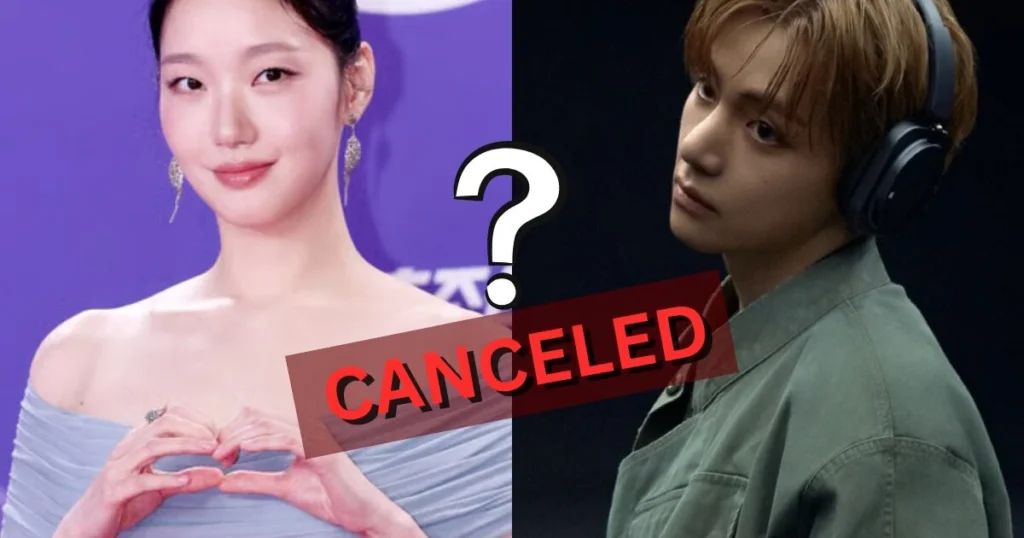
The controversy has transcended academic and political debate, manifesting as a targeted campaign of harassment against celebrities who have associated themselves with the film. Actresses Kim Go Eun and Lee Young Ae have been the primary targets of online vitriol after they publicly praised the film’s artistic merits and the performances of its cast. Comment sections on social media platforms have been flooded with accusations that these actresses are "anti-state" or "historically illiterate."
The backlash reached a new height when V, a member of the global sensation BTS, was spotted at a theater attending a screening of the movie. Supposed right-wing supporters took to social platforms to question his political leanings, with some demanding that he clarify his stance on the film’s portrayal of the Park administration. This "guilt by association" phenomenon has created a chilling effect within the entertainment industry, as stars find themselves caught in the crossfire of a highly polarized political climate.
Industry Response and Safety Concerns
As the rhetoric against the film’s cast and crew escalated from criticism to personal threats, major filmmaking organizations in South Korea felt compelled to intervene. On Friday, October 2, the Producers Guild of Korea and the Cinematographers Guild of Korea issued separate, strongly worded statements. These organizations condemned the "excessive personal attacks" and "safety threats" directed at the individuals involved in the production.
"While historical interpretation is a matter of public debate, the use of intimidation and the targeting of artists for their creative choices is a direct threat to the freedom of expression," the Producers Guild stated. The guilds urged the public to refrain from "crossing the line" and called for a more civilized discourse regarding the film’s content.
The safety concerns are not merely theoretical. Hive Media Corp. announced that the cast and crew of The Assassin(s) would be canceling all scheduled appearances, including highly anticipated "Guest Visit" (GV) sessions, at the upcoming Busan International Film Festival (BIFF). The distributor cited the need to prioritize the safety of the actors and staff amidst a "heightened atmosphere of hostility." The cancellation is a significant blow to the festival, as the film was expected to be one of the headline attractions.
A Legacy of Political Polarization
The intensity of the reaction to The Assassin(s) is inextricably linked to the complex legacy of the Park family in South Korea. Park Chung Hee’s 18-year rule remains the most divisive period in the country’s modern history. His daughter, Park Geun Hye, served as the country’s first female president before being impeached and removed from office in 2017 following a massive corruption scandal.
For the conservative base, the Park era represents national strength and economic prosperity. For the liberal and progressive factions, it represents a dark chapter of military dictatorship and state-sponsored violence. By touching upon the death of Yuk Young Soo—who is generally remembered more sympathetically than her husband—the film has poked at a raw nerve in the national psyche.
Chronology of Key Events
- August 15, 1974: First Lady Yuk Young Soo is assassinated at the National Theater in Seoul during a National Liberation Day event.
- December 1974: Mun Se Gwang is executed following a government investigation that blamed North Korea for the attack.
- September 23, 2026: The Assassin(s) is released in South Korean theaters.
- September 28, 2026: The film surpasses 1 million viewers, as online debates regarding "historical distortion" begin to gain traction.
- October 1, 2026: Reports of online harassment against Kim Go Eun, Lee Young Ae, and BTS’s V surface.
- October 2, 2026: The Producers Guild and Cinematographers Guild of Korea issue statements condemning threats against the film’s crew.
- October 2, 2026: Hive Media Corp. announces the cancellation of all appearances at the Busan International Film Festival due to safety concerns.
Analysis of Implications for the Film Industry
The fallout from The Assassin(s) suggests a narrowing space for historical revisionism or speculative fiction in South Korean cinema when the subject matter involves the mid-20th-century conservative leadership. While the South Korean film industry has gained international acclaim for its bold storytelling, the domestic reaction to this film indicates that certain historical figures remain "untouchable" for significant portions of the population.
Furthermore, the targeting of celebrities like V and Kim Go Eun demonstrates the increasing "politicization of fandom." In an era where a celebrity’s every move is scrutinized, simply watching a controversial film is now interpreted as a political statement. This environment may lead to increased self-censorship among artists and performers, who may fear that any association with "controversial" content could jeopardize their commercial viability or personal safety.
As The Assassin(s) continues its run in theaters, the debate it has sparked is unlikely to fade quickly. It serves as a stark reminder of the deep ideological rifts that persist in South Korean society and the power of cinema to act as a lightning rod for national identity, memory, and the unfinished business of history. For now, the film stands as both a massive commercial triumph and a cautionary tale about the volatile intersection of art and politics in the digital age.