The year 2013 marked a transformative era for the Republic of Korea, characterized by a rare alignment of significant political milestones and shifting cultural narratives. Following the December 2012 presidential election, Park Geun-hye, a veteran representative of the conservative Saenuri Party, was inaugurated as the nation’s first female head of state. This event was widely heralded as a potential "watershed moment" for gender relations in a society historically defined by patriarchal structures. In June 2013, the K-pop quartet Girl’s Day sought to capitalize on this zeitgeist with the release of their single "Female President." While the song was marketed as a "girl power" anthem, its release sparked a complex discourse regarding the depth of empowerment in Korean pop culture and the persistent socio-economic challenges facing women in the country.
The Political Context: Park Geun-hye’s Ascent to the Blue House
Park Geun-hye’s victory in 2012 was a moment of profound contradiction. As the daughter of former President Park Chung-hee—a military leader whose legacy is divided between his role in South Korea’s rapid economic development and his record of autocratic rule—her candidacy was both celebrated and scrutinized. For many, her ascent to the presidency represented a breakthrough for women’s representation in the highest echelons of government. For others, particularly those in the progressive Democratic United Party (Minju Party), her rise was viewed less as a victory for feminism and more as a continuation of a familial political dynasty.
Despite these political nuances, the optics of a woman residing in CheongWaDae (the Blue House) were undeniably revolutionary. South Korea has long grappled with a rigid social hierarchy influenced by Neo-Confucian values, which traditionally relegated women to domestic spheres. The presence of a female president suggested, at least symbolically, that the glass ceiling in Seoul was beginning to crack. It was within this atmosphere of cautious optimism that the entertainment industry began to weave themes of female leadership into its commercial output.
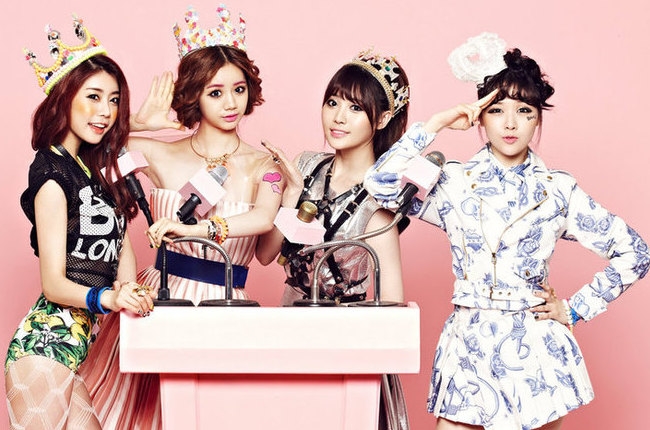
Chronology of the Female President Release
The timeline leading up to the release of "Female President" reflects a strategic effort by Dream Tea Entertainment to elevate Girl’s Day into the top tier of K-pop groups.
- December 19, 2012: Park Geun-hye wins the South Korean presidential election with 51.6% of the vote.
- February 25, 2013: Park Geun-hye is officially inaugurated as the 11th President of South Korea.
- March 14, 2013: Girl’s Day releases "Expectation," a song that marked their transition to a more mature, "sexy" concept, significantly increasing their chart presence.
- April 2013: Member Hyeri’s relationship with veteran idol Tony Ahn (of H.O.T.) becomes public, generating substantial media attention for the group.
- June 24, 2013: Girl’s Day releases the repackaged album "Expectation" with the new title track "Female President."
- June 27, 2013: The group holds a poolside showcase to promote the single, emphasizing a bold, confident image.
The marketing of "Female President" was explicitly tied to the national mood. The song’s title and its initial teasers suggested a thematic exploration of female authority and autonomy, promising a departure from the "aegyo" (cute) tropes that had previously defined the group’s image.
Statistical Reality: Gender Inequality in 2013 South Korea
To understand the critique of "Female President," one must examine the empirical data regarding women’s status in South Korea during this period. While the country boasted a female president, the day-to-day reality for South Korean women remained fraught with systemic barriers.
According to the 2012 and 2013 Global Gender Gap Reports published by the World Economic Forum, South Korea consistently ranked among the lowest of the OECD nations. In 2012, the country was placed 108th out of 135 countries, a position that reflected a widening gap in economic participation and opportunity.
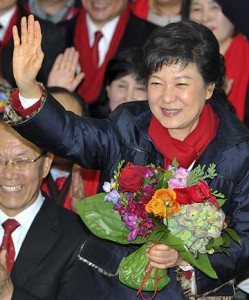
Key data points from the 2013 period include:
- The Wage Gap: South Korea maintained the highest gender wage gap among OECD countries, with women earning approximately 36-39% less than their male counterparts for equivalent work.
- Labor Force Participation: While South Korean women are among the most highly educated in the world, their participation in the labor force showed a distinct "M-curve." Women frequently entered the workforce in their 20s but exited in their 30s due to marriage and childbirth, often struggling to re-enter the professional sphere in meaningful roles.
- Political Representation: Despite having a female president, women held only about 15.7% of seats in the National Assembly following the 2012 elections, significantly below the global average.
- Social Legislation: Reproductive rights remained heavily restricted. Under the Criminal Code of 1953, abortion was illegal except in cases where the mother’s health was at risk or in instances of rape or incest. This legislative environment highlighted a lack of bodily autonomy that stood in stark contrast to the narrative of "empowerment."
Analysis of the Music Video and Lyrical Content
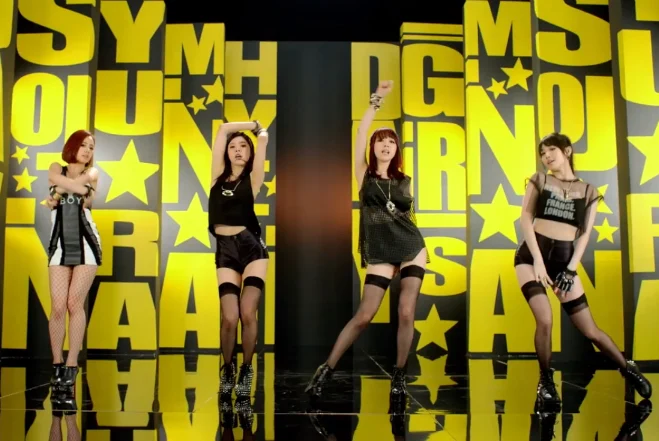
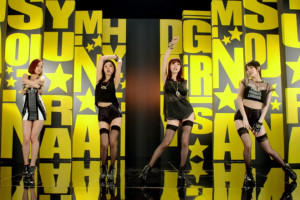
The music video for "Female President" utilized a blend of military motifs and high-fashion aesthetics. It opened with scenes of the members behind screens, a visual choice that drew immediate comparisons to Beyoncé’s "Naughty Girl." The choreography featured a "fox tail" dance, intended to be both provocative and assertive.
However, the song’s lyrical content revealed a disconnect between the title and the message. The lyrics did not address political power, economic independence, or social reform. Instead, the central thesis of the song was the "empowerment" of a woman taking the initiative to kiss a man first. Lines such as "The president of our country is now a woman / So what’s the problem? Why can’t a girl do it?" framed the presidency not as a milestone for human rights, but as a justification for changing dating etiquette.
A notable segment of the music video involved member Minah and an androgynous, suit-wearing Hyeri. The video portrayed a romantic dynamic between the two, culminating in a near-kiss initiated by Minah. While this was seen as a "risqué" and "bold" move in the context of conservative Korean broadcasting standards, critics argued it was a superficial use of gender-bending tropes. The "empowerment" depicted was still entirely centered on the pursuit of a romantic partner, with the members expressing feelings of being "dizzy" or "nervous" in the presence of their love interest—traits that aligned more with traditional submissiveness than the authority suggested by the song’s title.
Industry and Public Response
The response to "Female President" was polarized. Within the K-pop industry, the song was a commercial success, helping Girl’s Day secure their first-ever music show win on SBS’s Inkigayo. The "sexy" concept was part of a broader trend in 2013, as groups like AOA, Dal Shabet, and Rainbow also shifted toward more mature imagery to survive in a highly competitive market.
From a sociological perspective, however, the song faced criticism for "commodity feminism"—the practice of using feminist rhetoric to sell products without actually challenging patriarchal structures. Observers noted that the song’s focus on the "freedom to kiss first" trivialized the actual struggles of South Korean women.
While there were no official statements from the Blue House regarding the song, the silence was telling. President Park Geun-hye’s own brand of "feminism" was often described as "gender-neutral" or even "patriarchal," as she rarely championed specific policies aimed at narrowing the gender gap or protecting women’s reproductive rights during her early term.
Broader Impact and Implications
The "Female President" era serves as a case study in how pop culture interacts with political milestones. It demonstrated that while a female head of state can change the visual landscape of power, it does not automatically translate into a cultural shift in the definition of female empowerment.
The legacy of this period is one of unfulfilled potential. The "watershed moment" many hoped for remained largely symbolic. In the years following 2013, the discourse around women’s rights in South Korea shifted from the pop charts to the streets, eventually leading to the robust "Escape the Corset" and #MeToo movements. These later movements were characterized by a rejection of the very "sexy" and "aegyo" tropes that Girl’s Day and their contemporaries utilized to market their version of power.
Ultimately, "Female President" remains a artifact of its time—a reflection of a society that was ready to accept a woman in the Blue House but was not yet ready to decouple a woman’s self-worth from her relationship with men. The song highlighted the gap between the symbolic progress of having a female leader and the structural progress required to achieve genuine gender equity in the workplace, the legal system, and the home. While Girl’s Day successfully navigated the commercial demands of the K-pop industry, their "anthem" serves as a reminder that true empowerment requires more than a change in dating norms; it requires a fundamental restructuring of the social contract.