The global expansion of South Korean popular music, known as K-pop, has fostered an unprecedented level of diversity within its international fandom, bringing together individuals from disparate backgrounds through a shared interest in East Asian entertainment. However, as the Hallyu wave permeates Western markets, the industry’s heavy reliance on Black musical traditions—specifically Hip-Hop, R&B, and Soul—has ignited a complex discourse regarding the boundaries between cultural appreciation and appropriation. This tension is particularly acute for Black K-pop fans, who find themselves navigating a landscape where their culture is frequently emulated as a stylistic "concept" while their personal identities and historical sensitivities are often overlooked by both the industry and the broader fan community.
The Foundation of Influence: Black Artistry as the Blueprint for K-pop
K-pop’s sonic and visual architecture is inextricably linked to Black American music. From the early 1990s, when Seo Taiji and Boys introduced New Jack Swing and Hip-Hop to the Korean mainstream, the industry has looked toward Black artists for innovation. This influence is not merely superficial; it is embedded in the training systems, choreography, and production styles of major labels like SM Entertainment, YG Entertainment, and JYP Entertainment.
Contemporary idols frequently cite Black legends as their primary inspirations. For instance, BTS’s RM (formerly Rap Monster) has utilized his platform to recommend the works of neo-soul and R&B artists such as D’Angelo, Prince, and India Arie, encouraging a deeper understanding of the genre’s roots among his global following. Similarly, the influence of Michael Jackson is a recurring motif in K-pop choreography and aesthetics, seen in the solo work of artists like SHINee’s Taemin and Teen Top’s Niel. The 2014 Mnet Asian Music Awards (MAMA) further solidified this connection by featuring a performance by American R&B star John Legend, signaling the industry’s desire for proximity to the "authentic" sounds of Black music.

The Appropriation Divide: From Appreciation to Gimmickry
Despite the clear lineage of musical influence, the K-pop industry frequently faces criticism for crossing the line into cultural appropriation. Appropriation occurs when elements of a marginalized culture are adopted by a dominant or outside group as a "costume" or a temporary aesthetic, often without respect for the original context or history.
In recent years, several high-profile incidents have sparked international backlash:

- The Confederate Flag Controversy: In various music videos and fashion shoots, idols have been seen wearing the Confederate flag, a symbol deeply associated with slavery and white supremacy in the United States. Fans often defend these choices by citing ignorance of U.S. history or pointing to Black celebrities like Kanye West, who has controversially used the imagery. However, critics argue that as K-pop labels seek "global" status, the responsibility to conduct basic cultural research increases.
- The "Hip-Hop Concept" as a Trend: For many rookie groups, Hip-Hop is treated as a "flavor of the month"—a gritty, edgy concept used to gain initial attention before the group transitions into more traditional "bubblegum" pop. This perceived lack of authenticity is a major point of contention. While groups like BTS have been praised for their sustained engagement with Hip-Hop history, others, such as 4Minute in their "Crazy" era or Keith Ape in "It G Ma," have been accused of using Black cultural markers as a gimmick to project "toughness."
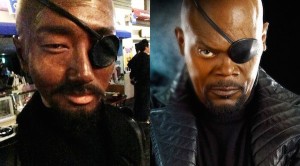
- Blackface and Caricature: The use of blackface in Korean variety shows and music videos remains a recurring issue. Instances involving members of Super Junior or Block B have been met with swift condemnation from international audiences. These portrayals often lean into minstrelsy, reducing Black identities to "funny" or "exotic" caricatures for the entertainment of a domestic Korean audience.
Chronology of Cultural Friction and Industry Evolution
To understand the current state of this discourse, one must look at the timeline of K-pop’s engagement with racial issues over the last decade:
- Early 2000s: The rise of "Original Hip-Hop" in Korea through artists like Tiger JK, Tasha Reid (Yoon Mi-rae), and Dynamic Duo. Tasha Reid, who is of mixed Black and Korean heritage, became a pivotal figure in bridging the two cultures, though she frequently spoke about the discrimination she faced within the Korean industry.
- 2012-2014: A surge in global visibility led to increased scrutiny. The release of various "hip-hop" themed idol videos sparked debates on Tumblr and Twitter, platforms where Black fans began to organize and voice their concerns about the "costuming" of Black culture.
- 2015: The "American Hustle Life" era for BTS, where the group traveled to Los Angeles to learn about Hip-Hop history from mentors like Warren G and Coolio. This represented a rare attempt by a K-pop label to provide their artists with direct education on the roots of their musical style.
- 2020-Present: The Black Lives Matter movement catalyzed a shift in the industry. Major companies like SM Entertainment and Big Hit Music (HYBE) made public statements or donations, signaling an awareness that their global business model is dependent on the goodwill of a diverse international audience.
Supporting Data: The Demographic Shift of the Hallyu Wave
The necessity for cultural sensitivity is backed by shifting market data. According to the 2023 "Overseas Hallyu Survey" by the Korean Foundation for International Cultural Exchange (KOFICE), K-pop’s popularity in the Americas and Europe has grown by over 30% since 2018. In the United States, Black and Hispanic fans constitute a significant portion of the "highly engaged" K-pop demographic.

Data from social media analytics suggests that Black fans are among the most active participants in digital fandom spaces, contributing to the viral success of groups on platforms like TikTok and Twitter. However, these fans also report higher rates of "fandom fatigue" due to recurring instances of racial insensitivity from idols and the subsequent "gaslighting" they face from other fans who dismiss their concerns as "forced outrage."
Official Responses and the Challenge of "Letting It Slide"
When controversies arise, the responses from Korean entertainment agencies vary. Labels like Seven Seasons (formerly managing Block B) have occasionally responded to fan letters, acknowledging that their artists’ actions were offensive and promising better education. However, a common sentiment among non-Black fans is the suggestion to "let it slide," citing Korea’s geographic and cultural isolation as a valid excuse for ignorance.
This "isolationist" defense is increasingly viewed as obsolete in the digital age. As Camiele, a contributor to the Seoulbeats roundtable, noted: "In 2015, with many Korean artists and their record companies wishing desperately to crossover to the States… they refuse to do basic research to find out the historical significance of some of the things they imitate." The argument holds that if a company is savvy enough to utilize Western social media algorithms for profit, they are savvy enough to use a search engine to vet their fashion and lyrical choices.
The Experience of the Black Fan: Identity and Invisibility
Beyond the actions of the idols themselves, the internal dynamics of the fandom often alienate Black participants. In fan-produced content, such as "reader-insert" fan fiction, the default protagonist is almost exclusively portrayed as East Asian or White. Descriptions of "running hands through silky hair" or "pale skin" serve as constant reminders that Black fans are not the intended audience for the "lovey-dovey" illusions created by the industry.

Furthermore, Black fans often face a "double standard" of desirability. While Black culture is commodified and celebrated in the form of music and dance, Black individuals—particularly Black women—are often marginalized or "exoticized" within the community. This creates a cognitive dissonance where fans must reconcile their love for the music with the reality that the industry may not see them as a viable demographic for romantic or social representation.
Broader Impact and the Path Toward Respect
The implications of this ongoing dialogue are profound for the future of K-pop. As the genre moves toward a "K-pop 4.0" era—characterized by localized groups in the West and more frequent collaborations with American artists—the industry can no longer afford to treat cultural sensitivity as an optional "extra."

The tension between Korean and Black artists often stems from the concept of authenticity. For Hip-Hop to be more than a costume, there must be a respect for its history as a tool of resistance and self-expression for the oppressed. When Korean rappers like San E or Zico use racial slurs or mimic stereotypical "AAVE" (African American Vernacular English), it devalues the art form and alienates the very community that created it.
The ultimate goal, as expressed by many in the community, is not to "cancel" K-pop, but to demand a "kaleidoscope" of mutual respect. The beauty of music lies in its ability to cross borders, but that crossing must be done with integrity. Respecting the roots of K-pop means respecting the contributions of the Black community. For the Hallyu wave to remain a sustainable global phenomenon, it must transition from a model of "extraction"—taking the best of Black culture without the burden of its history—to a model of "exchange," where diversity is celebrated through genuine understanding rather than superficial imitation.