South Korea Clarifies Scope of New Public Indecency Law Amid Global Misinterpretation Regarding Fashion Restrictions
Article Editorial Team

The administration of South Korean President Park Geun-hye officially implemented a revised ordinance under the Minor Offenses Act in late March 2013, sparking an immediate and intense debate regarding civil liberties and the limits of government regulation on personal appearance. The law, which was approved during the first cabinet meeting of the Park administration on March 11, 2013, mandates a fine of 50,000 South Korean Won (approximately $45 to $48 USD) for individuals found guilty of "overexposure" in public spaces. While the South Korean government maintained that the law was a necessary update to existing public decency statutes, the legislation quickly became the center of a global media firestorm, with international outlets and domestic critics suggesting that the nation was returning to a period of authoritarian social control reminiscent of the 1970s.
The legislative change was intended to streamline and modernize the Minor Offenses Act, which had not seen significant revisions in several decades. According to official government briefings, the specific clause regarding overexposure was designed to address public nudity, indecent exposure, and behavior that causes "discomfort or embarrassment" to others in public settings. However, the vague wording of the ordinance led to widespread speculation that the law would be used to target women wearing miniskirts or K-pop performers known for their provocative stage outfits. This interpretation was amplified by social media reactions and sensationalized reporting by Western media organizations, which framed the law as a literal "ban on miniskirts."
Historical Context and the Shadow of the Yushin Era
To understand the intensity of the public reaction in South Korea, it is necessary to examine the historical context of the 1970s. During the presidency of Park Chung-hee, the father of President Park Geun-hye, South Korea operated under the Yushin Constitution, a period characterized by strict military-style discipline and heavy-handed social regulations. In 1973, the elder Park’s administration implemented the "Minor Offenses Act," which gave police the authority to measure the length of women’s skirts and the hair length of men.
Under those regulations, skirts that ended more than 20 centimeters (approximately 7.8 inches) above the knee were considered illegal. Police officers frequently patrolled the streets of Seoul with bamboo rulers, stopping women to measure their hemlines. Men with long hair were subject to "forced haircuts" on the spot. These measures were presented as a way to "purify" the national spirit and maintain public morality against the perceived decadence of Western hippy culture. Consequently, when the younger President Park introduced an "overexposure" law early in her term, the historical parallels were immediate and visceral for many South Koreans. Opposition politicians and civil rights activists were quick to label the move as "regressive" and "authoritarian nostalgia," suggesting that the new president was following in her father’s footsteps.

The Timeline of the 2013 Controversy
The controversy unfolded rapidly following the initial announcement of the cabinet’s decision. On March 11, 2013, the cabinet approved the revision to the Minor Offenses Act. Within days, the news had spread through domestic social media platforms. High-profile celebrities, including K-pop icon Lee Hyori, took to Twitter to express their concerns. Lee, known for her trendsetting fashion, tweeted, "Is the overexposure fine for real? I’m so dead," a sentiment that resonated with millions of fans and sparked a wave of digital protest.
By mid-March, the story had transitioned from domestic political news to an international sensation. Major Western outlets, including the Daily Mail, CNN, and the Huffington Post, published headlines suggesting that South Korea was banning miniskirts. These reports often featured photos of popular K-pop groups like Girls’ Generation or T-ara, implying that the multibillion-dollar Korean music industry would have to overhaul its aesthetic. The narrative of a "modern democracy banning skirts" proved to be highly clickable, resulting in a global perception that South Korea was undergoing a sudden cultural contraction.
On March 22, 2013, as the law officially went into effect, the South Korean National Police Agency (NPA) was forced to hold a press conference to clarify the situation. Police officials emphasized that the law was not a new creation but a revision of a statute that had existed for 40 years. They clarified that the primary goal was to address public nudity and "obscene behavior" that goes beyond mere fashion choices.
Official Clarifications and Legal Specifics
In their efforts to quell public anxiety, the National Police Agency released detailed statements explaining that the "overexposure" clause would only apply to cases where individuals were "revealing their private parts or buttocks in a way that causes offense." The police explicitly stated that miniskirts, short shorts, and typical K-pop stage attire did not fall under the category of illegal overexposure.
Furthermore, the government argued that the revision actually benefited the public by replacing potential jail time with a standardized fine. Under the previous version of the law, public indecency could lead to a summary trial and short-term imprisonment. The 2013 revision established a fixed fine of 50,000 KRW, which officials argued was a more lenient and efficient way to handle minor public order offenses such as public urination or streaking.
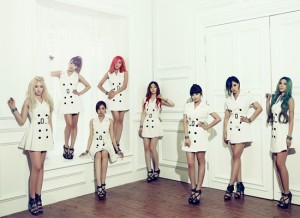
Despite these clarifications, the Democratic United Party (the primary opposition at the time) continued to criticize the administration. Spokesperson Ki-hong told reporters that "any law that allows the government to judge what citizens wear is a violation of basic rights." The opposition argued that even if the intent was not to ban miniskirts, the vague language of "causing discomfort to others" gave the police too much discretionary power, which could lead to selective enforcement or harassment.
Data and Socio-Economic Implications
The controversy occurred at a time when the South Korean "Hallyu" (Korean Wave) was at its peak, with the fashion and music industries serving as major drivers of the national economy. In 2012 and 2013, K-pop was increasingly being used as a tool for "soft power" and tourism. Analysts pointed out that any real restriction on the visual identity of K-pop would have significant economic repercussions.
According to data from the Korea Creative Content Agency (KOCCA), the export value of Korean cultural content was growing at an annual rate of over 10% during this period. The "sexy" or "chic" concepts of girl groups were a staple of the industry’s marketing strategy. Domestic fashion retailers also reported that "ha-ui-sil-jong" (the "missing bottom" fashion trend, where long tops are paired with very short shorts) was a dominant consumer category. The fear that the government might interfere with these market-driven trends created friction between the conservative administration’s moral agenda and the nation’s liberalized, capitalist youth culture.
Furthermore, statistics from the National Police Agency showed that arrests for public indecency had been relatively stable over the previous decade. Critics used this data to argue that there was no "indecency crisis" requiring a legislative update, further fueling the theory that the law was a symbolic gesture aimed at appeasing the president’s older, conservative base.
Analysis of Media Sensationalism and Journalistic Integrity
The 2013 overexposure law serves as a prominent case study in the dangers of "echo-chamber" journalism in the digital age. The rapid transformation of a mundane legal update into a global human rights issue highlights how nuance is often lost when local news is translated for a global audience. Western media outlets largely ignored the police department’s clarifications, preferring the more dramatic narrative of a "miniskirt ban."

This sensationalism had real-world consequences for South Korea’s international image. For a country that prides itself on its high-tech infrastructure and modern cultural exports, being portrayed as a regressive society where police measure skirt lengths was a significant public relations setback. The incident underscored the gap between South Korea’s rapid economic modernization and the lingering political sensitivities regarding its authoritarian past. It also demonstrated the power of celebrity influence; a single tweet from a pop star like Lee Hyori carried more weight in the court of public opinion than a dozen official government press releases.
Long-Term Impact and Current Status
In the years following the 2013 controversy, the "overexposure law" did not lead to the mass arrests of women in miniskirts that many had feared. Enforcement remained focused on traditional public indecency, and the K-pop industry continued to push the boundaries of fashion and performance without legal interference. However, the event left a lasting mark on the South Korean political landscape, serving as a reminder of the public’s vigilance against any perceived encroachment on personal freedoms.
The legacy of the 2013 law is ultimately one of communication failure. While the Park administration may have intended to simply update an archaic legal code, they failed to account for the historical trauma associated with dress codes in South Korea. The incident taught subsequent administrations that in a highly connected and politically active society, even minor administrative changes require transparent communication and a deep understanding of the historical context.
Today, South Korean society remains one of the most fashion-forward in the world. The debate over the 2013 law has largely faded, but it remains a cautionary tale about how the intersection of politics, history, and pop culture can create a volatile atmosphere where facts are easily overshadowed by historical shadows and viral headlines. The "sea of fire" rhetoric from the North may be a recurring geopolitical concern, but for a brief moment in 2013, the most heated battle in Seoul was not over nuclear weapons, but over the length of a hemline and the power of the state to define public morality.
Related News