BTS Redefines Longevity and Artistic Identity in Exclusive Apple Music Interview with Zane Lowe Ahead of ARIRANG Album Launch and Global Reunion
Article Editorial Team
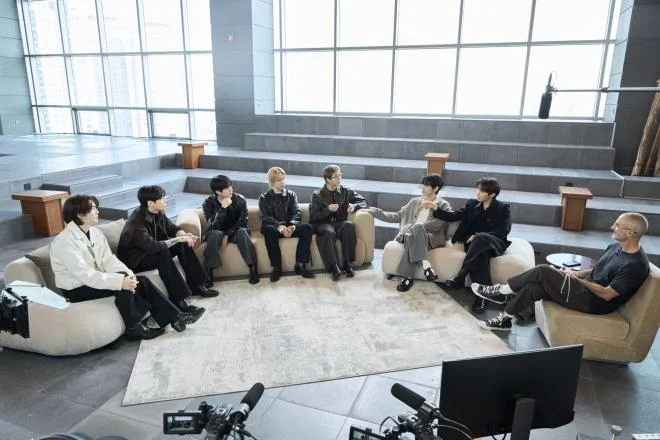
In an introspective and quietly powerful interview with Apple Music’s Zane Lowe, global icons BTS engaged in a profound dialogue that transcended the typical promotional cycle of the music industry. The conversation, which served as a precursor to their highly anticipated return as a full ensemble, saw the seven members—RM, Jin, SUGA, j-hope, Jimin, V, and Jung Kook—unpacking the complexities of time, identity, and the structural requirements of maintaining a collective identity in a global market that rarely accommodates deceleration. What emerged from the discussion was not a standard declaration of permanence, but a grounded, philosophical consensus: that the longevity of a group is not a guaranteed outcome of success, but a deliberate and daily intention.
The Philosophy of Continuity: Longevity as a Practiced Choice
A central theme of the interview was the existential question of whether a group of BTS’s magnitude can last indefinitely. Within the K-pop industry, the "seven-year curse"—a term referring to the tendency of groups to disband or lose members when their initial contracts expire—has long been a benchmark of survival. BTS, having debuted in 2013, has already far surpassed this milestone, yet the members expressed a nuanced understanding that survival requires more than just contract renewals.
Jin, the eldest member of the group, offered a candid assessment of permanence, noting that while nothing in the physical or professional world is truly eternal, the effort invested in preservation is what creates value. For Jin, the "forever" of BTS is found in the care the members invest in one another and their shared history. This sentiment was echoed by j-hope, who characterized longevity as an existence shaped by collective will. He noted that while no one can definitively promise the future, a shared agreement to continue creates its own form of lasting reality.
SUGA provided a vision for the group’s "third act," imagining a future where BTS continues to produce music well into their senior years. Crucially, he framed this not as a professional obligation, but as a personal choice predicated on the joy of creation. V simplified this philosophy further, suggesting that the strength of the group lies in consistent, quiet effort over time rather than grand, sweeping declarations. Together, the members presented a unified front: "forever" is not a destination they have reached, but a discipline they practice daily.
The Transition from Military Service to Reunion
The interview provided critical insight into the group’s transition following their mandatory military service, a requirement for all able-bodied South Korean men that necessitated a multi-year hiatus for the group’s collective activities. While such a break often signals the decline of a group’s momentum, BTS described their reunion as an organic and almost instinctive process.
Jung Kook, the group’s youngest member, noted that returning to the collective felt like a return to a "default state." Having spent his entire adult life as part of the ensemble, the transition back into group activities felt less like a strategic comeback and more like a natural continuation of his identity. The group’s military timelines, which were strategically staggered to minimize the duration of their absence, allowed for a seamless reintegration.
Jimin reflected on his time in the military as a period of profound personal and professional sharpening. He observed the work ethic of younger soldiers, which prompted him to reevaluate his own drive and purpose. Far from being a period of stagnation, the hiatus served as a catalyst for growth. Jimin revealed that even within the constraints of military life, he and Jung Kook continued to develop their craft, ensuring that the time away was an investment in their eventual return.
Leadership and the Evolution of Group Dynamics
RM, the group’s leader, provided a rare glimpse into the internal pressures of guiding a global phenomenon for over fifteen years. He described the current state of the group as being closer to a family than a professional team, noting that communication often occurs through unspoken understanding and shared intuition. However, he admitted that the role of leader carries a specific weight, particularly when balancing the needs of the collective with his own individual identity.
RM’s reflections highlighted a shift in the group’s internal power structure—from a top-down leadership model to a more collaborative, consensus-based synergy. He emphasized that despite his role, he remains one of seven, and that the group’s ability to move forward depends on their shared vision. This alignment was further illustrated by j-hope, who noted that the decision to reunite and plan a new world tour did not require extensive debate; the members simply understood that their story was far from over.

Creative Expansion and the Significance of ARIRANG
A significant portion of the interview focused on the group’s upcoming album, titled ARIRANG. The choice of title is deeply symbolic, as "Arirang" is a traditional Korean folk song often referred to as the unofficial national anthem of Korea. It represents themes of longing, resilience, and cultural heritage—sentiments that the members felt acutely during their time apart.
RM explained that by reinterpreting ARIRANG in a modern, global context, the group aims to bridge the gap between their Korean roots and their international audience. The album represents a strategic effort to transform a specific cultural heritage into a universal narrative of connection and nostalgia.
The creative process for the new era also involved collaboration with international producers, including El Guincho, known for his work with Rosalía. Jung Kook spoke about the challenges of embracing new musical textures and the pressure to do justice to unfamiliar sounds. This willingness to experiment, even at the height of their fame, underscores BTS’s commitment to artistic evolution rather than relying on established formulas.
Chronology of a Global Phenomenon: From Big Hit to HYBE
To understand the weight of BTS’s current position, it is necessary to look at the trajectory of their career. When the group debuted in 2013 under Big Hit Entertainment, the company was a small, independent label with limited resources. RM recalled the early days when the staff consisted of only a few people who shared multiple responsibilities.
The growth of BTS mirrors the transformation of Big Hit into HYBE, a multi-national entertainment conglomerate. However, the members emphasized that their perspective remains grounded in their humble beginnings. They credited their success to a symbiotic relationship with their global fan base, known as ARMY. As the members have aged, so too have their fans; the interview touched upon the fact that many of their early supporters are now adults building their own lives, careers, and families. This shared evolution has turned BTS from a musical act into a cultural touchstone for an entire generation.
Broader Impact and Industry Implications
The return of BTS is expected to have a massive impact on the global music economy. Analysts have long noted the "BTS effect" on South Korea’s GDP, which includes contributions to tourism, consumer goods exports, and the global "Hallyu" (Korean Wave). Their reunion signifies not just a win for their fans, but a stabilization of the K-pop market, which has seen a diversification of talent but remains anchored by BTS’s peerless commercial reach.
Furthermore, BTS’s approach to their "Chapter 2"—the period of solo endeavors followed by a group reunion—sets a new precedent for the industry. By successfully navigating mandatory military service without losing cultural relevance, BTS has provided a blueprint for other groups to follow. Their emphasis on individual growth as a prerequisite for collective strength challenges the traditional K-pop model of constant group activity.
Analysis: The Future Defined by Intention
As BTS prepares for a world tour and the release of ARIRANG, the stakes have shifted. They are no longer in a position where they must prove their viability; instead, they are in a phase of legacy-building. The interview with Zane Lowe revealed a group that is acutely aware of its history but refuses to be trapped by it.
The primary takeaway from this introspective dialogue is that BTS’s continued existence is a choice made with full awareness of the risks involved. Starting a new chapter involves stepping into unfamiliar territory and facing the potential for failure. Yet, as the members noted, stopping was never a viable option. The connection they have built with each other and their audience is a singular occurrence that cannot be replicated.
In conclusion, BTS does not rely on the abstract promise of "forever." Instead, they rely on a daily commitment to one another and to their craft. By choosing to continue, they are proving that the most enduring legacies are not built on contracts or guarantees, but on the decision of seven individuals to remain together, evolving in unison while honoring their separate paths. As they move toward the ARIRANG era, BTS remains a testament to the power of intentionality in an ever-changing global landscape.
Related News