Trope Gone Wrong: Viewers Icked By “Perfect Crown” IU And Byeon Woo Seok Linking Arms
Article Editorial Team
A romantic trope, long considered a cornerstone of K-Drama appeal, has unexpectedly drawn widespread criticism in the highly anticipated series Perfect Crown, starring two of the industry’s most prominent figures, IU and Byeon Woo Seok. Rather than eliciting the usual swoons and adoration from audiences, a significant height difference between the lead actors, particularly during intimate scenes, has been perceived as awkward and uncomfortable, sparking considerable online debate and raising questions about the enduring efficacy of established romantic formulas.
The Enduring Allure of the K-Drama Height Difference Trope
For years, the "height difference trope" has been a beloved element in South Korean dramas, often contributing to the romantic fantasy and visual chemistry between leads. This popular narrative device typically features a tall male lead paired with a noticeably shorter female lead, creating a dynamic that is frequently portrayed as endearing, protective, and visually appealing. The visual contrast is often leveraged to emphasize the male lead’s strength and the female lead’s vulnerability or petite charm, reinforcing traditional romantic archetypes that resonate deeply with a broad audience base.
Dramas like Goblin (Gong Yoo and Kim Go-eun), Strong Woman Do Bong-soon (Park Hyung-sik and Park Bo-young), and Weightlifting Fairy Kim Bok-joo (Nam Joo-hyuk and Lee Sung-kyung) have successfully utilized this trope, with the height disparities between their main couples becoming iconic and celebrated aspects of their on-screen chemistry. Fans often highlight "cute height differences" as a factor in their enjoyment, seeing it as a tangible representation of a protective, affectionate relationship. These dramas often staged scenes specifically to play into this dynamic—back hugs, forehead kisses, or the male lead effortlessly resting his chin on the female lead’s head—all designed to capitalize on the visual appeal and romantic tension generated by the disparity. The success of these series cemented the height difference as a reliable formula for generating audience engagement and romantic investment.
"Perfect Crown": High Expectations and Initial Reception
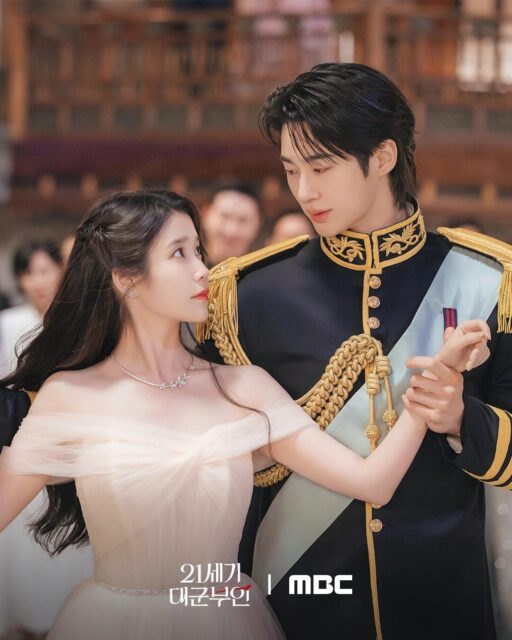
Perfect Crown premiered with immense anticipation, largely due to its star-studded cast. IU, a multifaceted artist celebrated for her acting prowess in dramas like Hotel Del Luna and My Mister, and Byeon Woo Seok, who has garnered significant attention for his compelling performances in recent hits, were expected to deliver a captivating romantic narrative. Both actors possess substantial individual fan bases and critical acclaim, leading to high expectations for their on-screen chemistry and the drama’s overall success. Industry analysts and viewers alike predicted that their combined star power would guarantee a hit, further solidifying their positions as top-tier talents in the competitive K-Drama landscape.
The drama, set to explore complex romantic dynamics, was positioned as a major release for the season, with significant investment in its production and marketing. Early promotional materials hinted at a visually stunning production and a compelling storyline, further fueling audience excitement. However, shortly after its debut, whispers of discontent began to surface online, not about the plot or individual performances, but concerning the perceived lack of natural chemistry between the lead actors, particularly in scenes requiring physical intimacy.

The Viral Moment: Linking Arms and Online Outcry
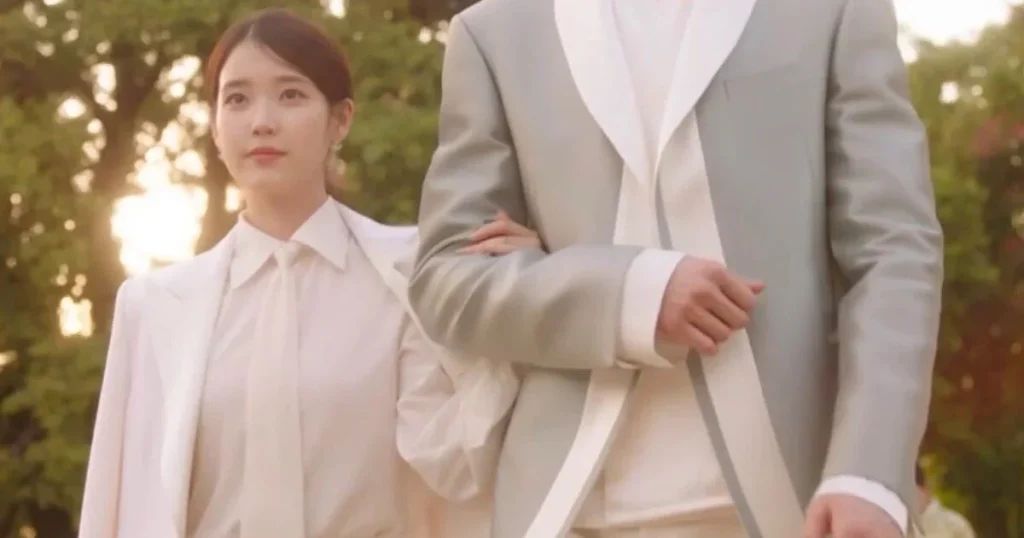
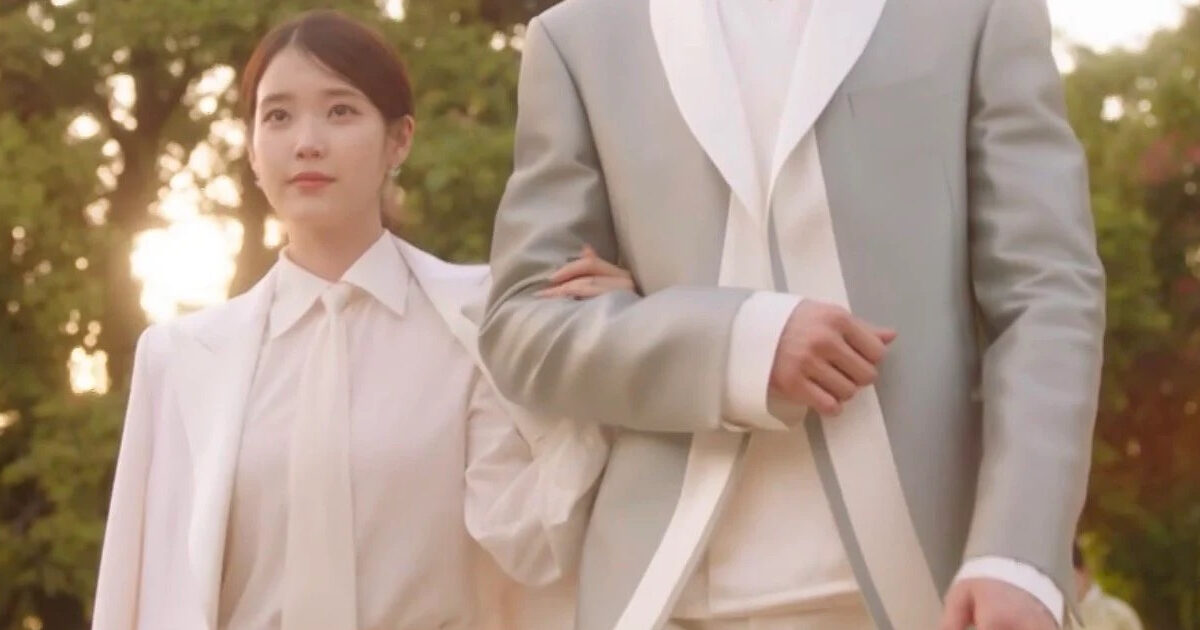
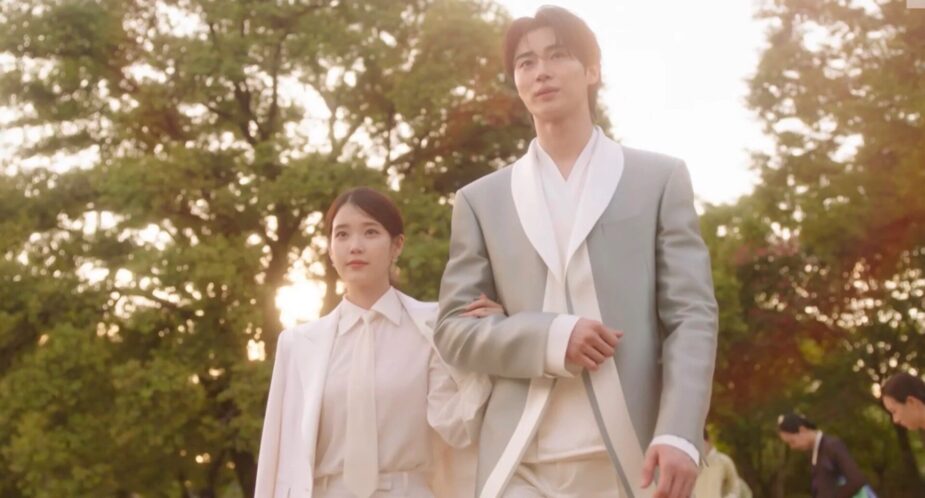
The specific incident that catalyzed the widespread criticism involved a seemingly innocuous scene where IU and Byeon Woo Seok’s characters linked arms. While a common gesture of affection or companionship in K-Dramas, this particular moment in Perfect Crown quickly became a flashpoint for viewer discomfort. A viral post on the popular South Korean online community theqoo, dating to April 24, 2026, highlighted the scene, drawing attention to the significant height disparity—reportedly nearly a foot—and how it manifested physically.
The image and subsequent video clips shared across social media platforms like X (formerly Twitter) showed IU, noticeably shorter than Byeon Woo Seok, attempting to link arms with him. Instead of appearing natural and fluid, the interaction struck many viewers as stiff and almost mechanically forced. Commenters on theqoo and X quickly pointed out that IU’s arm appeared to be straining upwards, while Byeon Woo Seok’s arm seemed positioned awkwardly downwards, creating an unnatural angle that disrupted the intended romantic effect. One widely circulated comment on X succinctly stated, "You two should never link arms. This looks seriously wrong," encapsulating the sentiment of many online users.
This specific scene was dissected frame by frame, with viewers expressing secondhand embarrassment rather than the intended romantic excitement. The physical dynamic, instead of blending seamlessly into the narrative, felt exaggerated, almost as if the staging was inadvertently highlighting the height difference to a point of awkwardness. This hyper-focus on a single interaction underscored a broader concern that had been percolating since the drama’s initial episodes: the perceived lack of organic chemistry between the two leads.
Audience Discomfort and Chemistry Concerns
The criticism surrounding the "linking arms" scene was not an isolated incident but rather a crystallization of underlying concerns about the overall chemistry between IU and Byeon Woo Seok. For many K-Drama enthusiasts, palpable chemistry between lead actors is paramount, often outweighing plot intricacies or production quality. It is the invisible thread that connects characters and draws viewers into their emotional journey. Without this underlying connection, even familiar romantic tropes, when executed without finesse, can fall flat.
Viewers described the interactions as lacking "natural flow," leading to scenes that felt "uncomfortable to watch." The height difference, which in other dramas serves to enhance intimacy, here seemed to emphasize a disconnect. Some argued that the production team might have inadvertently exacerbated the issue by not adapting staging and camera angles to mitigate the perceived awkwardness. Instead, scenes often appeared to frame the actors in a way that highlighted their physical disparity rather than integrating it harmoniously into their interactions. This led to a feeling among some viewers that the actors themselves, despite their individual talents, were struggling to bridge a physical gap that impacted their ability to convey a convincing romantic bond.
The criticism extended beyond mere aesthetics. For many, the discomfort stemmed from a sense that the emotional connection, the "spark," was missing. When a romantic gesture like linking arms appears strained, it can disrupt the viewer’s immersion and undermine the believability of the characters’ relationship. This sentiment was echoed in numerous online discussions, where fans expressed disappointment that a drama featuring such beloved stars was failing to deliver on a fundamental aspect of romantic storytelling.
The Power of Online Discourse in K-Drama Reception
The rapid and widespread negative reaction to the "linking arms" scene highlights the significant influence of online communities and social media in shaping public opinion regarding K-Dramas. Platforms like theqoo, Naver, and X serve as powerful aggregators of viewer feedback, where individual observations can quickly gain traction, morph into collective sentiment, and even dictate a drama’s trajectory. A single viral post can ignite a torrent of discussion, propelling specific scenes or aspects of a drama into the spotlight, for better or worse.
In the case of Perfect Crown, the initial murmurs of lukewarm chemistry quickly escalated into a full-blown critique after the visual evidence of the "awkward" arm-linking scene went viral. This online discourse creates a real-time feedback loop for production companies and networks, as public sentiment can directly impact viewership ratings, advertising revenue, and the drama’s overall reputation. The speed and intensity with which these discussions unfold mean that dramas are under constant scrutiny, and even minor missteps in execution can be magnified into significant criticisms. This environment demands that productions be increasingly attuned to audience expectations, not just in terms of narrative quality but also in the nuanced portrayal of character interactions.
Broader Implications for K-Drama Production
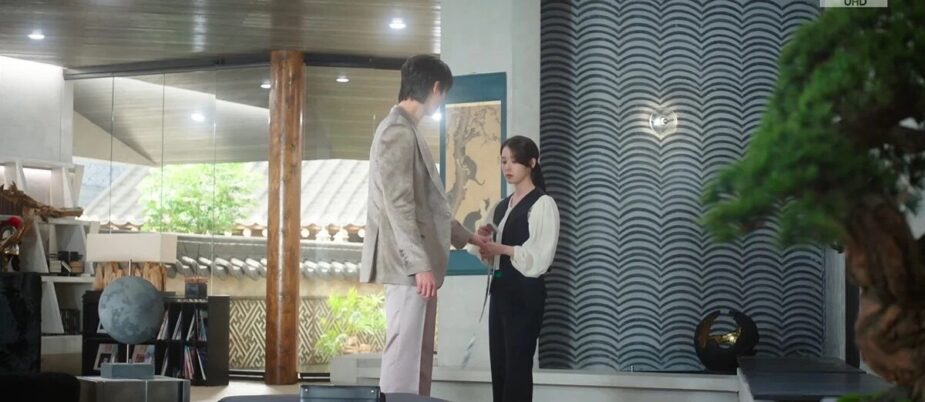
The unexpected backlash against Perfect Crown‘s use of the height difference trope carries several broader implications for the K-Drama industry. Firstly, it suggests an evolving sophistication among viewers. While tropes provide comfort and familiarity, audiences are increasingly discerning about their execution. A formulaic approach without genuine chemistry or thoughtful staging may no longer be sufficient. This incident could prompt production teams to reconsider how they utilize established tropes, moving beyond mere adherence to popular formulas and focusing more on authentic character interactions and natural chemistry.
Secondly, it underscores the critical role of casting directors and creative teams in ensuring not just individual talent but also synergistic compatibility between leads. While IU and Byeon Woo Seok are undeniably talented, this instance suggests that star power alone cannot guarantee successful on-screen chemistry. Future casting decisions might place a greater emphasis on physical compatibility and pre-production workshops to build rapport, especially for romantic dramas where the lead pair’s dynamic is central.
Thirdly, the incident serves as a reminder of the challenges inherent in adapting romantic narratives for a modern audience. What was once universally charming may now be perceived as forced or even problematic if not handled with sensitivity and nuance. Directors and writers may need to explore more diverse ways of portraying romantic intimacy, moving beyond overly reliant visual tropes and focusing on developing deeper, more believable emotional connections that transcend physical characteristics.
The critical reception of Perfect Crown‘s "linking arms" scene is a stark reminder that even the most cherished K-Drama tropes are not immune to scrutiny. While the height difference has historically been a source of romantic charm, its execution in this instance has prompted viewers to voice their discomfort, highlighting the evolving expectations of K-Drama audiences. As the series progresses, how the production team addresses these concerns, or whether the chemistry ultimately develops, will be closely watched, offering valuable lessons for the future of romantic storytelling in South Korean television. The incident marks a moment where audience engagement demands not just familiar narratives, but also an authentic and believable portrayal of human connection, even within the confines of established romantic formulas.
Related News