Drake Achieves Unprecedented Feat: Only Living Soloist with 12 Albums Simultaneously on Billboard 200 Since 1963
Article Editorial Team
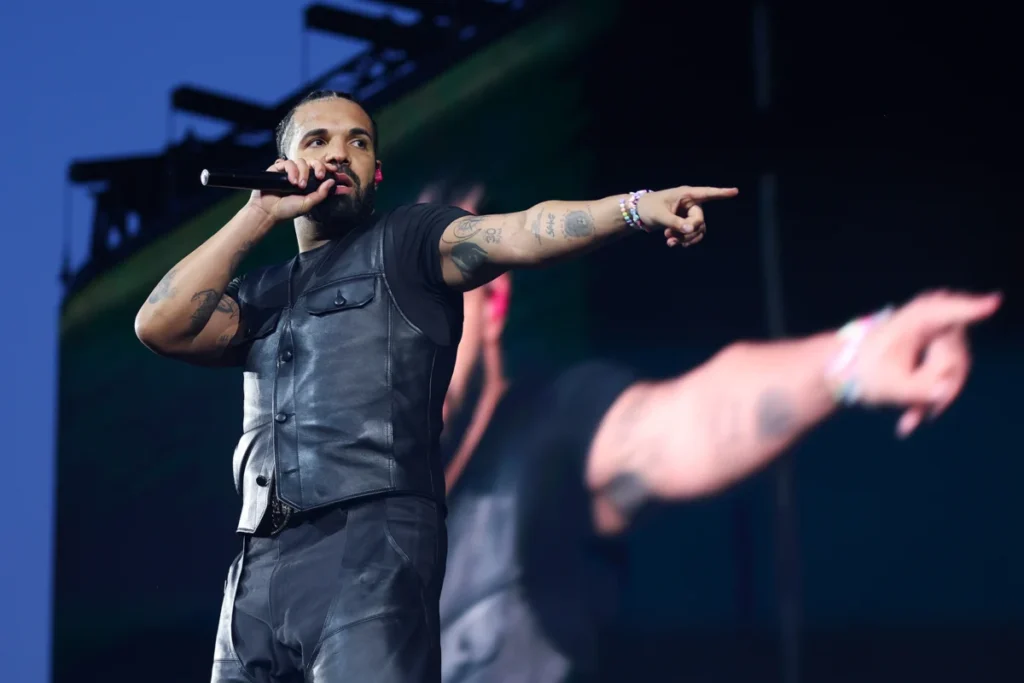
Drake has once again etched his name into music history, achieving a monumental milestone on the Billboard 200 albums chart. The Canadian superstar is now the sole living solo artist to have an astounding 12 albums concurrently charting on the prestigious list. This historic accomplishment, achieved on the Billboard 200 chart dated May 30, 2026, marks a significant moment in the chart’s nearly seven-decade history, a period that has seen dramatic shifts in how music consumption is measured and albums are ranked.
The achievement is particularly noteworthy as it solidifies Drake’s unparalleled dominance and enduring appeal across his extensive discography. His latest album, ICEMAN, debuted at No. 1, making it his 15th chart-topping release. However, the true story lies not just in the new number one, but in the sheer volume of his catalog occupying the Billboard 200 simultaneously. ICEMAN is joined by HABIBTI at No. 2 and MAID OF HONOUR at No. 3, giving Drake the unprecedented feat of holding the entire top three positions on the chart. Beyond this immediate dominance, 12 of his albums are collectively present on the 200-position chart, a testament to his sustained influence and the loyalty of his fanbase.
A Historical Chart Landscape
The Billboard 200, which ranks the most popular albums in the United States based on multi-metric consumption—including album sales, track equivalent albums (TEAs), and streaming equivalent albums (SEAs)—has undergone significant transformations since its inception. The current chart methodology, which incorporates streaming data, has made it easier for older albums, often referred to as catalog titles, to remain on the chart for extended periods compared to previous eras when the chart was primarily a sales-only ranking.
The specific benchmark Drake has now met – 12 albums charting simultaneously as a living soloist – has only been achieved by a select few in the post-1963 era, when the Billboard 200 combined its separate mono and stereo album charts into a single, unified ranking. This unification in August 1963 was a crucial step in standardizing album popularity measurement. Since that pivotal change, only two other acts have managed to place at least 12 albums on the Billboard 200 at the same time: Prince and The Beatles.
Prince achieved this feat in the weeks following his untimely death in 2016, with his catalog experiencing a surge in interest from fans. He notably held a record 19 albums on the chart in one week in May 2016. The Beatles also demonstrated remarkable chart longevity, appearing with 13 albums in March 2014 and 14 albums in December 2010. These instances were largely driven by external factors: the 2014 surge coincided with a major television tribute concert celebrating the 50th anniversary of their U.S. television debut, while the 2010 resurgence was linked to the digital release of their entire catalog on iTunes. Drake’s achievement, however, stands apart as it is accomplished during his active career, reflecting ongoing listener engagement with his work rather than post-mortem catalog appreciation or specific promotional events.
Drake’s Charting Albums: A Comprehensive Look
The May 30, 2026-dated Billboard 200 chart showcases the breadth of Drake’s catalog presence. His current charting albums include:
- No. 1: ICEMAN
- No. 2: HABIBTI
- No. 3: MAID OF HONOUR
- No. 25: Take Care
- No. 40: Views
- No. 55: $ome $exy $ongs 4 U (with PARTYNEXTDOOR)
- No. 65: Scorpion
- No. 69: Certified Lover Boy
- No. 81: Thank Me Later
- No. 96: For All the Dogs
- No. 130: More Life
- No. 167: Nothing Was the Same
This diverse list spans Drake’s career from his early works to his most recent releases, illustrating a consistent ability to connect with audiences across different stages of his musical evolution. The presence of albums released over a decade ago, such as Thank Me Later (2010) and Take Care (2011), alongside his newer projects, underscores the enduring appeal of his discography and the power of streaming in keeping catalog albums relevant.

Evolution of the Billboard 200: A Historical Perspective
The Billboard 200 chart, which began its weekly publication in March 1956, has been a barometer of American musical taste for decades. Its methodology has been a dynamic entity, adapting to technological advancements and evolving music consumption habits.
- Early Years (1956-1963): The chart initially tracked separate mono and stereo album sales, reflecting the distinct formats available to consumers.
- The Merger (1963): In August 1963, Billboard consolidated these into a single Billboard 200 chart, creating a more comprehensive measure of album popularity.
- The Catalog Exclusion Era (Mid-1991-End of 2009): For a significant period, catalog albums (generally those 18 months or older) were largely ineligible to chart. This rule was implemented to give newer releases a better chance of visibility and to reflect current market trends.
- The Multimetric Shift (End of 2014 onwards): A transformative change occurred at the end of 2014 when the chart transitioned from a pure album sales formula to a multimetric methodology. This included the integration of streaming data from platforms like Spotify, Apple Music, and YouTube, and later, track equivalent albums (TEAs). This shift fundamentally altered how album popularity was calculated, significantly boosting the chart presence of albums with high streaming numbers, regardless of their sales figures.
The current system, which relies on equivalent album units, comprises album sales, TEAs (10 individual tracks sold from an album equal one unit), and SEAs (2,500 ad-supported or 1,000 paid/subscription on-demand official audio and video streams generated by songs from an album). This comprehensive approach allows for a more nuanced representation of an album’s overall popularity in the digital age.
Implications of Drake’s Achievement
Drake’s unprecedented chart performance carries several significant implications for the music industry and for artists aiming for long-term career success.
Firstly, it highlights the immense power of a cohesive and extensive catalog in today’s music landscape. While new releases always garner attention, Drake’s ability to maintain such a strong presence across his entire body of work suggests that artists can build and sustain a devoted fanbase that actively engages with their older material. This is particularly relevant in the streaming era, where access to vast libraries of music makes catalog exploration more accessible than ever before.
Secondly, his feat underscores the evolving definition of music stardom. In an era dominated by singles and fleeting viral trends, Drake’s sustained success across multiple albums demonstrates the enduring value of the album as an artistic statement and a fan connection point. His ability to not only top the charts with new material but also to have a significant portion of his back catalog remain relevant speaks to a deep and loyal connection with his audience.
Thirdly, Drake’s achievement serves as a benchmark for artists navigating the complexities of the modern music industry. His consistent output, coupled with strategic releases and a strong understanding of fan engagement, has allowed him to build a legacy that transcends individual hits. This sustained presence on the Billboard 200 is a testament to a long-term career strategy that prioritizes both artistic integrity and commercial viability.
The Billboard 200 chart dated May 30, 2026, will be fully published on Billboard’s website on May 27, a day later than usual due to the U.S. Memorial Day holiday on May 25. For continuous updates on chart news, followers can track @billboard and @billboardcharts on X (formerly Twitter) and Instagram. Drake’s latest record-breaking performance solidifies his position not just as a chart titan, but as a cultural phenomenon whose influence continues to shape the trajectory of popular music.
Related News