
A Strategic Analysis of the K-pop Industry Transition into 2015 Institutional Reform Artist Development and the Evolution of Global Fan Engagement

The South Korean entertainment industry enters 2015 at a critical juncture, following a year characterized by significant internal volatility, legal precedents, and a shift in the traditional "idol" business model. While the "Hallyu" or Korean Wave continued its international expansion throughout 2014, the period was equally defined by a series of high-profile departures, contractual disputes, and tragic incidents that have forced a collective re-evaluation of industry standards. As the market looks toward the new fiscal and creative year, the focus shifts toward the sustainability of artist management, the diversification of individual brand identities within groups, and the urgent need for structural reforms regarding artist safety and fan conduct.

2015: Kpop Wishes For the New Year

The Evolution of Individual Branding: The Case for Solo Ventures

A prominent trend identified heading into 2015 is the increasing demand for individual artist autonomy, exemplified by the calls for solo debuts for established group members. Within the landscape of YG Entertainment, the career trajectory of Gong Min-ji, known as Minzy of 2NE1, has become a focal point for discussions on talent utilization. Despite her documented proficiency in choreography and vocal performance, Minzy remains one of the few veteran idols from the "Second Generation" of K-pop who has yet to release a solo project. This stands in contrast to her group mate CL, who has been positioned for a major debut in the United States market.

The industry at large has seen a shift toward "musically ambitious" solo debuts. In 2014, artists such as Taemin of SHINee and Yeeun (Ha:tfelt) of Wonder Girls moved away from standard idol tropes to explore avant-garde and singer-songwriter identities. Analysts suggest that for groups like 2NE1, which faced a forced hiatus in 2014 following internal controversies, individual solo projects are not merely creative outlets but essential strategic moves to maintain brand relevance. Furthermore, the interest in solo work extends to other major labels; fans and critics have expressed significant interest in seeing more independent output from members of the Wonder Girls, such as Yubin and Lim, as well as a second solo effort from Infinite’s Sunggyu to build upon his established rock-inspired discography.

2015: Kpop Wishes For the New Year

A Chronology of Turmoil: The 2014 Legal and Structural Crisis

To understand the priorities of 2015, one must examine the unprecedented series of disruptions that occurred in 2014. The year is now frequently referred to by industry insiders as a "Black Year" for K-pop due to the frequency of group fractures.

  1. May 2014: Kris (Wu Yifan) of EXO filed a lawsuit against SM Entertainment to terminate his contract, citing a lack of consideration for his health and an unfair distribution of profits.
  2. September 2014: Jessica Jung’s departure from Girls’ Generation sent shockwaves through the industry. The conflict highlighted the growing tension between an idol’s commitment to their group and their pursuit of external business ventures, such as her fashion brand, Blanc & Eclare.
  3. October 2014: Luhan, another prominent member of EXO, followed Kris in filing a lawsuit against SM Entertainment, further destabilizing the group’s Chinese operations.
  4. November 2014: All six members of B.A.P filed a joint lawsuit against TS Entertainment, alleging "slave contracts" and reporting that the company had retained the vast majority of the group’s $9 million USD in earnings, leaving the members with minimal compensation.

These events have pulled back the curtain on the "darker corners" of the industry. The legal implications are profound; these cases have forced the Fair Trade Commission to look closer at the "iron-clad" contracts that often offer no room for personal freedom. For 2015, the industry faces a mandate to move toward more transparent remuneration and contract terms to prevent the further loss of high-value talent.

2015: Kpop Wishes For the New Year

Industrial Safety and the Human Cost of Hallyu

Perhaps the most somber catalyst for change was the September 2014 car accident involving the group Ladies’ Code, which resulted in the deaths of members EunB and RiSe. This tragedy brought the issue of road safety and the grueling schedules of idols to the forefront of national discourse. Investigations revealed that the van was traveling at excessive speeds on a rainy night to meet a tight schedule—a common practice in an industry where groups often perform in multiple cities within a single day.

In response, there have been growing calls from artists and the public for agencies to prioritize the physical well-being of their staff and performers over logistical efficiency. Industry analysts argue that the "happy façade" presented to fans must be backed by genuine structural safety. The year 2015 is expected to see a shift in how agencies manage travel logistics, with a potential move toward more humane scheduling and stricter adherence to transport safety regulations to prevent further avoidable loss of life.

2015: Kpop Wishes For the New Year

Media Innovation and the Globalization of Variety Programming

While the music industry faced internal struggles, the television sector saw the rise of innovative formats that bridge cultural gaps. The success of JTBC’s Abnormal Summit (Bichesanghoedam) in late 2014 represents a new direction for Korean variety programming. By featuring a panel of foreign residents debating serious social issues in fluent Korean, the show has moved away from traditional slapstick humor toward intellectual and cultural exchange.

This shift is significant for 2015 as it provides a platform for the Korean public to engage with global perspectives. However, the show has also highlighted the growing pains of internationalization, facing scrutiny over stereotypical jokes and the need for more diverse representation. The demand for "thought-provoking" media suggests that 2015 audiences are seeking more substance from their entertainment, mirroring the desire for more "authentic" and "home-made" musical content from idols.

2015: Kpop Wishes For the New Year

The Paradigm Shift in Fan Culture: Maturity and Privacy

The relationship between idols and their fanbases is also undergoing a necessary evolution. The prevalence of sasaeng (stalker) fans and the aggressive reaction to dating news remained significant issues throughout 2014. The "dating scandals" involving members of Girls’ Generation and EXO demonstrated a divide in fan maturity, with some segments of the "Cassiopeia" and "EXO-L" fandoms reacting with hostility toward the private lives of their idols.

For 2015, there is a push for a "limit" or "threshold" that fans should not cross. Professional observers note that if the K-pop industry is to continue its global ascent, the culture of "owning" an idol must be replaced by a culture of mutual respect. This includes:

2015: Kpop Wishes For the New Year
  • Privacy Rights: Acknowledging that idols are human beings entitled to date, shop, and live without constant surveillance.
  • Cultural Sensitivity: As idols travel more frequently to international markets, there is an increasing responsibility for them to avoid cultural faux pas, such as the use of religious imagery or blackface, which have caused friction in the past.
  • Constructive Engagement: Encouraging fans to hold idols accountable for genuine mistakes while discouraging the "Oppa didn’t mean it" defense that often enables problematic behavior.

Future Outlook: Implications for 2015 and Beyond

The transition into 2015 is defined by a desire for an "overall good year" that avoids the plagiarism controversies and legal mudslinging of the recent past. From a business perspective, the focus will likely be on "amicable break-ups" and transitions. The departure of Lee Joon and Thunder from MBLAQ at the end of 2014 serves as a potential model for this; unlike the litigious exits seen elsewhere, their departure was framed as a natural progression toward individual goals, maintaining a level of professionalism that preserved the group’s legacy.

Furthermore, the industry is expected to see a rise in "musically ambitious" projects as the market becomes saturated with standard idol groups. Agencies that allow their artists to pen their own lyrics and explore niche genres—as seen with the success of soloists in 2014—are likely to see higher levels of fan loyalty and international critical acclaim.

2015: Kpop Wishes For the New Year

In conclusion, the K-pop industry in 2015 stands at a crossroads between maintaining its high-gloss image and addressing the systemic issues that threaten its stability. The success of the coming year will depend on whether entertainment companies can transition from a "factory-style" production model to one that treats artists as human stakeholders. By prioritizing road safety, legal transparency, and individual creative growth, the industry can ensure that the "Hallyu" wave remains a durable and respected global phenomenon rather than a volatile trend. The lessons of 2014, though painful, provide a clear roadmap for the institutional reforms necessary to sustain the future of Korean entertainment.
The Evolution of K-pop Fan Culture and the Growing Need for Institutional Boundaries

The global phenomenon of K-pop is built upon a foundation of unprecedented fan engagement, where the relationship between the artist and the audience transcends traditional boundaries of entertainment. On one hand, this devotion manifests in extraordinary acts of philanthropy, such as the organization of massive fan projects, the donation of thousands of dollars to charities in an idol’s name, and the tradition of donating "rice wreaths" to support events. On the other hand, the intensity of this connection has birthed a darker, more intrusive side of fandom—one characterized by cyber-harassment, physical endangerment, and a sense of entitlement that treats human beings as corporate commodities. As the industry continues to expand, the incidents involving prominent figures such as f(x)’s Krystal, SHINee’s Jonghyun, and members of Super Junior highlight a critical need for entertainment agencies and the fans themselves to establish healthier boundaries.

Digital Harassment and the Vulnerability of Social Media

In the modern K-pop landscape, social media serves as a double-edged sword. While it allows for direct communication between idols and their supporters, it also leaves artists vulnerable to coordinated attacks. A prominent example occurred when Krystal Jung, a member of the girl group f(x), was forced to deactivate her Instagram account, @kjungxox. The catalyst for this decision was not a scandal of her own making, but rather the digital footprints of another idol. After G-Dragon of BIGBANG "liked" several of her photos, a segment of his fanbase initiated a campaign of harassment against her, fueled by unsubstantiated dating rumors.

The harassment escalated beyond derogatory comments to include multiple attempts to hack her private account. This incident underscored a recurring theme in K-pop culture: the "shipping" or dating of idols is often viewed by certain fan factions not as a personal matter, but as a violation of a perceived social contract. The anonymity of the internet allows these "netizens" to exert psychological pressure on artists, often resulting in the artist retreating from public digital spaces to protect their mental well-being.

I Demand You Smile: The Power of Fans

The "Only 13" Movement and the Policing of Group Identities

The influence of fans extends beyond the personal lives of idols into the very structure of the musical groups themselves. The case of Super Junior serves as a primary case study in how fan entitlement can dictate corporate policy. For years, a vocal minority of the fanbase, operating under the slogan "Only 13," has campaigned against the inclusion of Henry Lau and Zhou Mi as official members of the main Super Junior lineup. Despite their talent and contributions to the sub-unit Super Junior-M, these artists have been relegated to "guest" status in the eyes of traditionalist fans.

In July 2013, the tension reached a breaking point, prompting Super Junior’s Eunhyuk to issue a formal statement. He clarified that Zhou Mi and Henry were not official members of the primary group, a move widely seen as an attempt to appease the "Only 13" supporters. This demand for "clearly defined boundaries" between original members and newer additions highlights a possessive mindset. Fans who have invested years of emotional and financial support into a specific lineup often view the introduction of new members as a dilution of the "brand" they helped build, effectively forcing management companies to prioritize fan sentiment over artistic expansion or the professional integration of their own trainees.

The Apology Culture and the Illusion of Perfection

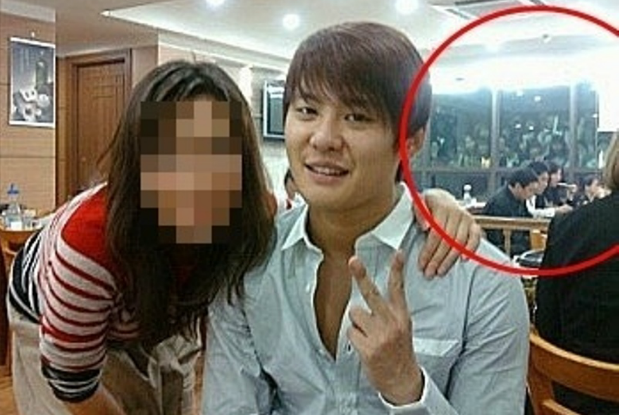
Perhaps the most jarring aspect of K-pop fandom is the expectation of perpetual availability and "purity." This was illustrated when SHINee’s Jonghyun was spotted at a movie theater with a female acquaintance. Despite the lack of any evidence suggesting a scandalous relationship, the mere sight of an idol in a private social setting with the opposite sex was enough to spark a wave of online scrutiny.

In response, Jonghyun issued a public apology via Twitter, stating: "Even though it’s not something I should be sorry about, I’m sorry." This statement captures the paradox of the K-pop industry. Idols are frequently forced to apologize for exercising basic human rights—such as dating, socializing, or having a private life—because their public image is marketed as that of a "virtual partner" to the fans. This "apology culture" reinforces the idea that the consumer owns the artist. When an idol’s actions deviate from the scripted perfection expected by the public, the resulting backlash is often treated by agencies as a PR crisis rather than an opportunity to defend the artist’s autonomy.

I Demand You Smile: The Power of Fans

Physical Safety and the Chaos of Public Appearances

The dangers of unchecked fan fervor are most visible at international airports and music show venues. The phenomenon of "airport crowds" has become a significant safety hazard in South Korea and abroad. When groups like EXO or SHINee travel, they are frequently swarmed by hundreds of fans who push, shove, and trample one another to get a closer look or a photograph. These "stampedes" have resulted in minor injuries to both the artists and the fans themselves.

In many instances, entertainment agencies have been criticized for failing to provide adequate security personnel, particularly for high-profile groups under major labels like SM Entertainment. The lack of physical barriers and the tendency of fans to shove cameras into the faces of idols create an environment of constant physical and psychological stress. Furthermore, reports of fans making inappropriate physical contact or "sexually assaulting" idols in the chaos of a crowd are not uncommon. The silence from corporate entities regarding these incidents suggests a reluctance to reprimand the very people who drive their revenue, even when the safety of their employees is at risk.

The Economic Drivers of Fan Entitlement

To understand why these behaviors persist, one must look at the economic structure of the K-pop industry. The "customer is always right" philosophy is applied with extreme rigor in South Korea’s entertainment sector. Fans are not merely listeners; they are high-stakes investors. They buy albums in bulk to influence chart rankings, purchase expensive "fanchant" slots, and fund elaborate advertisements on subways and billboards.

Because the industry relies so heavily on this high-engagement model, companies often feel beholden to the whims of the most vocal fans. This creates a power imbalance where the "netizen" or the "sasaeng" (obsessive fan) feels they have a legitimate claim to control the idol’s behavior. The "idol" is treated as a character in a story that the fans are co-writing. When the character breaks script—by dating, by speaking out, or by changing their image—the "investors" feel a sense of betrayal, leading to the toxic cycles of harassment seen in the cases of Krystal and Jonghyun.

I Demand You Smile: The Power of Fans

The Role of "Netizens" and the Impact of Online Commentary

South Korean online communities, often referred to as "netizen" hubs, play a pivotal role in shaping an idol’s career. A single post on a community site can trigger a massive shift in public perception. The hypocrisy of this system is evident: fans often claim to protect their idols from "malicious netizens," yet they frequently employ the same tactics of bullying and demand-making when the idol does something they dislike.

The repercussions of these two-second comments can be devastating. For an idol, a "bad reputation" on these platforms can lead to the loss of endorsement deals, television appearances, and, in extreme cases, the termination of their contract. The blind negativity and the pursuit of "upvotes" on hate comments have created a culture where empathy is secondary to engagement.

Analysis: The Path Toward Institutional Reform

The current trajectory of K-pop fandom suggests that a paradigm shift is necessary for the long-term sustainability of the industry. This reform must occur on three levels:

  1. Corporate Responsibility: Agencies must move away from the "mollification" strategy. Instead of forcing idols to apologize for non-scandals, companies should issue firm statements defending their artists’ right to a private life. Furthermore, investing in robust security protocols at public venues is a non-negotiable requirement for employee safety.
  2. Artist Assertiveness: While the risk to their careers is high, more artists are beginning to use social media to call out inappropriate behavior. By setting boundaries directly with their audience, idols can begin to dismantle the "virtual partner" illusion.
  3. Fan Self-Policing: The "good" side of fandom—the side that organizes charities and light-stick oceans—must become as vocal in condemning harassment as they are in supporting a comeback. Maturity within the fandom involves recognizing that an idol is a professional performer, not a personal possession.

Conclusion: A Call for Human-Centric Fandom

The K-pop industry has reached a global scale that requires a more sophisticated approach to fan management and artist protection. The incidents involving Krystal, Jonghyun, and the members of Super Junior are symptoms of a deeper systemic issue: the commodification of human emotion. While the passion of fans is the engine that drives the Hallyu wave, that engine must be tempered by respect and boundaries.

I Demand You Smile: The Power of Fans

As the business of "perfection" continues to grow, the industry must reckon with the fact that its stars are human beings who will inevitably fall short of impossible standards. To allow toxic behavior to go unpunished is to poison the very community that makes K-pop special. The question remains: will the companies and the fans have the courage to step forward and demand a more humane environment, or will the "customer is always right" mentality continue to override the basic rights of the artists? The future of K-pop may well depend on the answer.