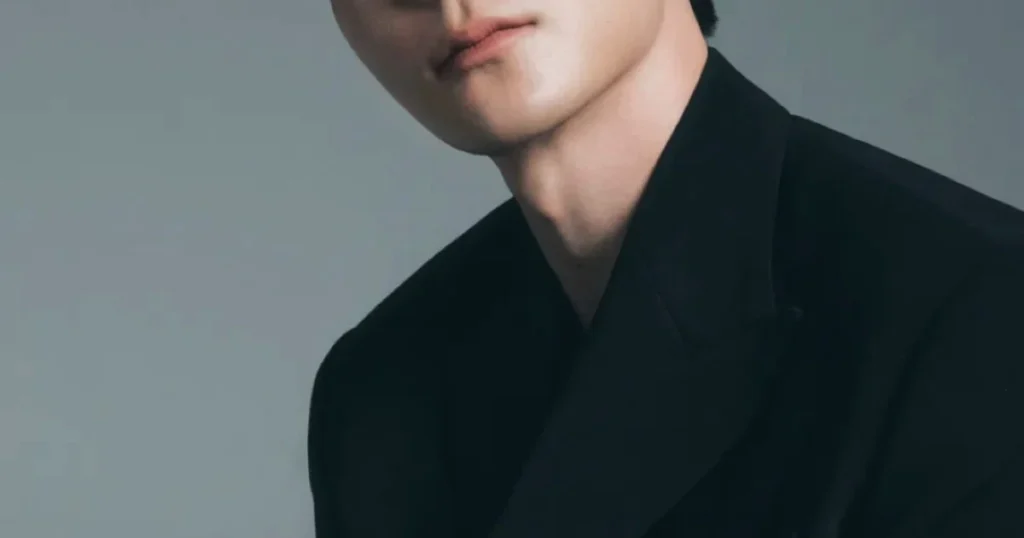
The Revelation on Jo Hyun Ah’s Common Thursday Night
On October 1st, a new episode of Jo Hyun Ah’s Common Thursday Night was uploaded, featuring Roy Kim as the primary guest. The show, known for its relaxed, "drinking-talk" format, often encourages celebrities to share stories they might otherwise withhold in more formal broadcast settings. During the episode, Jo Hyun Ah and Roy Kim reminisced about their long-standing friendship, which spans over twelve years. Jo recalled their younger days, noting that they used to socialize frequently, often involving late-night gatherings.
The conversation took an unexpected turn when Jo Hyun Ah pointed out a specific detail about Roy Kim’s appearance from their past. She mentioned a period when he frequently wore headbands, a style choice that often draws attention to the hairline. As she observed him closely across the table, she began to comment on his forehead. Roy Kim, sensing the direction of the observation, reacted with a sharp, albeit playful, defensiveness, asking if she was suggesting his hairline was receding. Jo Hyun Ah countered by asking directly if he had undergone a transplant.
Without hesitation, Roy Kim confirmed the suspicion, stating that the procedure had taken place "quite a while" ago. Despite his initial honesty, he appeared momentarily self-conscious, covering his forehead with his hand and questioning if the results were noticeable to the public. He expressed a belief that the procedure had looked natural until that moment. Jo Hyun Ah immediately offered reassurance, noting that the results looked excellent and that the decision to undergo the procedure was a positive one.
Contextualizing Roy Kim’s Career and Public Image
Roy Kim, born Kim Sang-woo, rose to national fame in 2012 as the winner of Superstar K4. His debut was marked by his "flower boy" visuals and a sophisticated, acoustic-folk musical style that set him apart from the high-energy dance groups dominating the charts. Over the years, he solidified his status as a top-tier soloist with hits such as "Bom Bom Bom," "Love Love Love," and "The Hardest Part."
Throughout his career, Kim’s image has been that of an intellectual and refined artist—he is an alumnus of Georgetown University—which makes his candidness about cosmetic maintenance particularly noteworthy. In the K-pop industry, where "natural beauty" is often highly prized yet frequently manufactured, stars usually avoid discussing surgical enhancements. However, Kim’s admission aligns with a growing trend of "honesty marketing," where celebrities gain favor by being transparent about the realities of maintaining their appearance.
The timing of his admission also reflects his maturity as an artist. At 33, Kim has navigated the highs of superstardom and the lows of public scrutiny. Having served in the Republic of Korea Marine Corps—a branch known for its intense physical demands—he has transitioned into a phase of his career where he focuses on longevity, both in his vocal health and his physical presentation.
The Rising Trend of Hair Restoration in South Korea
Roy Kim’s admission is not an isolated incident but rather a reflection of a significant demographic shift in South Korea. The country has long been the global capital of plastic surgery, but the focus has recently expanded heavily into hair restoration, particularly among men in their 20s and 30s.
According to data from the National Health Insurance Service (NHIS) in South Korea, the number of individuals seeking treatment for hair loss has been steadily increasing. In recent years, it was reported that nearly 250,000 people sought medical help for alopecia annually, with a significant portion of those patients being in their 30s. The pressure to maintain a youthful "M-shape-free" hairline is immense in a society where professional success and social standing are often linked to physical appearance.
Hair transplant surgery in Korea has become highly sophisticated, with clinics in districts like Gangnam offering Follicular Unit Extraction (FUE) and Follicular Unit Transplantation (FUT) with high success rates. For a celebrity like Roy Kim, whose face is frequently captured in high-definition 4K video and by professional photographers, even minor thinning can become a source of professional anxiety. By admitting to the procedure, Kim acknowledges a common struggle faced by many of his peers and fans alike.

The Physical Demands and Self-Care Routines of K-Pop Stars
Beyond the transplant confession, Roy Kim used the interview to discuss his broader approach to self-care and health. He detailed a rigorous routine that includes Pilates and personal training sessions. Pilates, once viewed primarily as a workout for women in Korea, has seen a surge in popularity among male idols for its ability to strengthen the core and improve posture—essential for singers who need breath control and stage presence.
Kim also highlighted the importance of thermal therapy, mentioning his habit of visiting saunas near his home. "I go to the sauna… to sweat it all out and then soak in the hot bath," he explained. This holistic approach to maintenance—combining surgical intervention with consistent physical fitness and traditional wellness practices—underscores the discipline required to remain competitive in the entertainment industry.
Industry Implications and the "Stigma" of Male Cosmetic Surgery
The reaction to Roy Kim’s confession has been largely positive, reflecting a softening of social stigmas. Historically, male celebrities were expected to maintain an aura of effortless perfection. Admitting to a hair transplant or "filler" injections was often seen as a sign of vanity that could alienate fans. However, the modern audience, particularly Gen Z and Millennials, tends to value authenticity and "relatability."
Industry analysts suggest that when a star of Roy Kim’s caliber speaks openly about hair loss, it helps to destigmatize the condition for the general public. Hair loss is often a taboo subject for men, linked to aging and a loss of virility. By framing the transplant as a standard part of his self-care—much like his Pilates or his skincare routine—Kim repositioned the narrative from one of "hiding a flaw" to one of "proactive maintenance."
Furthermore, this transparency may be a strategic move for celebrities. In an era of "netizen detectives" who compare high-resolution photos from different years to spot surgical changes, pre-empting the discovery with an honest admission can prevent scandals and build a stronger, trust-based bond with the fanbase.

Chronology of the Interaction and Public Response
The timeline of the event and its subsequent viral spread follows a familiar pattern in the digital age:
- October 1, 2024: The video is released on YouTube. Within hours, clips of the "hair transplant" segment begin circulating on social media platforms like X (formerly Twitter) and Instagram.
- October 2, 2024: Major Korean entertainment news outlets (such as Dispatch, Newsen, and Daum) pick up the story, emphasizing the "surprise" nature of the confession.
- October 2-3, 2024: International K-pop news sites, including Koreaboo and Allkpop, translate the content for a global audience, where the discussion shifts to the broader pressures of the K-pop industry.
- Ongoing: Online forums (TheQoo, Pann, Reddit) show a mix of support and humor, with many users praising his honesty and others sharing their own experiences with hair restoration.
Conclusion: The New Standard of Transparency
Roy Kim’s admission to having a hair transplant is more than just a piece of celebrity gossip; it is a data point in the evolving cultural history of South Korean entertainment. As the industry moves toward a more nuanced portrayal of its stars, the barriers between the "perfect idol" and the "real person" continue to erode.
Kim’s willingness to discuss his hairline, his fitness regimen, and his aging process suggests a level of comfort with his identity that resonates with a modern audience. As he continues his career, his music remains the primary focus, but his candidness about the physical realities of being a public figure adds a layer of human depth to his persona. In the high-stakes world of K-pop, where every strand of hair is often managed by a team of stylists, Roy Kim’s simple admission—"It’s been quite a while"—serves as a refreshing reminder that even the biggest stars are subject to the same biological realities as their fans.