The South Korean economic landscape is dominated by a unique corporate structure known as the chaebol, a term derived from the Korean words "chae" (wealth) and "beol" (faction or clan). These massive, family-controlled conglomerates—including household names such as Samsung, Hyundai, LG, and SK Group—are not merely business entities but the primary architects of the nation’s rapid industrialization following the Korean War. While these organizations are frequently romanticized in popular media as the backdrop for high-stakes drama and immense personal wealth, their real-world influence extends into every facet of South Korean life, from national policy and international diplomacy to the daily consumer habits of the citizenry. The history of the chaebol is inextricably linked to South Korea’s "Miracle on the Han River," yet their continued dominance remains one of the most polarizing issues in contemporary Korean society.
The Cultural Archetype versus Economic Reality
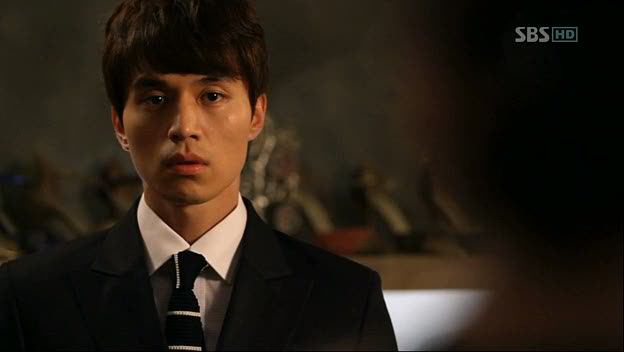
In the realm of Korean television dramas, or K-dramas, the "chaebol heir" has become a staple trope. Series such as Secret Garden, What Happened in Bali, and the more recent Reborn Rich often depict these figures as arrogant, suit-clad elites navigating internal board room coups and complex inheritance battles. This media portrayal has familiarized global audiences with the concept of the chaebol, associating the term with opulence and corporate succession. Real-life examples, such as Super Junior’s Choi Siwon—whose father served as the CEO of Boryung Medicine—further blur the lines between entertainment and the industrial elite.
However, the economic reality of the chaebol is far more consequential than televised fiction suggests. A chaebol is characterized by a single chairman, often the patriarch of the founding family, who exerts control over a vast network of diversified subsidiaries through complex cross-shareholding arrangements. Unlike Western conglomerates that may focus on a specific sector, a single chaebol often operates across entirely unrelated industries. For instance, the Hyundai Group is globally recognized for automotive manufacturing, yet its domestic operations encompass department stores, heavy construction, elevator manufacturing, and logistics. Similarly, the Lotte Group maintains a dominant presence in confectionery, hospitality, retail, and chemicals. This omnipresence ensures that the average South Korean citizen likely interacts with a chaebol-owned entity multiple times a day, whether through their smartphone, their apartment building, or the grocery store where they shop.
Chronology of Development: From Ruin to Global Dominance
The emergence of the chaebol was a deliberate result of state-led economic planning rather than organic market growth. To understand their current stature, one must look at the timeline of South Korea’s post-war recovery.
- Post-War Reconstruction (1953–1961): Following the 1953 armistice, South Korea was one of the poorest nations in the world. The economy relied heavily on foreign aid. During this period, several nascent companies began to consolidate wealth by managing the distribution of imported goods and basic commodities like sugar and flour.
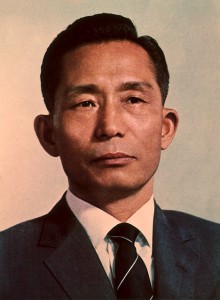
- The Park Chung-hee Era (1961–1979): The trajectory of the chaebol changed permanently following the military coup led by General Park Chung-hee. Park sought to modernize the nation through an "export-first" policy. His administration hand-selected specific family-owned businesses to lead the industrial charge. These firms were granted preferential access to low-interest loans, government contracts, and protection from foreign competition. In exchange, they were required to meet strict government-mandated export quotas.
- Heavy and Chemical Industrialization (1970s): The government pushed chaebols to move beyond light manufacturing into heavy industries such as shipbuilding, steel, and petrochemicals. This period saw the birth of Hyundai’s massive shipyards and the expansion of the Pohang Iron and Steel Company (POSCO).
- Global Expansion and High Tech (1980s–1990s): Chaebols shifted their focus toward electronics and semiconductors. Samsung and LG (then Lucky-Goldstar) began their ascent as global competitors, moving away from being mere original equipment manufacturers (OEMs) to becoming recognized global brands.
- The 1997 Asian Financial Crisis: This served as a turning point. Several over-leveraged chaebols, most notably Daewoo, collapsed under the weight of massive debt. The International Monetary Fund (IMF) mandated structural reforms, leading to increased transparency and the dismantling of some of the more unstable conglomerates.
- Modern Consolidation (2000s–Present): Surviving chaebols emerged stronger and more technologically advanced. Today, companies like Samsung Electronics are global leaders in innovation, often outperforming long-established Western and Japanese rivals.
Supporting Data: The Magnitude of Influence
The scale of chaebol influence is best understood through economic statistics. As of the early 2020s, the "Big Five" chaebols—Samsung, Hyundai Motor, SK, LG, and Lotte—account for approximately 50% of the total market capitalization of the South Korean stock exchange (KOSPI). Samsung Group alone has historically contributed between 15% and 20% of South Korea’s total Gross Domestic Product (GDP).

In terms of exports, these conglomerates are the lifeblood of the nation. South Korea’s export-oriented economy is heavily reliant on the high-tech components, automobiles, and refined petroleum produced by chaebol subsidiaries. However, this concentration of wealth has led to a "dual economy" structure. While employees of these large firms enjoy high salaries and significant social prestige, the small and medium-sized enterprises (SMEs) that act as suppliers to the chaebols often struggle with thin profit margins and lack the capital to invest in independent research and development. This disparity has contributed to a growing wealth gap and stagnant social mobility among the younger generation.
The Political-Industrial Complex and "The Iron Triangle"
The relationship between the chaebol and the South Korean government is often described as "the iron triangle" of business, bureaucracy, and politics. Because the chaebols are essential to the nation’s economic stability, they wield immense lobbying power. This has frequently led to controversies regarding political corruption and "crony capitalism."
Historically, several chaebol leaders have faced legal scrutiny for bribery, tax evasion, and embezzlement, only to receive presidential pardons on the grounds that their leadership is vital to the national economy. For example, Lee Kun-hee, the late chairman of Samsung, was twice convicted of white-collar crimes and twice pardoned. More recently, the 2016-2017 political scandal involving former President Park Geun-hye and Samsung’s leadership led to the president’s impeachment and the imprisonment of Samsung’s de facto leader, Lee Jae-yong, though he too was eventually granted parole and later a pardon.

Critics argue that this "too big to jail" status undermines the rule of law and creates a moral hazard. Professor Robert Kelly of Pusan National University has noted that the chaebols often operate as "politics-corrupting, consumer-punishing oligopolists" that would likely have been subject to anti-trust dissolution in Western regulatory environments.
Official Responses and Reform Efforts
In response to public outcry over corporate scandals and the rising cost of living, successive South Korean administrations have attempted to implement "chaebol reform." The goal of these reforms is typically to increase corporate transparency, protect minority shareholders, and end the practice of "circular shareholding," where subsidiaries own shares in each other to keep control within the founding family despite owning only a small percentage of total equity.
Under the administration of President Moon Jae-in (2017–2022), the government appointed "chaebol snipers"—reform-minded economists—to the Fair Trade Commission to crack down on unfair internal trading. There have also been efforts to encourage a "creative economy" that supports startups and independent tech firms, reducing the nation’s reliance on a handful of conglomerates. However, these efforts often face resistance from the business community, which argues that aggressive regulation could hamper the international competitiveness of Korea’s most successful companies.
Broader Impact and Implications for the Future
The legacy of the chaebol is a paradox. On one hand, it is undeniable that without the centralized efficiency and aggressive expansion of these firms, South Korea would not have achieved its status as a member of the G20 and a global leader in technology. The chaebols provided the infrastructure for a nation to rise from the ashes of war to become a cultural and industrial powerhouse.
On the other hand, the "chaebol model" is increasingly viewed as anachronistic in the 21st-century global economy. The rigid, hierarchical corporate culture of these firms is often cited as a deterrent to the kind of flexible, grassroots innovation seen in Silicon Valley. Furthermore, the social pressure to join a chaebol has created an hyper-competitive education system and a sense of "Hell Joseon"—a term used by frustrated youth to describe the harsh socioeconomic conditions of modern Korea.
As South Korea looks toward the future, the challenge lies in balancing the economic stability provided by these giants with the need for a more equitable and diverse market. Whether the chaebol can evolve from family-run fiefdoms into modern, transparent corporations will likely determine the long-term sustainability of the South Korean economic miracle. For viewers of K-dramas, the "arrogant heir" remains a source of entertainment, but for the citizens of South Korea, the evolution of the chaebol is a matter of national survival.